

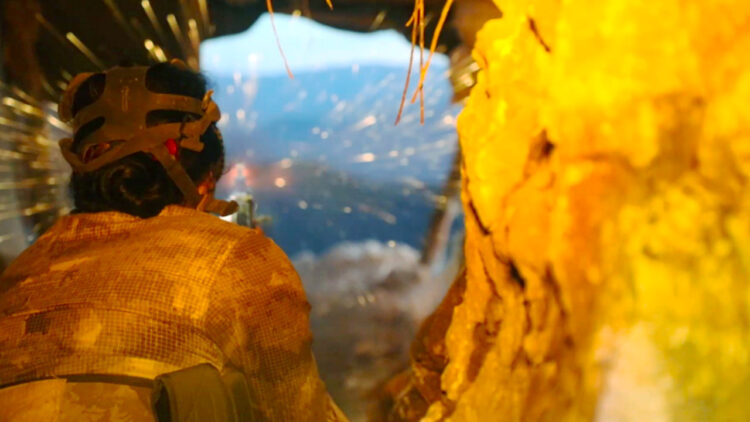
The Kurdistan Workers’ Party (PKK) is intensifying its underground warfare strategy in response to Turkey’s increasingly sophisticated drone capabilities, said Serdar Yektaş, spokesperson for the PKK’s armed wing the People’s Defence Forces (HPG), said in a revealing interview with journalist Amberin Zaman for Al-Monitor, an online newspaper known for its in-depth coverage of the Middle East.
Turkey’s use of domestically produced drones, particularly in operations against PKK strongholds in northern Iraq and Syria, has severely hampered the group’s ability to wage traditional guerrilla warfare. The PKK, which has been in armed conflict with the Turkish state for over 40 years, has seen a shift in battlefield dynamics. Yektaş acknowledged the losses suffered by the PKK as a result of drone strikes, but insisted that this had not weakened the group’s resolve.
In response, the PKK has changed its tactics, focusing on building extensive tunnel networks in the Medya defence zones in the mountainous regions of Iraqi Kurdistan. These tunnels are designed to protect PKK fighters from air strikes and provide a secure base of operations. According to Yektaş, these tunnels are not just shelters, but are equipped with essential facilities, making them functional underground complexes. “We have built real apartments in the mountains,” he told Zaman, describing the tunnels as having bathrooms, kitchens, living rooms and even meeting rooms for seminars.
Yektaş went on to explain that the tunnels are carefully designed to ensure proper ventilation and water supply, with some stretching for kilometres. The tunnels have proved effective in shielding PKK fighters from Turkish air strikes, with Yektaş noting that they are sometimes unaware they are being bombed until they are informed by comrades elsewhere.
While Turkey claims to be on the verge of eradicating the PKK, Yektaş argues that the group’s ideological cohesion and tactical adaptability are stronger than ever. He claims that the PKK’s tunnel strategy is a direct response to the overwhelming force of Turkey and its NATO allies, highlighting the asymmetrical nature of the conflict.
The PKK’s tunnel warfare is not a new tactic, but it has been refined and expanded in recent years. Yektaş pointed out that the decision to intensify tunnel construction came after the collapse of peace talks in 2015, which had briefly halted such defensive preparations. He also rejected criticism of the PKK’s role in urban conflicts in Turkey, attributing the initiation of these clashes to local Kurdish youth rather than direct orders from the PKK.
According to Yektaş, the continued development of the tunnel system is proof of the PKK’s commitment to resisting Turkish military operations. Despite the challenges, the PKK continues to adapt, focusing on survival and the preservation of Kurdish identity and autonomy.


