

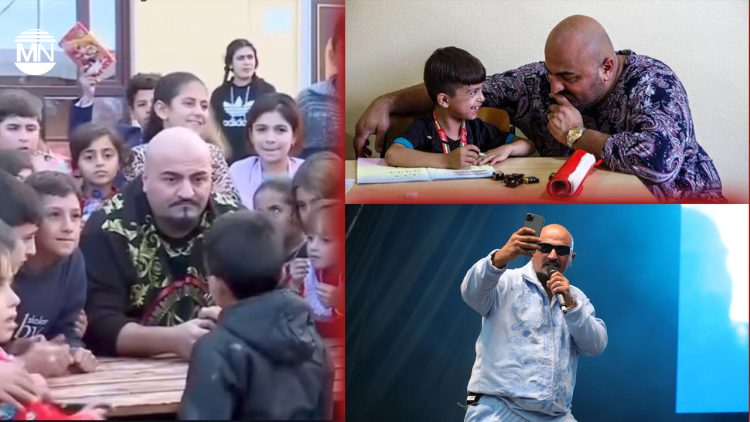
Germany’s music world and immigrant communities are mourning the sudden and tragic death of rapper Xatar, one of the most influential and controversial figures in German hip-hop. The 43-year-old, whose real name was Giwar Hajabi, was found dead on Thursday in a flat in Cologne, the Cologne Public Prosecutor’s Office confirmed on Friday. A death investigation has been launched to determine whether there was any criminal involvement. An autopsy found no signs of external violence, but chemical and toxicological tests are underway, with results expected to take weeks.
Xatar was born in Sinê, Eastern Kurdistan-Rojhilat (Iran), as the son of a famous composer and conductor father and a Kurdish activist mother. His family fled to Germany when he was a child. Rising through the underground rap scene, Xatar became known not only for his musical success but also for legal controversies, most notably a spectacular 2009 gold heist. He and his accomplices robbed a gold transporter, stealing jewellery and dental gold, according to prosecutors. He was sentenced to eight years in prison in 2011 but was released three years later. Remarkably, Xatar continued his music career even while incarcerated, releasing Baba aller Babas in 2015, which topped the German charts.
Beyond his own music, Xatar was a major force in the industry as the founder of the label Alles oder Nix, launching the careers of stars like SSIO, Schwesta Ewa, and Mero. His life story was dramatised by acclaimed director Fatih Akin in the 2022 film Rheingold, which became the most successful opening weekend in Akin’s career, drawing around 170,000 viewers and earning critical acclaim. Xatar released six albums, 17 singles, appeared in four films, and published an autobiography. He also became known for his successful restaurant chains across Germany, building a reputation as an influential figure far beyond music.
Tributes have flooded social media. Fellow rapper Farid Bang honoured him on Instagram: “You have left German rap as one of its greatest legends. I will always remember you fondly,” closing with a red heart emoji. Rapper Haftbefehl posted, “I am at a loss for words, my brother. I hope you are in a better place now. My deepest condolences to the family. Legends Never Die.” Former music manager Marina Buzunashvili shared a touching post, and journalist Rooz reflected in disbelief at the loss.
Kurdish singer Ferhat Tunç wrote: “I am saddened to hear of the passing of Kurdish rapper Giwar Hajabi, known as Xatar, at the age of 43. We first met at the premiere of Rheingold, directed by Fatih Akin, which became one of Germany’s most-watched films. We last shared the stage in Hamburg and had agreed on a duet for one of his songs. I wish mercy upon Xatar, whose personality was both humble and dignified, and patience to his family.”
Xatar’s longtime friend Sidar Coşkun revealed that Xatar had been battling leukaemia for the past two years. Coşkun said: “Jiwar’s death happened last night. He stood up, suddenly collapsed, and never got back up. He already had a disease — blood cancer — but he was receiving treatment. It’s a huge loss; I’m in shock. Everyone is in shock. The family is devastated — his mother, his wife, his young children — they are shattered.”
Xatar, who proudly carried both his Kurdish and German identities, was admired as a pioneering figure who brought the slogan of ‘Kurdistan’ into Germany’s rap scene. His journey, beginning with migration and shaped by hardship, resilience, and artistic brilliance, left a lasting mark on music and on the Kurdish diaspora youth who saw him as a symbol of strength.
Xatar is survived by his wife, Farvah, and their five children. His death has sent waves of grief through Germany’s Kurdish and immigrant communities, where he was celebrated as a symbol of resilience, cultural pride, and success despite adversity.
