

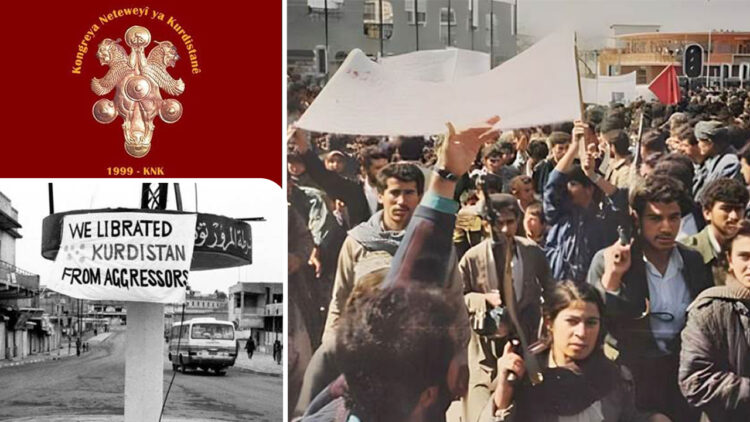
On the 33rd anniversary of the Kurdish Raperîn uprising in the Kurdistan Region of Iraq, the Kurdistan National Congress (KNK) called for unity among all Kurdish political factions to develop a national strategy to counteract the plans and agendas of adversaries.
The historic uprising of 5 March 1991, known as Raperîn in Kurdish and led by various sectors of society, resulted in the swift overthrow of Saddam Hussein’s oppressive regime across the Kurdistan Region of Iraq. This monumental event paved the way for the establishment of the Kurdistan Regional Government and the election of its parliament, fulfilling a long-held dream of self-determination for the Kurds.
Despite these significant milestones, the KNK highlighted that the Kurdish achievements are under increasing threat due to a combination of poor governance, political infighting, foreign interventions and the resurgence of adversarial agendas. In response, the congress underscored the urgency of reinvigorating principles that fuelled the 1991 uprising, notably national unity and the cessation of political and partisan divisions. KNK stated that the Kurdish political experience can be revitalised by fostering an environment conducive to freedom, democracy and transparent elections.
The KNK’s statement also extended an appeal to all Kurdish political groups to engage in collaborative dialogue, aimed at developing a cohesive national strategy. This strategy, according to the KNK, would not only confront current challenges but also ensure the protection and advancement of the Kurdish people’s rights and achievements. The congress stressed that such unity and strategic planning are essential for repelling the schemes of external enemies and achieving a stable and prosperous future for the region.
5 March 1991 Kurdish Uprising
On 5 March 1991, a significant chapter in the history of the Kurdistan Region and its struggle for autonomy unfolded. This date marks the beginning of a widespread uprising against Saddam Hussein’s former Iraqi regime, a movement that forever altered the political and social fabric of the Kurdish region. Sparked by years of repression, the revolt started in Rania, quickly spreading throughout Kurdistan and effectively ending Iraqi military presence by October of the same year.
The aftermath of the uprising saw the emergence of the first parliament in the Kurdish region following free elections in May 1992, marking a pivotal moment in Kurdistan’s pursuit of democratic governance. In recognition of its significance, 5 March was declared an official holiday by the Kurdistan Regional Government, serving as a day of remembrance and honour for those who participated in the uprising.
Amid commemorating the 33rd anniversary of the Kurdish uprising, the KRI faces ongoing political turmoil, with parliamentary elections postponed to June 2024. This adds to the strain of having no functioning legislative body and deepens existing tensions, particularly critiqued towards the Kurdistan Democratic Party (KDP), which wields significant political power. Alongside this, concerns over wide-spread corruption and press freedom violations by the KDP-led KRG accentuate the challenges within the KRI.


