As the autonomous region in North and East Syria, Rojava, prepares to mark International Women’s Day on 8 March, a celebration of resistance and liberation, Kurdish women continue to defend their homeland against intensified Turkish military operations.
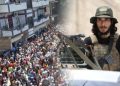
A recent ARTE TV report, aired on 1 March, reveals the escalating attacks by Turkey and its allied militias. Airstrikes and shelling have targeted key infrastructure and residential areas, killing civilians and injuring scores. The Tishreen (Tişrîn) Dam, a strategic lifeline for northern Syria, has come under heavy fire.
"The Turkish bombers attack our people, our mothers, our children," a Kurdish fighter told ARTE. "We cannot stay idle."
Women are not only on the front lines as combatants but also as activists fighting to safeguard their rights in the region’s democratic system. Rojava’s model of gender equality—where women hold leadership roles in governance and the military—stands in stark contrast to the patriarchal forces opposing them. Their struggle extends beyond the battlefield, as they push for a future where Syria’s constitution enshrines women’s rights.
Journalists reporting from the region have also become targets of Turkish aggression.
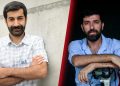
Since early December, at least three journalists—including Nazım Daştan and Cîhan Bîlgîn—have been killed while reporting from the Tishreen Dam. Their deaths highlight the increasing dangers faced by those exposing the realities of the conflict.

The ideological foundation of this movement is deeply connected to Abdullah Öcalan, the imprisoned Kurdish leader whose image can be seen elsewhere in the region. Öcalan has theoretically and practically developed the women’s liberation paradigm, known as Jîneology, and its organisations that empower women across Rojava and beyond.
"The Turks threaten me because I am a journalist and a Kurdish woman," one reporter stated in the documentary. "But that only makes me more determined. I will never stop telling the truth."
Mass demonstrations in Rojava are reaffirming this commitment. In the lead-up to 8 March, thousands have taken to the streets, declaring the occasion not just a day of celebration but a festival of women’s liberation from patriarchy.
In late November, Ahmed al-Shaara (Abu Mohammad al-Julani) and his Hay’at Tahrir al-Sham (HTS) forces launched a storming offensive that ultimately led to the downfall of Bashar al-Assad’s regime, ending more than half a century of rule. Now leading an interim government, HTS has encountered fierce resistance from various communities, including the Kurds, Druze, Alawites, and other groups advocating for an inclusive, decentralised, and democratic Syria. While these communities push for a governance model based on pluralism and self-administration, HTS remains firm in its jihadist-rooted vision of a centralised Islamic state, exacerbating tensions across the war-torn country.
The ARTE TV report sheds light on the broader context of the conflict. ARTE, short for Association Relative à la Télévision Européenne, is a European public service channel dedicated to culture and investigative journalism. Founded as a joint Franco-German venture in 1992, ARTE is headquartered in Strasbourg, France, with editorial operations split between Paris and Baden-Baden, Germany. It produces and airs documentaries, reports, and cultural programming, offering multilingual subtitles to reach a global audience.
As the situation intensifies, the resistance in Rojava remains unbroken. The full 25-minute ARTE TV report offers a deeper look into the crisis and the resilience of Kurdish women. Watch it here: