

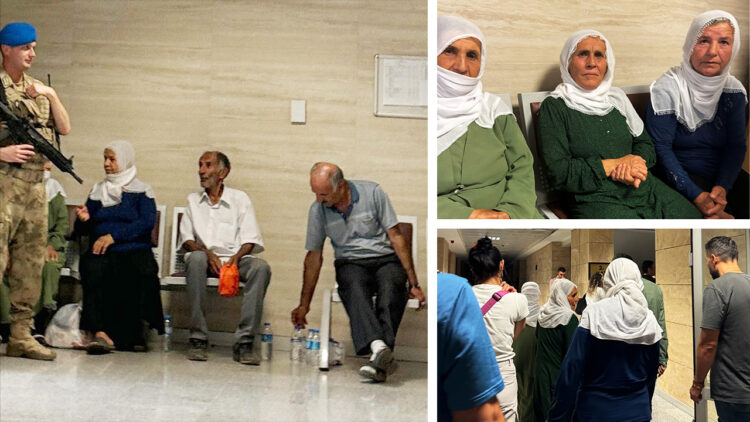
Nine Kurdish villagers, including several with serious health conditions, have been sent to prison in Batman (Êlih), Turkey, following a controversial legal process. The detainees, aged between 50 and 60, were initially released on conditional bail, but the prosecution appealed and they were jailed on Sunday.
The arrests stem from a military operation launched on 22 June in Dereiçi (Bilêxşê) village, which later extended to the Bayındırlık neighbourhood in Kurdish-majority Batman province, southeast Turkey, on 6 July. Fourteen individuals were initially arrested and released on conditional bail. However, the prosecution appealed on 13 July, leading to the detention of 11 villagers pending court interrogation.
Five of the nine individuals sent to prison had to take bags of medication with them due to their chronic illnesses. Among them was 68-year-old Yusuf Bölek, who suffers from severe health conditions including visual and gastrointestinal problems. His son, Diyadin Bölek, stated, “My father can barely sit up on his own and spends half his day in bed. He went to prison carrying a bag full of medicines.”
Defence lawyer Dorşin Şıkgenç raised concerns about the health of the detainees, noting that one, Emine Kaya, has a 70% disability rating, while others suffer from various chronic illnesses. “These individuals cannot take care of themselves in prison,” she said.
Serfiraz Azad, another defence lawyer, provided a detailed account of the legal process on social media, highlighting numerous irregularities. He described how legal access was initially hindered and criticised the prosecution’s approach, saying, “The prosecutor referred all clients for detention and judicial control without even taking statements from them.”
Azad also expressed frustration with the restricted case files: “After we had submitted a blind defence due to restrictions on the case file, the duty magistrate released our clients under judicial control and with a travel ban,” he tweeted.
The lawyer concluded his tweet with a stark summary: “In short, our clients, including the village headman and 71% disabled Emine, who can barely walk, were detained after interrogation and sent to prison. What happened is a general summary of the suffering of Kurds in Turkey.”
Family members and legal representatives have criticised the arrests, citing the lack of substantial evidence. They argue that the charges are based solely on testimonies and that the decision to detain the villagers seems to have been influenced by pressure to validate the security operation.
Şıkgenç announced plans to appeal the remand decision and seek bail for the detainees.
In a related incident, Mustafa Yaşar, a 68% disabled individual, was detained in Istanbul for certain social media posts and sentenced to 1 year, 6 months and 22 days in Metris Prison. Yaşar, who participated in hunger strikes during his imprisonment in the 1990s and suffers from Wernicke-Korsakoff syndrome, was convicted of “propaganda for a terror organisation”. His lawyer, Gülizar Tuncer, argued that he had put up the posts in remembrance of deceased activists and old friends from prison.


