

Kurdish politicians and community leaders in Kurdish-majority city of Cizre (Cizîr), southeast Turkey, gathered on Friday to mark the anniversary of the massacre in 2015 via a military operation that killed 177 civilians. The memorial event aimed to draw attention to the events of that year and demand an official investigation into the deaths.
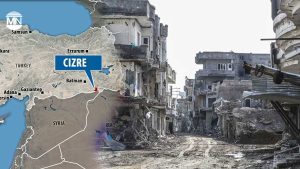
The 79-day military blockade of Cizre in 2015 left many civilians trapped in their homes and basements without access to food, water or medical aid. The bodies of 177 victims were later discovered in the city’s basements, raising questions about the conduct of the security forces during the operation.
At the event, Ayşegül Doğan, spokesperson for the Peoples’ Equality and Democracy (DEM) Party, called for accountability for the deaths.
She urged the Turkish government to acknowledge the events and allow for an independent investigation.
"Kurds have suffered enough. We need to know the truth about what happened in Cizre," Doğan said.
The blockade, part of a larger military operation in the predominantly Kurdish region of southeastern Turkey, has been heavily criticised for its impact on civilians. In addition to the loss of life, the operation caused extensive damage to the city, displacing many residents.
Öztürk Türkdoğan, Vice Co-Chair of the DEM Party, addressed the need for reconciliation and truth. “The Kurdish issue will only be resolved when we confront the past and allow for a thorough investigation into the events that have shaped our communities,” he stated.
The call for a peaceful resolution was also a key theme at the memorial, with many politicians urging the Turkish government to consider the role of imprisoned Kurdish leader Abdullah Öcalan in the peace process. Doğan emphasised the importance of supporting Öcalan’s efforts to facilitate dialogue and reconciliation between Kurdish and Turkish communities.
In Cizre, during the 2015-2016 curfew and military operations, the local population faced unimaginable brutality. The city had been subjected to bombings, tank assaults and sniper fire, trapping civilians without access to water, food or medical aid. The international community largely ignored the situation while pro-government media outlets dismissed the claims as lies.
At the time, Derya Koç, a former Peoples’ Democratic Party (HDP) district head, reported from a basement in Cizre, where she and others had taken refuge. Her distressing account described the deaths of her fellow survivors, and how the military’s tactics included targeting those attempting to rescue the wounded.
Related Articles
Families continue fight for justice for relatives killed in Cizre massacre

Cizre victims apply to ECHR as Turkey’s Constitutional Court denies rights violations
When the military operations ended, the survivors returned to find their city in ruins. Entire neighbourhoods were destroyed, and many had lost their homes and loved ones.
Cizre’s history of violence and repression dates back decades. The trauma faced by its people, from the 1990s through the recent operations, shaped a generation marked by loss, fear and a constant struggle for survival. The youth, who fought in the streets and constructed barricades, were descendants of those who suffered in earlier years, carrying the weight of past atrocities with them.


