

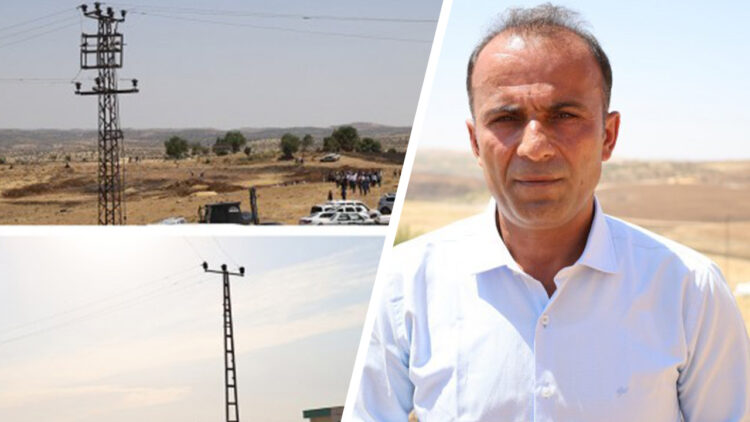
Hamdin Demir, the mayor of Mazıdağı (Şemrex) who lost 10 relatives in the fire that swept through rural areas in the Kurdish-majority Mardin (Mêrdîn) and Diyarbakır (Amed) provinces of Turkey, has blamed the state-run electricity company DEDAŞ and government policies for exacerbating the disaster.
On 20 June, a devastating fire swept through rural communities spanning Mardin’s Mazıdağı and Diyarbakır’s Çınar (Xana Axpar) districts, claiming 14 lives and injuring 78 others. The blaze engulfed large areas between the two districts, leaving behind widespread devastation and prompting an outcry from affected Kurdish residents.
Mayor Demir, affiliated with the pro-Kurdish Peoples’ Equality and Democracy (DEM) Party, has accused both the state-run electricity distribution company DEDAŞ and government agricultural policies for exacerbating the catastrophe. Speaking amidst the sombre aftermath, Demir stated, “DEDAŞ is a major problem here”, alleging the company’s negligence in maintaining electrical infrastructure and its adverse impact on local agriculture.
DEM Party Co-Chair Tülay Hatimoğulları weighed in on the situation, calling for immediate action: “This area must urgently be declared a disaster zone, with priority given to alleviating the suffering. According to preliminary reports and eyewitnesses, this was not a stubble fire; the judiciary must heed this.”
In response to allegations, DEDAŞ issued a statement denying responsibility for the fire’s ignition, attributing the blame to traditional agricultural practices despite visual evidence suggesting otherwise. Eyewitness accounts contradict DEDAŞ’s assertion that the fire did not originate from its electrical transmission lines. Visual evidence from the fire-stricken areas shows charred electrical poles and equipment, challenging the company’s claims of non-involvement. This discrepancy has intensified public scrutiny and calls for transparency in the investigation into the fire’s cause.
The response efforts have also come under scrutiny, with Demir criticising the delayed intervention from provincial and national authorities. “The governorate and disaster agency intervened only when the fire was near extinguishment,” Demir lamented, highlighting the chaos and desperation faced by local residents during the crisis.
Demir criticised the government’s poor agricultural policies that compel farmers to burn stubble, contributing to the fire risk. “There is no agricultural policy here. If there were, people wouldn’t feel the need to burn stubble,” he asserted, urging the government to focus on urgent reforms to prevent such tragedies in the future rather than blaming the already stressed local Kurdish farmers.


