

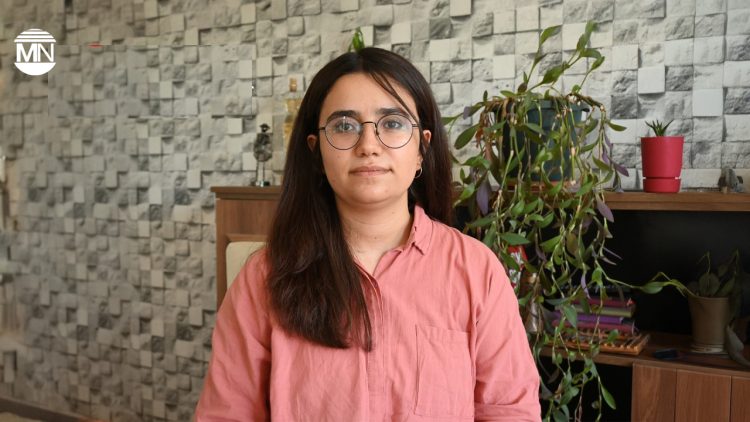
Zeynep Karayılan, Co-Chair of the Lawyers for Freedom Association (ÖHD) in Diyarbakır (Amed), has called on Turkey to implement European human rights rulings by reforming its penal laws and ending the prolonged isolation of jailed Kurdish leader Abdullah Öcalan. In an interview with Mezopotamya Agency’s Rukiye Payiz Adıgüzel on Friday, Karayılan said that Öcalan’s release and the recognition of the “right to hope” for prisoners on life sentences were essential steps towards a democratic solution to the Kurdish issue.
In a 2014 ruling, the European Court of Human Rights (ECtHR) found that the aggravated life sentence given to Abdullah Öcalan without possibility of parole violated Article 3 of the European Convention on Human Rights, which prohibits torture. The court called on Turkey to amend its laws to correct this violation.
However, Turkey has not yet implemented the required legal changes. As a result, various human rights organisations submitted complaints to the Council of Europe’s Committee of Ministers, which in turn gave Turkey a deadline of September 2025 to act.
Karayılan warned that no concrete steps have been taken on the matter of “the right to hope”, despite it being one of the most pressing legal and political issues since the Kurdish conflict entered a new phase of dialogue.
“Turkey must revise its penal code to allow conditional release for those serving aggravated life sentences, including Mr Öcalan,” she said. “These reforms are not only necessary to end a legal violation, but also crucial to restarting meaningful negotiations.”
Karayılan stated that although Öcalan had a brief meeting with his nephew, pro-Kurdish Peoples’ Equality and Democracy (DEM) Party MP Ömer Öcalan, in October 2024, he effectively continues to be held in isolation. “He is still not allowed regular contact with his family or lawyers. This is not a recent policy—he has been held in isolation since 1999,” she said.
She argued that ending Öcalan’s isolation and granting him freedom of movement are necessary steps towards him playing a meaningful role in the peace process. “His call on 27 February led to the PKK ending its operations; it is now the state’s turn to act,” she said.
Karayılan explained that implementing the “right to hope” would not only affect Öcalan but also thousands of other prisoners serving similar sentences. “Just as isolation started in İmralı and spread out across the country, so change must also begin there,” she said. “This would also open the door to the release of severely ill prisoners.”
To enable these changes, she called for amendments to Turkey’s Law of Execution of Sentences and its Anti-Terror Law.
“Parliament is the place for resolution,” she added, urging the establishment of a parliamentary commission on the Kurdish issue. “Civil society, political parties and bar associations must all take responsibility. We need a collective struggle to push for peace.”
Karayılan concluded that the state must now take legal and transparent steps: “Until now, all moves have come from Mr Öcalan and the PKK. If we want a peaceful and democratic solution, the legal path must now be opened by the state.”


