

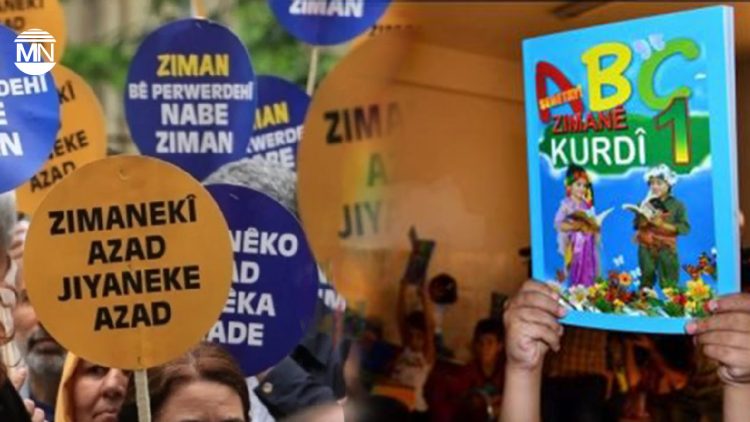
Only one in five Kurdish children under the age of 11 in Turkey can fluently speak their native language, according to a recent study by the Socio-Political Field Research Centre (SAMER). The survey, conducted in 22 cities between 28 January and 11 February, reveals a sharp decline in Kurdish language use among younger generations, raising concerns about the future of the language.
The study found that children are increasingly less likely to speak Kurdish, and the number of those who don’t speak it at all is rising. Yüksel Genç, SAMER’s coordinator, explained that Kurdish is increasingly being reduced to a cultural artefact rather than a living language. “Many children not only struggle to speak Kurdish but also do not understand it,” she stated.
Related Articles
Overwhelming support for mother tongue education in Turkey, survey revealsOn International Mother Language Day, Kurds advocate for linguistic freedom for all in Turkey
The research highlights that this decline is not exclusive to Kurdish but affects other minority languages in Turkey, such as Armenian, Syriac, Pontic Greek and Circassian. The absence of legal recognition and educational support has placed these languages under severe threat.
SAMER’s findings also indicate that Kurdish speakers face systemic discrimination, particularly in public institutions such as schools and hospitals. Over 70% of respondents reported experiencing linguistic discrimination in official settings, further discouraging the use of Kurdish in daily life.
The study attributes this crisis to decades of assimilation policies and restrictions on the Kurdish language in education and public life. Despite widespread demand for mother tongue education, the lack of institutional support means younger generations are less likely to maintain fluency.
Genç emphasised the urgent need for policy changes, stating that without concrete legal and social measures, Kurdish and other minority languages risk becoming merely folkloric elements rather than vibrant, spoken languages. “A society that forgets its language also loses its cultural and historical roots,” she warned.


