

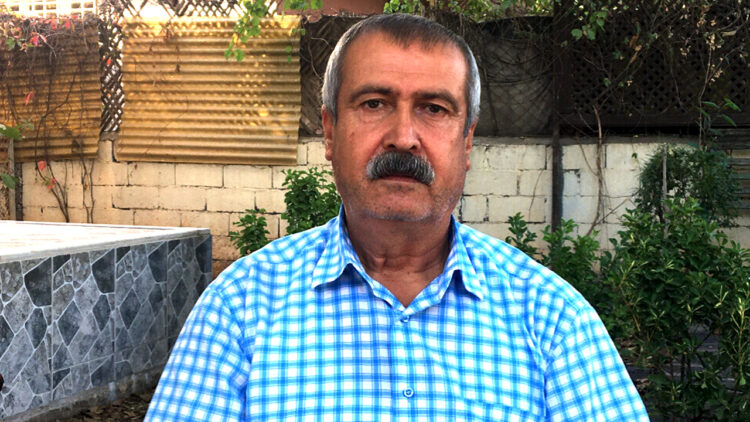
Rıfat Ronî, a prominent Kurdish language educator and former co-chair of the Mezopotamya Language and Cultural Research Association (MED-DER), faces serious charges in Turkey, accused of promoting Kurdish language education and supporting cultural activities that allegedly contravene Turkish educational laws.
Turkish authorities allege that Ronî, by working with MED-DER, was attempting to build an alternative education network that threatens Turkey’s language policies, which restrict official education to Turkish.
Ronî’s indictment, accepted by Diyarbakır’s (Amed) Fifth Heavy Penal Court, accuses him of overseeing activities in Kurdish that, according to the authorities, present an unauthorised alternative to Turkey’s national education system. “Education in languages other than Turkish is not permitted,” reads the indictment, which frames the organisation’s Kurdish language programmes as a subversive alternative to official state education. Ronî’s trial is set for 17 December.
The case against Ronî reportedly hinges on the testimonies of informants, including one witness with a record of inaccuracies in previous cases. Authorities have drawn on multiple aspects of his work with MED-DER, including interviews supporting Kurdish language rights, educational activities, and cultural events that they classify as supporting the banned Kurdistan Workers’ Party (PKK).
Evidence cited in the indictment includes Ronî’s interactions with Kurdish cultural organisations, such as meetings with Kurdish rights advocate Abdulgani Alkan and his organisation of events celebrating Kurdish figures like poet Cegerxwîn. Turkish prosecutors describe these activities as “legal-looking illegal activities,” though no specific evidence of criminal conduct is detailed in the indictment.
The case highlights Turkey’s contentious policies surrounding Kurdish language rights. Kurdish, though spoken widely in southeastern Turkey, is not permitted as a language of instruction in public schools, limiting educational and cultural rights for Kurdish speakers. MED-DER, an advocacy group based in the predominantly Kurdish city of Diyarbakır (Amed in Kurdish), was established to promote Kurdish language and culture, providing Kurdish language courses and working to preserve the language’s place in regional heritage. Authorities have frequently targeted MED-DER and similar organisations, viewing them as a threat to national unity.
The charges against Ronî also include his affiliations with the Peoples’ Democratic Congress (HDK), a platform that brings together leftist and pro-Kurdish groups across Turkey. Prosecutors have controversially described HDK as a “terrorist organisation”, highlighting Ronî’s alleged links to the group and treating his digital communications with HDK affiliates as evidence.


