

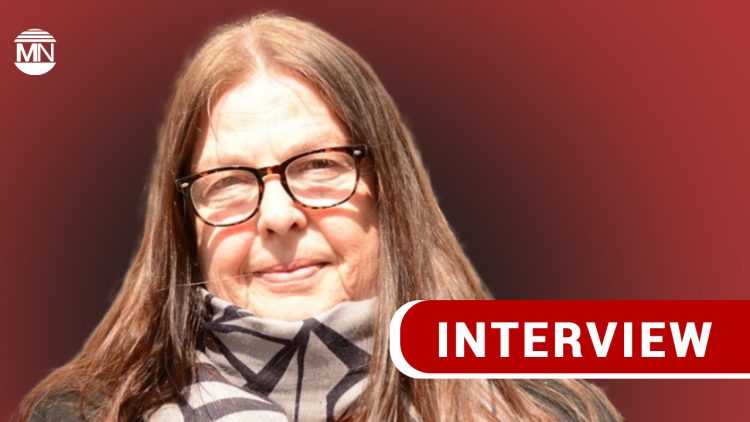
Norwegian academic Prof Kariane Westrheim commented on the recent decision of the Kurdistan Workers’ Party (PKK) to dissolve itself and end its armed struggle, while also reflecting on her experience of meeting and spending time with PKK guerrillas in the early 2000s, in an interview with the female-run news outlet Jinha.
Westrheim, professor emerita in the Department of Education at the University of Bergen, is also chair of the EU Turkey Civic Commission (EUTCC). She has long advocated for Kurdish rights and has worked extensively on human rights, peace processes and education in conflict zones.
Commenting on the PKK’s decision to dissolve itself following Kurdish leader Abdullah Öcalan’s ‘Call for Peace and Democratic Society’ of 27 February 2025, Westrheim says she assumes the move was met with strong reactions, such as “disbelief and probably also despair”, explaining that for many Kurdish people, the PKK had become a “lifeline – the safe card to keep the enemy at bay”.
She remarks that the step should be regarded as a historic advance towards a peaceful solution to the Kurdish question in Turkey – a “critical opening, not a conclusion” – and a potential move towards democratisation. She stresses, however, that the “real impact” of the decision will depend on the response of the Turkish state.
“Disarmament removes a major barrier to open dialogue and may help shift public perception, allowing the Kurdish question to be addressed not as a security threat, but as a political, cultural and historical issue demanding democratic solutions,” Westrheim says, though she remains sceptical as to whether the Turkish government will respond positively.
When asked about the regional consequences of the PKK’s move, she points to the transnational nature of the Kurdish question, noting that Kurdistan is divided across Syria, Iran, Iraq and Turkey. A change in the methods of struggle will therefore affect all four states. Highlighting the distinctive model established by the Kurds in Syria – a system based on ethnic and religious diversity, gender liberation and democratic principles – she warns that “all of this is at risk if Turkey is not reined in and other powers do not intervene”.
As an education specialist, she stresses the importance of intercultural education, language rights and inclusive curricula that recognise diverse identities as essential components of sustainable peace.
She calls on international institutions to support peace negotiations in Turkey, warning that this support must not be dictated by geopolitical agendas. “Peacebuilding requires long-term commitment, not short-term strategic calculations,” she says.
Westrheim also recounts a visit she paid to PKK guerrillas in the mountains of northern Iraq in the early 2000s. She describes the warm reception she received and expresses admiration for the fighters who have withstood harsh living conditions and continuous Turkish military operations for years.
She recalls her time among the female guerrillas, noting that she was impressed by their commitment to learning, self-liberation and sharing their ideas with others. She says she was included in many discussions, which had a profound personal effect on her, and explains that during her time in the mountains, she came to understand why the PKK describes itself as an “educational revolution”.
“This feeling of solidarity and fighting spirit – not only among the guerrillas but across the movement – has left an indelible mark on me,” she says, adding that it feels “bittersweet” to acknowledge that the historical era of the PKK has ended and will now be followed by “something else – the nature of which is still unclear”.


