

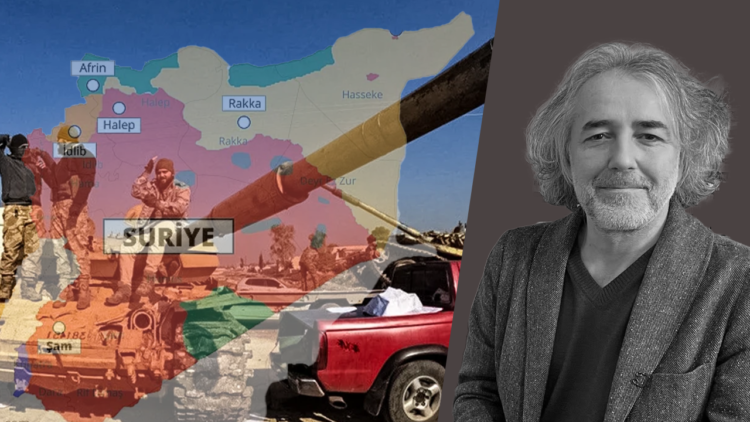
Journalist Fehim Taştekin, writing for Turkish news platform Gazete Duvar, provides a nuanced critique of Turkey’s evolving strategy in Syria, focusing on Hay’at Tahrir al-Sham’s (HTS) territorial ambitions and their implications for regional dynamics and Kurdish communities. Turkey’s backing of the Syrian National Army (SNA) and other factions aims to consolidate its influence in northern Syria, but tensions between HTS, SNA, and Kurdish forces reveal deeper contradictions and challenges.
Taştekin highlights the precarious situation in Sheikh Maqsoud (Şêx Meqsûd) and Ashrafiyeh (Eşrefiye), two Kurdish neighbourhoods in Aleppo under siege by HTS and its allies. HTS is pursuing a pragmatic approach, moving away from the confrontation with the Kurds in Aleppo while focusing its resources on capturing Hama. Their long-term ambitions reportedly include advancing toward Homs and Damascus, conserving their forces, and avoiding actions that could provoke direct international backlash.
HTS’s ideological roots, stemming from al-Qaeda and ISIS, exacerbate concerns over their expansion. Taştekin points to HTS leader Abu Mohammad al-Julani’s background as a former ISIS member, illustrating the enduring extremist threat posed by the group. Despite their claims of moderation, HTS’s actions demonstrate their willingness to assert dominance over rival factions and local populations alike.
Turkey’s strategy of leveraging its support for the SNA to reshape northern Syria faces significant hurdles. HTS has clashed with SNA commanders, detained some, and demands control over key territories, highlighting the tensions between these Turkish-backed factions and the independently motivated HTS. These internal conflicts expose the fragile alliances and competing agendas within the anti-Assad coalition.
The Kurdish neighbourhoods of Sheikh Maqsoud and Ashrafiyeh become emblematic of the broader conflict’s complexity. Local Kurdish forces, including the Sheikh Maqsoud Defence Forces, are mobilising to defend their areas. Meanwhile, the civilian population in these neighbourhoods suffers under siege conditions, with reports of restricted access to food, water, and other essentials. This blockade appears to be part of a broader strategy to pressure Kurdish communities.
International dynamics further complicate the situation. The United States, while allied with the Kurdish-led Syrian Democratic Forces (SDF), balances its support for Kurdish forces with broader regional considerations. Meanwhile, Russia’s continued backing of the Assad regime and military operations in Syria adds another dimension to the unfolding crisis. Taştekin notes that the ongoing struggles in Sheikh Maqsoud and Ashrafiyeh reflect the broader geopolitical tensions shaping Syria’s future.
In his analysis, Taştekin underscores the contradictions inherent in Turkey’s Syria policy. While seeking to expand its influence, Turkey faces resistance from both Kurdish forces and the independent agendas of groups like HTS. The resistance of Kurdish communities and the competing interests of international powers highlight the complexities of the conflict, leaving the region in a state of fragile uncertainty.


