

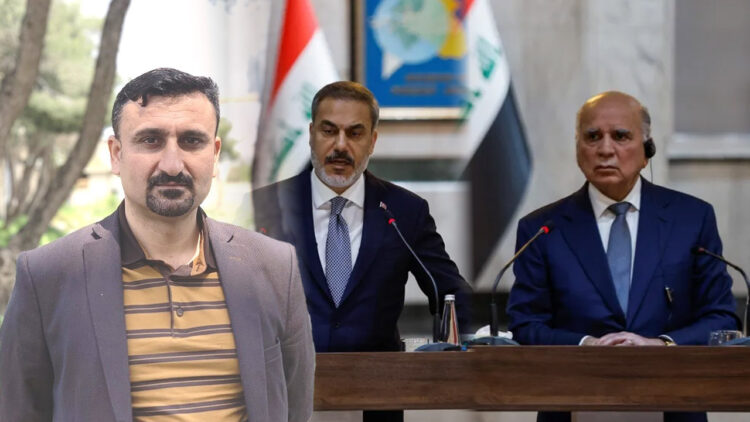
A recently signed security pact between Iraq and Turkey has ignited widespread fears regarding Ankara’s intentions in northern Iraq, with concerns growing over Turkey’s expanding military presence and potential ambitions to annex parts of the region.
The memorandum of understanding (MoU), centred on military, security, and counter-terrorism cooperation, follows years of tension between the two nations over Turkey’s military operations against the Kurdistan Workers’ Party (PKK). The PKK, labelled a terrorist organisation by Turkey, the United States, and the European Union, has long operated from bases in northern Iraq, leading to frequent Turkish incursions.
While the agreement is touted by both governments as a milestone in improving bilateral relations, critics argue that it could lead to increased Turkish influence and even the potential annexation of key areas. According to a report by Dana Taib Menmy for The New Arab on Monday, the lack of clear terms for Turkey’s withdrawal from Iraqi territories has raised alarm among Iraqi political observers and Kurdish leaders.
Abdul Ghani Ghazban, an Iraqi political observer, highlighted the absence of withdrawal conditions in the MoU, describing it as a significant risk that could lead to further Turkish incursions, particularly near Nineveh province. “Turkey’s military incursion was supposed to be limited, but it now extends nearly 40 kilometres, with permanent bases and checkpoints,” Ghazban told The New Arab.
The inclusion of the Bashiqa camp as a joint training base under the MoU has further complicated the situation. Ghazban and others view this as part of a broader strategy by Turkey to maintain and possibly expand its military footprint in Iraq. The recent suspected Turkish drone strike that killed two Kurdish journalists in Sulaymaniyah has only intensified these fears, with many viewing it as an indication of Turkey’s willingness to assert its influence by any means necessary.
The incident has sparked protests in Iraq’s Kurdish region and condemnation from international rights groups, who have called for an investigation into whether the journalists were targeted for their work. The Committee to Protect Journalists (CPJ) has classified the attack as a potential war crime, demanding accountability from Ankara.
Peyman Ezedîn, a former MP for the Kurdistan Region of Iraq (KRI), warned that the security pact could deepen divisions within Iraq. Ezedîn told The New Arab that the pact might undermine the authority of Iraqi courts and laws.
The potential for Turkey’s prolonged military presence in Iraq, coupled with these latest developments, has led to concerns about a strategic annexation, particularly in resource-rich areas like Mosul, Kirkuk, and Duhok. These regions are not only of strategic importance but also economically valuable due to their oil reserves, making them attractive targets for Ankara.
As Iraq navigates its complex relationship with Turkey, the broader implications of this security pact will likely reverberate across the region. The ambiguity surrounding Turkey’s military presence and the recent escalation in northern Iraq have raised serious questions about Iraq’s sovereignty and its ability to manage relations with its powerful neighbour.
The analysis by Dana Taib Menmy underscores the high stakes involved, as Iraq now faces the challenge of balancing its security cooperation with Turkey against the need to protect its territorial integrity and sovereignty. The coming months will be critical in determining the future of Iraq-Turkey relations and the stability of the region as a whole.


