

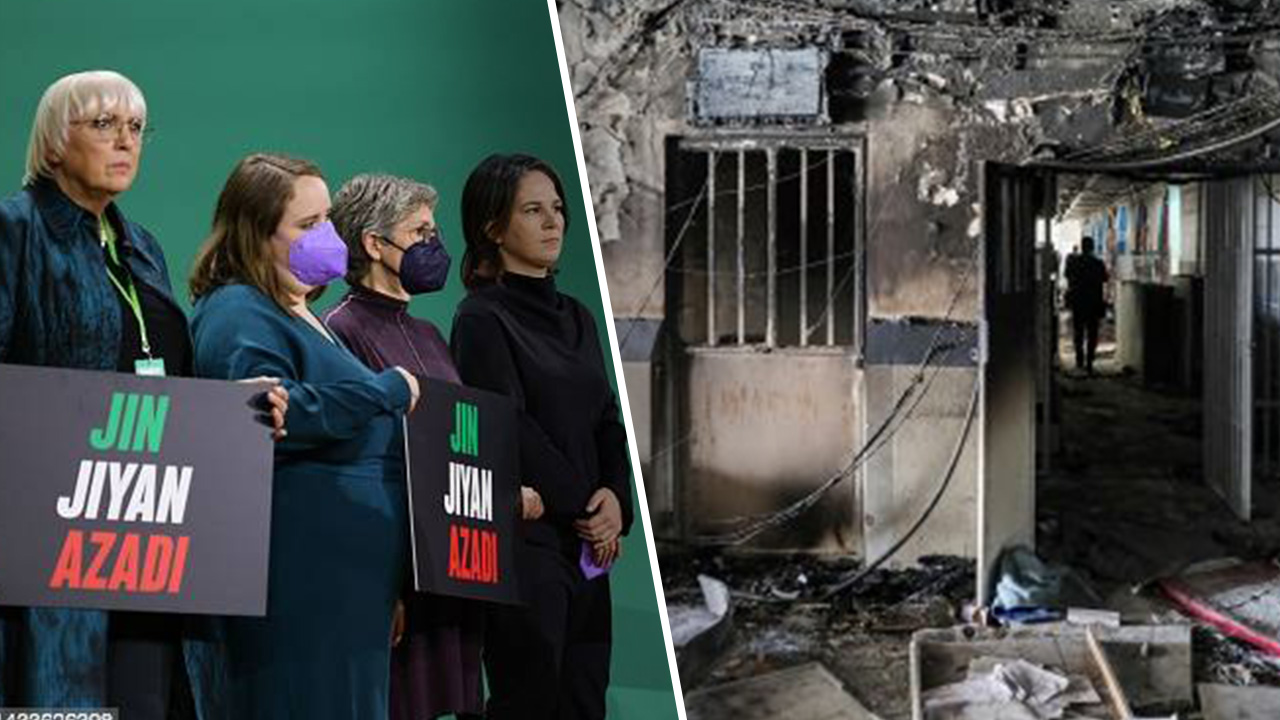
The death toll of a fire that broke out in Tehran’s notorious Evin prison on Saturday rose to at least eight prisoners, according to reports from the embattled Iranian authorities as nationwide anti-government protests continue.
As images of the fire circulated on Saturday night, reports emerged of special forces being deployed to the prison amid sounds of gunfire. Details have remained murky about the events of the night, and international observers have called for urgent action by the UN to determine the facts and safeguard inmates, many of whom are political prisoners.
The initial accounts from the night, published on the Iranian judiciary’s news site, said four inmates had died and 61 had been injured in a blaze at the prison. On Monday, the judiciary raised the death toll to eight, saying four more prisoners had succumbed to their injuries.
But the Norway-based Iran Human Rights organisation said it had received information that special forces “were deployed to incite prisoners and set the grounds for a crackdown” and “some political and ordinary crime prisoners were beaten with batons”.
“It’s more necessary than ever to establish an independent mechanism under the supervision of the United Nations to investigate the killing of protesters and events at Evin and other prisons, and prosecute the perpetrators,” said the NGO’s director, Mahmood Amiry-Moghaddam.
The Iranian government has sought to distance the events at Evin prison from the wider protests across Iran. Reports from state-run media said prisoners had rioted in one ward and set fire to a warehouse holding prison uniforms.
But Iran Human Rights noted the Islamic Republic’s “long history of concealing facts and … mass prison killings”, referring to incidents including the mass executions of thousands of political prisoners in 1988.
And, on 9 October, at least six prisoners at the Rasht Central Prison in the northern Gilan province were reportedly killed by prison guards after protests broke out at the prison, said Iran Human Rights.
As details remain scarce about the events in the prisons, the NGO called for “the international community to urgently establish an international mechanism under the supervision of the United Nations.”
Amnesty International Secretary General Agnes Callamard also called for such a mechanism in a tweet on Sunday, saying a special session of the UN Human Rights Council should be convened to launch an investigation into the Iranian government’s human rights abuses.
German Foreign Minister Annalena Baerbock was among the international politicians whose statements mirrored the calls for accountability. Baerbock tweeted that the Iranian government was responsible for inmates in its prisons and said the German embassy had been in close contact with Iranian authorities over the Evin fire.
Baerbock’s Green Party’s also sent a message of solidarity to the women protesters in Iran from the party’s congress, where politicians took the stage carrying placards with the Kurdish slogan, “Jin, Jîyan, Azadî” (Woman, Life, Freedom), that has become central to the anti-government protests.
Meanwhile, the Iranian-Kurdish Hengaw Human Rights Organisation called on international countries to deprive the Iranian government of a key path past sanctions by expelling the Islamic Republic’s diplomats.
The death of 22-year-old Jîna (Mahsa) Amini on 16 September, days after she was beaten by Iran’s morality police over a dress code infraction, sparked nationwide protests that have entered their fifth week.


