

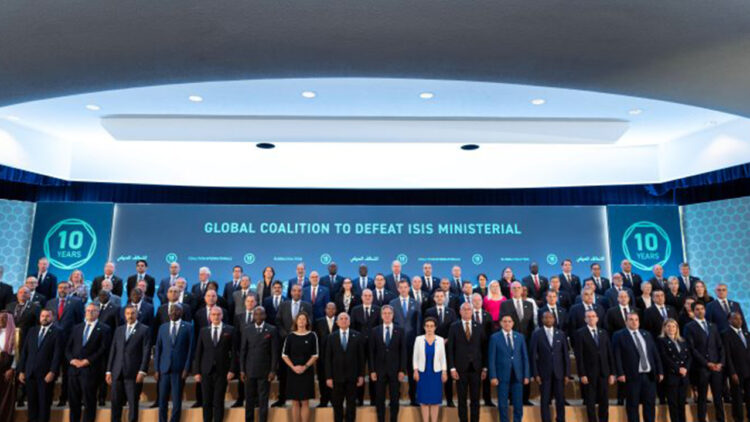
The ministers of the Global Coalition to Defeat ISIS issued a statement on 1 October, reaffirming support for stabilisation efforts in Iraq and Syria, but lacking a clear plan for continuing the fight against the terrorist militant organisation or empowering communities impacted by mercenary control, particularly in Syria and Iraq. It also failed to address Turkey’s alleged support for ISIS mercenaries.
The Coalition held a Ministerial Meeting in Washington on 30 September, reaffirming its commitment to Iraq and Syria in the ongoing battle against ISIS. The ministers outlined plans to raise $394 million for stabilisation efforts in liberated areas of Iraq and Syria, with members already committing over $200 million. “Ministers commend Iraq’s continuing cooperation in countering Daesh/ISIS in the region, and its leadership in broader Coalition lines of effort, including stabilisation and prevention of recruitment,” read the joint communiqué.
In addition to financial commitments, the ministers emphasised the importance of reintegrating displaced populations and ensuring accountability for crimes committed by ISIS, including gender-based violence. However, some critics have pointed out that the coalition’s strategy lacks attention to the alleged involvement of certain external actors, such as Turkey, in supporting the terrorist organisation’s mercenary groups. This omission, they argue, could affect long-term security in the region if not addressed.
While the coalition remains focused on countering ISIS globally, including in parts of Africa and Central Asia, the absence of a clear stance on such concerns leaves open questions about the effectiveness of its overall approach. Despite the coalition’s progress in rebuilding and stabilising Iraq and Syria, observers warn that ignoring all potential sources of destabilisation may undermine efforts to prevent a resurgence of ISIS.


