

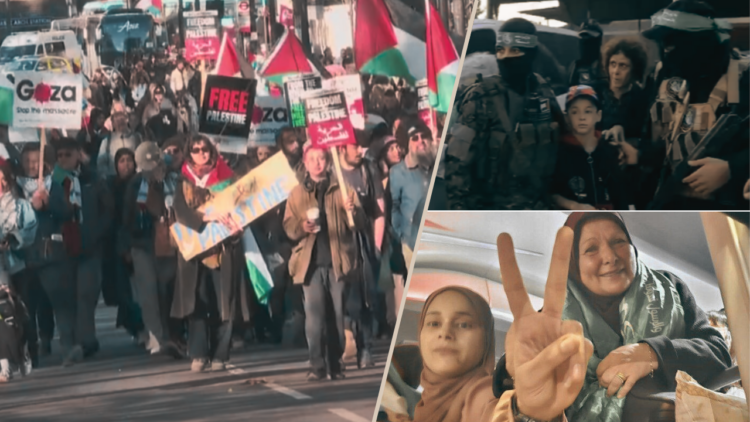
In accordance with a four-day temporary ceasefire between Israel and Hamas, the first group of hostages was released on Friday. The group included 13 Israelis, 10 Thais and one Filipino.
The Israelis released by Hamas included very young children and elderly women, who returned home safely by early evening.
Meanwhile, as part of the mutual agreement, Israel released 39 Palestinian prisoners on Friday evening. Among the prisoners released were 24 women, some convicted of attempted murder for alleged attacks on Israeli forces, and 15 teenagers jailed for offences such as rock-throwing. Their release was greeted with celebrations in the occupied West Bank.
On the second day of the ceasefire, Hamas is to free 14 Israeli hostages in exchange for 42 Palestinians in Israeli custody in a second ceasefire swap.
Hamas is expected to release at least 50 of the approximately 240 hostages it has held since launching attacks on southern Israel in October, according to the ceasefire agreement. In return, Israel will release at least 150 Palestinian prisoners and allow up to 300 trucks of humanitarian aid into Gaza.
The ceasefire comes after mounting international pressure in the wake of Israel’s offensive on Gaza, which has resulted in the deaths of more than 14,000 Palestinians, thousands of them children.
The World Health Organisation (WHO) has raised concerns about the fate of Mohammad Abu Salmiya, the director of Gaza City’s al-Shifa hospital, who was reportedly detained by Israeli forces over the alleged use of the facility by Hamas.
Meanwhile, pro-Palestinian demonstrators have gathered in various parts of the world to call for a permanent ceasefire in Gaza.
United States President Joe Biden expressed optimism that the ceasefire could be extended, saying the chances were “real”. He insisted that Friday’s release of hostages marked the ‘start of a process’ and pledged unrelenting efforts to ensure the safe return of all remaining hostages in Gaza.
On the first day of the ceasefire, the United Nations agency for Palestinian refugees (UNRWA) successfully unloaded a staggering number of 137 trucks filled with essential goods at their reception point in the Gaza Strip. This is the largest convoy received in Gaza since 7 October. Additionally, 129,000 litres of fuel and four trucks carrying gas were also permitted to enter Gaza.


