

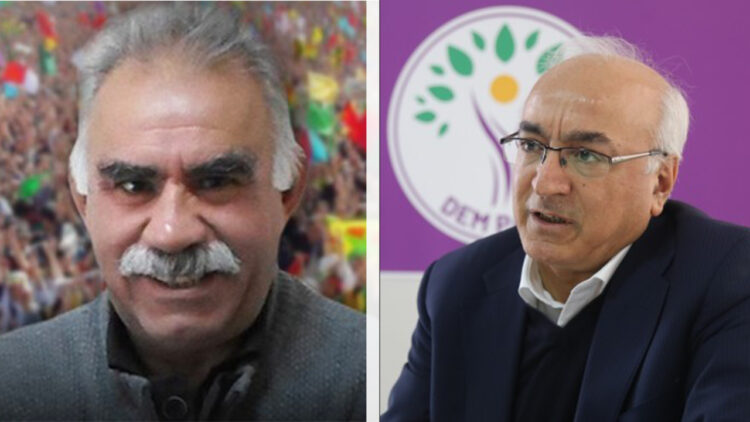
Speaking to Mezopotamya Agency on Tuesday, Öztürk Türkdoğan, formerly of the Committee of Wise Persons, tasked with explaining the ongoing settlement process with the Kurdistan Workers’ Party (PKK) to the public and promoting the negotiations, and now a pro-Kurdish Peoples’ Equality and Democracy (DEM) Party co-mayoral candidate for Ankara, stressed the imperative of resuming peace discussions with the Kurdish community.
He identified this as crucial for Turkey’s recovery from its ongoing turmoil, marking nine years since the inception of the Dolmabahçe Agreement — a significant but unfulfilled venture to resolve the Kurdish question.
Türkdoğan pointed to the government’s withdrawal from the agreement as a missed peace opportunity, stating, “If Turkey genuinely intends to surmount this crisis, it must reconcile with the Kurds and ask, ‘Where did we leave off?'” He lamented the lack of appreciation for the potential of the agreement, especially its symbolic stand against coup processes on the anniversary of its announcement, 28 February.
He highlighted the expanded conflict zones within and beyond Turkey’s borders, including Kurdish regions in Syria, Iraq and Iran, emphasising the humanitarian and financial tolls and the country’s slide towards authoritarianism. Yet, Türkdoğan remains hopeful about the agreement’s relevance and the Kurdish political movement’s consistent stance, advocating for a return to dialogue.
Drawing parallels with global conflict resolutions, such as those in Colombia and Northern Ireland, Türkdoğan underscores the feasibility of peaceful solutions. He calls on the Turkish government to recognise Abdullah Öcalan, the imprisoned leader of the PKK, as a key interlocutor for peace, suggesting that reconciling with the Kurds would not only mend internal strife but also elevate Turkey’s geopolitical stance.
Reflecting on the halt of the 2015 peace process, Türkdoğan’s message is a poignant reminder of the unexplored paths to peace and the critical need for Turkey to reinitiate efforts towards resolving its long-standing Kurdish issue.
The Dolmabahçe Agreement, once heralded as a beacon of hope for peace and reconciliation between the Turkish state and the Kurdish community, remains a testament to the complexities of political negotiations and the challenges of overcoming entrenched conflicts. Türkdoğan’s advocacy for revisiting this agreement illustrates the enduring quest for resolution and the belief in dialogue as the pathway out of crisis. As Turkey grapples with its current challenges, the call to renew peace talks with the Kurds represents not only a step towards resolving a historical issue but also a potential turning point for the country’s future.


