

If current trends continue, plastic pollution will reach 34 billion tonnes by 2050, experts warned on Tuesday during World Environment Day events in Turkey’s western city of İzmir. Environmental scientists, engineers and rights advocates said only a radical shift in scientific and legal frameworks can prevent irreversible ecological collapse.
“Every stage of plastic’s life cycle — from production to alleged recycling — creates pollution,” said environmental engineer Arzu Yücel during a panel discussion at the İzmir Chamber of Architects. “Plastics are not just waste. They are a direct assault on ecosystems and human immunity.”
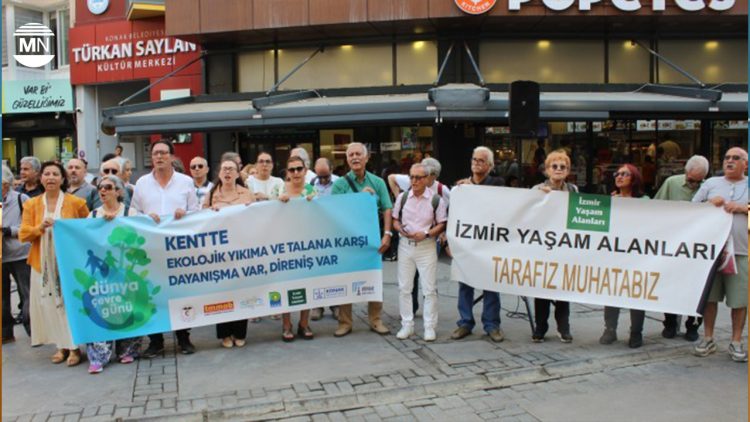
The panel was organised by local ecology groups and city councils under the UN-designated theme: “Beat Plastic Pollution”. The event launched a day of public demonstrations, music and marches in İzmir, where protesters carried signs reading, “Change the system, not the climate”, and, “Don’t touch my air, water and soil”.
Chemist Ertuğrul Barka highlighted alarming production rates: “Every year, the world produces 350–400 million tonnes of plastic waste. Most of it is burned or dumped into nature. By 2050, the total amount could quadruple. In Turkey, plastic waste levels are also rising fast.”
Public health expert Professor Ali Osman Karababa said plastic waste is damaging marine life and threatening global food supplies. “There are currently 171 trillion plastic particles in the oceans. Aquatic species are ingesting them — and so are we. This is a ticking time bomb alongside the climate crisis.”
Lawyer Arif Ali Cangı stressed that legal structures remain inadequate. “There’s no effective international law to reduce plastic production. Existing regulations, like charging for shopping bags, are economic rather than ecological. We need binding legal measures, not market-based solutions,” he said.
The day ended with a rally outside İzmir’s Türkan Saylan Cultural Centre, where İzmir City Councils Union chair Hamit Mumcu warned that “the struggle for the environment is a struggle for life, health, justice and democracy.”
From the Kaz Mountains to Akbelen Forest, Turkey’s ecological resistance is gaining momentum — but campaigners say global action is essential before plastic waste overwhelms the planet.


