

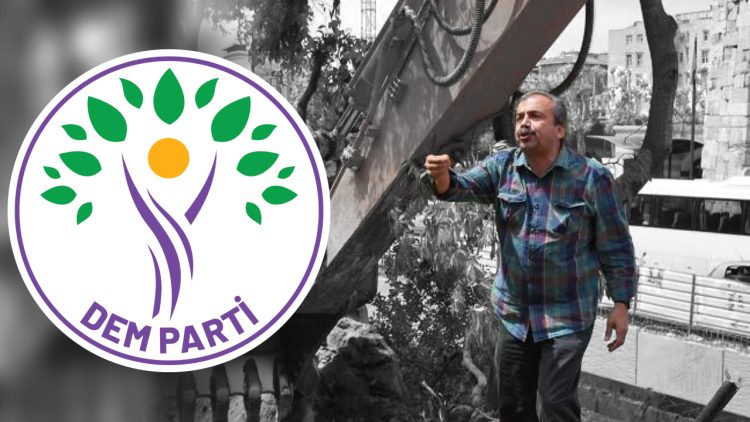
The co-chairs of Turkey’s pro-Kurdish Peoples’ Equality and Democracy (DEM) Party commemorated the 12th anniversary of the Gezi Park protests, a series of demonstrations that began in 2013 in İstanbul’s Gezi Park and evolved into a nationwide movement against government policies. Tülay Hatimoğulları and Tuncer Bakırhan highlighted the protests’ enduring impact on Turkey’s struggle for justice and democratic values.
Hatimoğulları’s video post on social media platform X featured Sırrı Süreyya Önder, a late peace negotiator and DEM Party MP, who played a prominent role in the Gezi protests. “Our honourable resistance #Gezi12YearsOld! Gezi was the will of millions. Gezi was the common voice of this country’s conscience. Gezi was us, Gezi was all of us!” she said.
Bakırhan echoed these sentiments, stating on X, “On the anniversary of the Gezi Resistance, once again: We stand for Peace, Justice and a Democratic Society! Gezi was the demand for freedom and justice rising from all corners of these lands. It was the most concrete expression of different identities, beliefs and lifestyles standing together in brotherhood. We will continue to defend a true democracy based on the will of the people, to walk towards a conflict-free future with the language of peace, and to uphold social peace and a democratic life.”
The Gezi Park protests, initially triggered by plans to redevelop the park, grew into a significant movement against perceived authoritarianism and police brutality under the Justice and Development Party (AKP) government of Recep Tayyip Erdoğan.
The protests faced a heavy crackdown, with police using tear gas and water cannons, leading to widespread injuries and arrests. Despite the repression, the movement’s democratising effect was profound, contributing to a shift in political consciousness that helped the Peoples’ Democratic Party (HDP), the predecessor to the DEM Party, achieve a historic success in entering the Turkish parliament. This success marked a significant moment for pro-Kurdish politics, reflecting the broader impact of the Gezi protests on Turkey’s political landscape.


