

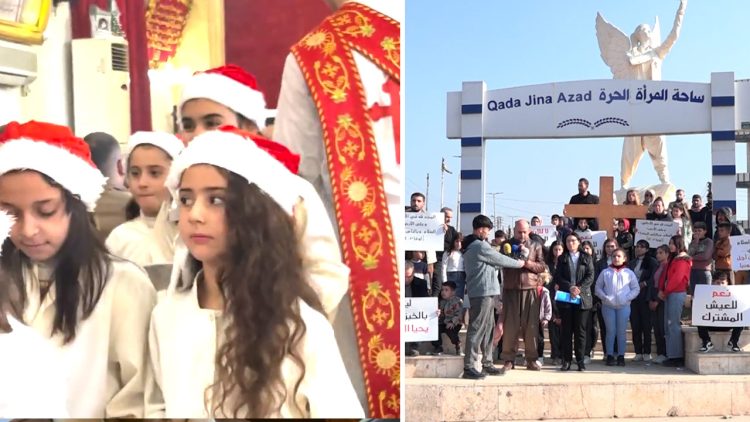
🎄🎅Over 100,000 Christians gathered in Qamishli (Qamişlo) and across North and East Syria to celebrate Christmas, demonstrating AANES’ commitment to protecting religious and cultural diversity.#DefendRojava #Xmas2024 #Christmas2024 #ReligiousFreedom
🔗https://t.co/0csBa6qCBw… pic.twitter.com/IJJ7it4lvA
— MedyaNews (@1MedyaNews) December 26, 2024
As Christians across North and East Syria celebrated Christmas, the Autonomous Administration of North and East Syria (AANES) demonstrated its commitment to fostering an inclusive and pluralistic society. Celebrations at the Syriac Orthodox Church of St Jacob in Qamishli (Qamişlo), attended by over 100,000 Christians, included prayers, hymns and community gatherings, reflecting the resilience and unity of the region’s Christian communities. Celebrations in other areas of the AANES-governed regions also highlighted the diversity and cultural richness of the occasion.
Established in the midst of the Syrian civil war, the AANES provides a framework that protects the rights of religious and ethnic minorities, including Syriac-Assyrian and Armenian Christians, Yezidis and others. Its pluralist model stands in stark contrast to the decades of repression under the Assad regime and the violence of ISIS. Reports from the Rojava Information Centre highlight how AANES has created spaces for political, social and cultural participation, although challenges remain.
In the city of Kobani (Kobanê), Christian communities condemned the attacks of the Turkish occupying state and its allied mercenaries, who have targeted the area and committed crimes against religious sites and values. As a result, local celebrations were muted this year. Instead of festive gatherings, Christians marked Christmas with solemn rituals and prayers, highlighting the ongoing challenges faced by religious minorities in the region. Religious leaders expressed their hope that peace, compassion and harmony will replace violence and hatred.
As AANES continues to work to secure religious freedom and cultural heritage, its role as a shelter for minorities navigating Syria’s turbulent political landscape remains critical.


