

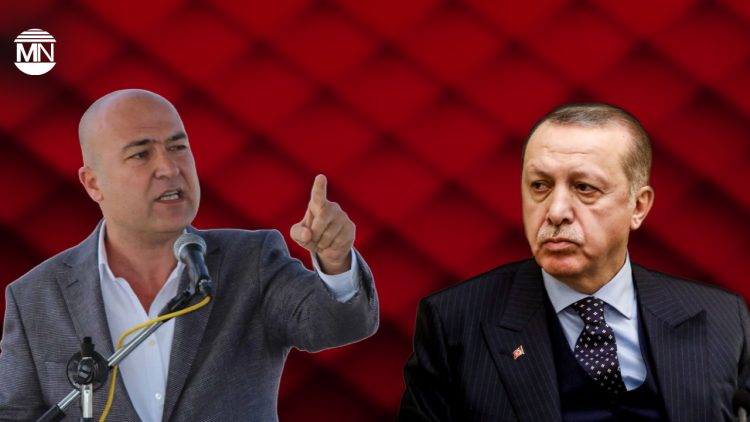
The main opposition Republican People’s Party (CHP) has rejected President Recep Tayyip Erdoğan’s call to cooperate on drafting a new constitution, accusing his government of failing to respect the existing constitutional order and rulings by Turkey’s highest court.
Speaking during a televised interview on Monday, CHP Deputy Chair Murat Bakan responded sharply to Erdoğan’s proposal: “We cannot work on a constitution with someone who does not recognise the current one.” The remarks came shortly after Erdoğan invited opposition parties to “join hands” in preparing a new charter, during a conversation with journalists on his return from Hungary.
Erdoğan insisted that the push for constitutional reform was not related to his political future. “We do not seek a new constitution for ourselves, but for the country,” he said. “I have no interest in being elected again or running for office once more.”
The President further claimed that there were no disagreements among major political parties concerning the first four articles of the constitution — the foundational clauses defining Turkey’s republican character, secularism, and indivisibility. He argued that, with consensus on these core principles, political parties could swiftly form commissions and begin work on the new draft.
But CHP’s Murat Bakan challenged this framing, pointing instead to what he described as the government’s disregard for constitutional law. “This is the same government that said the Constitutional Court should be abolished, refused to acknowledge its rulings, and kept MP Can Atalay in prison despite a binding court order,” he said.
Atalay, a lawmaker from the Workers’ Party of Turkey (TİP), remains imprisoned despite multiple rulings by the Constitutional Court ordering his release — a flashpoint that has drawn sharp criticism from both domestic and international legal experts.
Bakan also questioned the legitimacy of any constitutional reform under current political conditions, arguing that the composition of the Turkish parliament no longer reflects the electorate’s preferences due to the country’s electoral system. “This parliament doesn’t represent the current voter base,” he said.


