

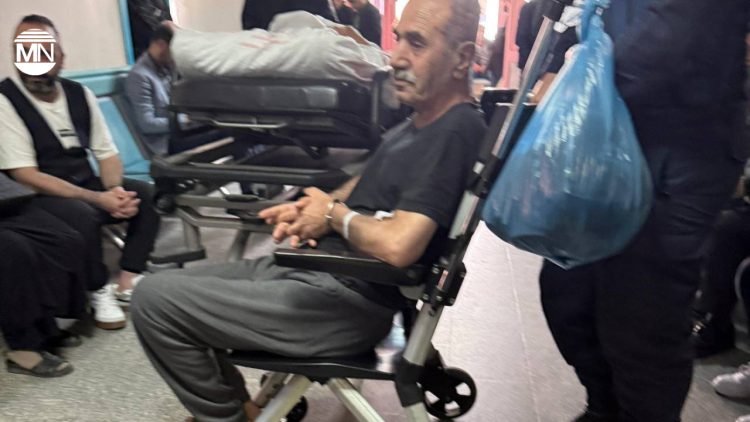
Mehmet Emin Çam, a 73-year-old prisoner held in Kurdish-majority southeastern Turkey, remains in a critical condition following a heart attack on 16 April, prompting renewed calls from rights groups and legal associations for his immediate release on medical grounds.
Çam, who is incarcerated at the Beşiri Type T Closed Prison in Batman (Êlih), is listed by the Human Rights Association (İHD) as a severely ill prisoner. He was transferred to Batman Training and Research Hospital after suffering a heart attack, where he continues to receive treatment.
According to his daughter, Şimel Çam, his condition remains serious. “Today the doctor informed us that his kidney values have risen significantly, which in turn is putting strain on his heart,” she told reporters.
Despite his health crisis, Çam has reportedly remained under tight security throughout his hospitalisation. His daughter stated that he was initially handcuffed during medical examinations, and that military personnel rejected doctors’ requests to remove the restraints. “Even while being moved between departments, he was handcuffed,” she said. “Now, in the prison ward, the handcuffs have been removed.”
She also noted that two of Çam’s heart vessels remain blocked and that his hospital accommodation is minimal, consisting of two beds and a small refrigerator.
Çam’s case has drawn public attention amid wider concerns over the treatment of severely ill prisoners in Turkey. Human rights organisations have long criticised the government for failing to grant medical parole to inmates with chronic and life-threatening conditions.
On social media, the hashtag #MehmetEminÇamaÖzgürlük (“Freedom for Mehmet Emin Çam”) has been widely circulated by activists, lawyers and political representatives, calling for his urgent release.
Tuncer Bakırhan, co-chair of the Peoples’ Equality and Democracy (DEM) Party, condemned the treatment of Çam, writing on X (formerly Twitter) that “there is no legal, moral, or human justification for this”. He added, “The approach to ill prisoners reflects the state’s approach to the Kurdish issue, democracy, and the rule of law.”
The Lawyers for Freedom Association (ÖHD) stated that Çam’s sentence has not been postponed despite multiple legal applications, while the Human Rights Centres of both the Diyarbakır (Amed) and Batman Bar Associations echoed the demand for his immediate release on the grounds of his right to life and medical treatment.
The DEM Party’s Human Rights Commission described Çam’s situation as “torture” and called on the broader public to raise their voices. Prominent rights advocate Eren Keskin also condemned the continued detention of ill prisoners, questioning the legality and morality of keeping individuals like Çam behind bars.
The case follows broader scrutiny of prison conditions in Turkey, particularly regarding inmates with serious health issues. Rights groups have reported systemic delays in granting parole or access to external medical care for severely ill prisoners. They cite ongoing cases such as Soydan Akay and Emin Aladağ—both political prisoners with multiple chronic conditions—who remain in custody despite critical health concerns and official disability classifications.
As of 11 April, Turkey’s prison population exceeded 403,000 people, surpassing capacity by over 100,000, according to figures from the General Directorate of Prisons and Detention Centres.


