

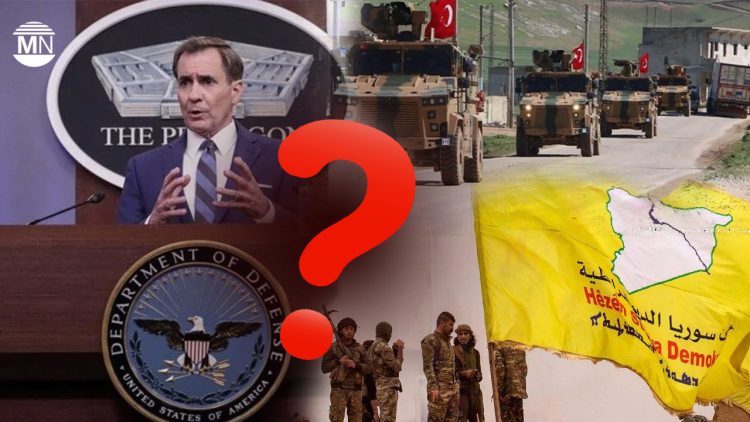
As the Biden administration prepares to transition power to President-elect Trump, US policy on Syria remains a focal point of debate. National Security Communications Advisor John Kirby’s recent remarks on Turkey and the Syrian Democratic Forces (SDF) illustrate Washington’s ongoing struggle to balance conflicting priorities in the region.
Kirby acknowledged Turkey’s “legitimate counterterrorism concerns”, but critics argue that this stance overlooks Ankara’s aggressive policies against Kurdish groups, including the SDF, a key US ally in the fight against ISIS. Kirby stated, “We recognise [Turkey’s] right to defend their citizens and territory against terrorist attacks,” while reiterating US support for the counter-ISIS mission in partnership with the SDF.
Turkey’s recent airstrikes on Kobani and its broader offensive against Kurdish regions have drawn sharp criticism from human rights advocates and policymakers. The Autonomous Administration of North and East Syria (AANES), often heralded as a model of democratic governance in the region, remains under siege from Turkish military aggression. Analysts argue that Ankara’s actions destabilise the region and undermine the fight against ISIS.
The incoming Trump administration has signalled a stronger stance in support of Kurdish forces. Advisors to President-elect Trump have openly criticised Turkey’s policies, raising expectations of a policy shift. However, the lingering effects of Biden’s diplomatic approach, perceived as overly accommodating to Ankara, have left Kurdish leaders wary of promises of continued US support.
While Kirby underscored the importance of maintaining “open lines of communication” with both Turkey and Kurdish counterparts, his remarks failed to address growing concerns over Ankara’s use of former ISIS affiliates in its operations. Critics within and outside Washington are calling for a reassessment of US-Turkey relations, especially given Turkey’s controversial actions in Syria and its impact on Kurdish communities.
The question now is whether the Trump administration will follow through on its promises of stronger support for the SDF and the Autonomous Administration, or if the pattern of prioritising NATO ally Turkey will continue. As January approaches, Kurdish communities and their supporters are watching closely, hoping for policies that prioritise stability and justice over geopolitical expediency.


