

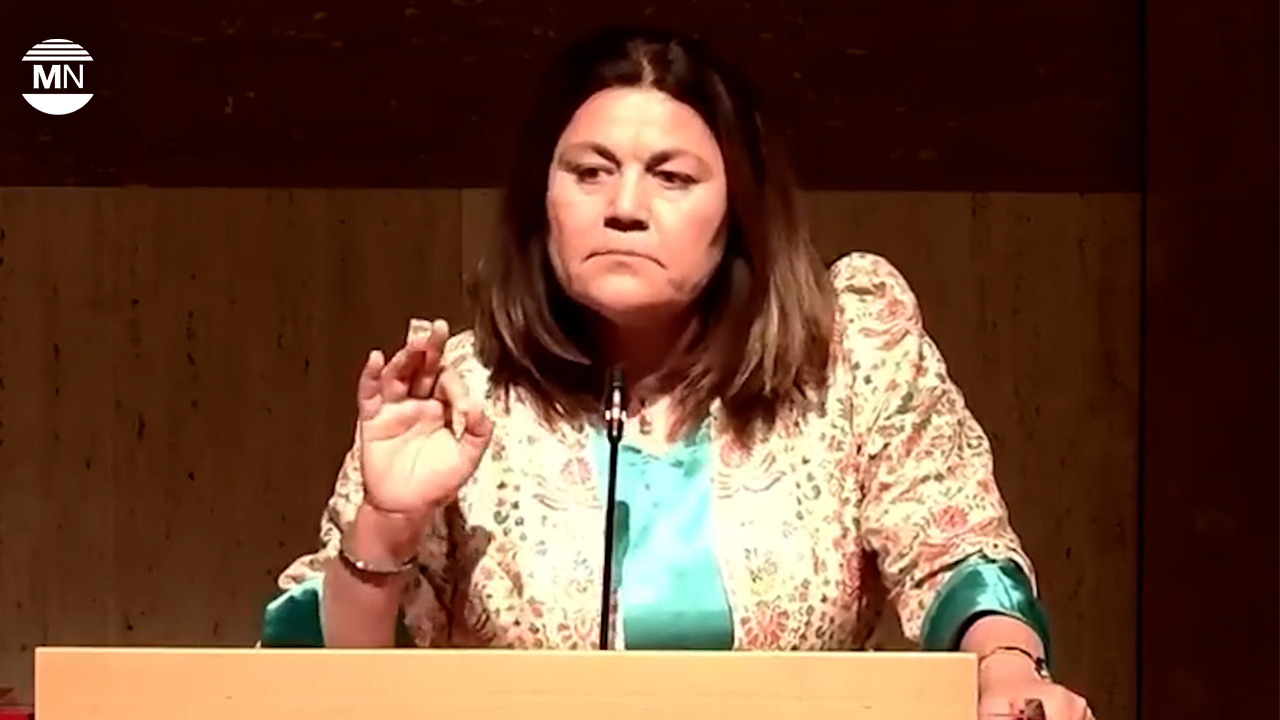
Foza Yusif, a senior official of the Kurdish-led Autonomous Administration of North and East Syria (AANES), has claimed that communities in Syria’s Alawite-majority coastal regions are facing atrocities similar to those previously committed against Yazidis in Sinjar (Şengal). Speaking at a conference in Rome on 11 April, Yusif alleged that more than 70 percent of villages in the Alawite regions have been burnt, and warned of a campaign to disrupt Kurdish-Arab alliances.
Yusif, a member of Syria’s pro-Kurdish Democratic Union Party (PYD), was addressing the “Freedom for Abdullah Öcalan, Solution to the Kurdish Question” conference, attended by over 300 delegates from 16 countries. The event, organised by the committee for the campaign of the same name and Italy’s Kurdistan Information Bureau, focuses on Kurdish political demands and Öcalan’s influence in shaping regional peace efforts.
“We will never accept the demand to dissolve the Syrian Democratic Forces unless our rights are constitutionally guaranteed,” Yusif said, referring to the Kurdish-led multi-ethnic military force that controls much of northern and eastern Syria. The Syrian Democratic Forces (SDF) are closely aligned with the AANES, a self-governing entity in the region, often also referred to by the Kurdish name of Rojava.
Yusif stated that significant atrocities against Alawite civilians had not been widely reported. “What happened [previously] in Sinjar is happening now in the Alawite regions,” she said, alleging that women were being abducted and villages razed. According to Yusif, a humanitarian delegation sent to the area by the AANES encountered evidence of widespread destruction, including traces of blood still visible at some sites.
She also warned of what she described as intelligence operations aimed at inciting conflict between Kurdish and Arab communities. “Efforts are underway to destroy the alliance forged in the fight against Islamic State,” she said, adding that individuals who support coexistence are being labelled as traitors and intimidated by actors seeking to dominate the region.
Yusif emphasised the commitment of her administration to cross-ethnic cooperation despite these pressures. “We will live together with all Arabs—not just those in Raqqa—and build unity with all the peoples of Syria,” she said.
Highlighting the broader goals of the Autonomous Administration, Yusif said one of their main strategies is to promote the idea of a “democratic nation” across all of Syria, not only in Kurdish-majority areas. She called for collaboration with moderate Arabs, Druzes, Alawites and civil society groups including youth and women’s movements.
The two-day conference in Rome featured a series of panels, including discussions on Abdullah Öcalan’s statement of 27 February, the 26-year isolation of the imprisoned Kurdish leader on İmralı Island, and the regional implications of his democratic autonomy model. Delegates included parliamentarians from Europe and Latin America, legal experts, trade unionists and civil society representatives.
Foza Yusif was one of several high-profile speakers, alongside figures such as Pervin Buldan and Ömer Öcalan from Turkey’s pro-Kurdish Peoples’ Equality and Democracy (DEM) Party, and international campaigners advocating for Öcalan’s release.


