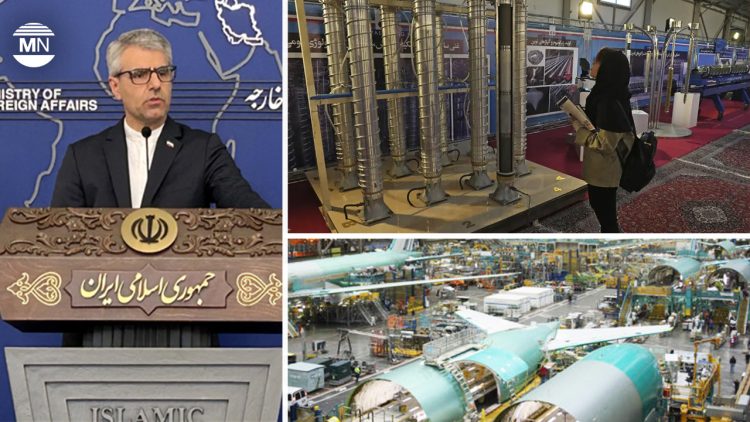
The United States and Iran are set to engage in another round of nuclear talks on 15 June, in Muscat, Oman, Iranian Foreign Ministry spokesperson Esmaeil Baghaei said on Tuesday. This will be the sixth attempt since mid-April for the two nations to reach an agreement on Iran’s nuclear development, which has the potential to considerably boost the economies of both countries. US President Donald Trump will attend the meeting with a prepared proposal, on which he has already consulted the Netanyahu administration in Israel.
The Trump administration has been pressing Iran to completely halt its uranium enrichment program, while Iran has insisted for years that the enrichment of uranium is not a forbidden activity and that it should be allowed to continue with this program. Notably, in 2010, Iran enriched its uranium stockpiles from under 5% to 20% immediately following negotiations with the US.
The Iranian government’s stance has been unequivocal; “No enrichment, no deal. No nuclear weapons, we have a deal.” Although Iran denies that it aims to build nuclear weapons, at the end of 2024 it had enough uranium enriched at 60% for four nuclear bombs, and has since increased enrichment while also inhibiting the United Nations from inquiring into the driver behind its enhanced uranium production.
Although the country’s territory lies atop some of the world’s largest natural gas and oil reserves, Iran struggles with significant energy shortages due to lack of foreign investment, a result of sanctions from Western powers. In turn, American companies have been unable to enter Iranian markets, paralysing the export of a potential $25 billion in US goods annually to Iran. Additionally, it is estimated that up to 200,000 jobs could be created for American workers as a result of the lifting of these sanctions.
America’s aggressive sanction policy has succeeded in pressuring Iran to halt its uranium enrichment program, and therefore this new round of negotiations will revolve crucially around economic incentives. The lack of American engagement in Iranian markets has devastated the Iranian economy, but with the lifting of sanctions, Iran’s GDP could increase from $600 billion to $1 trillion by 2040.
During the talks, Oman will act as a principal mediator. Should the talks not go well, Donald Trump’s repeated military threats against Iran may re-surface, or Israel, America’s strongest ally in the middle east, could strike Iran’s nuclear sites, which it has repeatedly threatened to do. After speaking with Netanyahu, Trump said; “We’re trying to make a deal so that there’s no destruction and death.”