

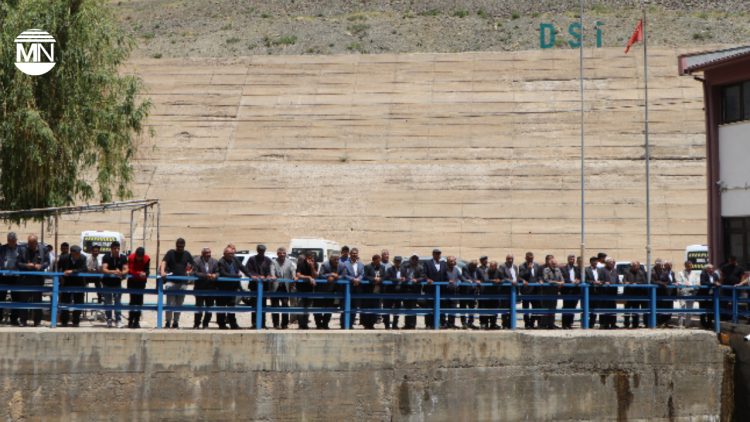
Residents of more than 20 villages in the Gürpınar (Payîzava) district in the Kurdish-majority province of Van (Wan) in south-east Turkey, are reporting the loss of orchards, fields and livestock due to water not being released from the nearby Zernek (Zêrnek) Dam, despite its original purpose as an agricultural irrigation facility.
Residents say the dam’s water is being withheld by a private company operating a hydroelectric power station, with priority being given to electricity production rather than to local farming needs. Appeals to local authorities and Turkey’s State Water Works (DSİ) have reportedly gone unanswered.
“We’re being choked. Our orchards are gone, our flocks are dying,” said Naif Çelik from Erkaldı (Hingiştans) village. “We pay fees for irrigation, but we get no water.” The Karasu River, which feeds the dam, has run low in summer, but residents accuse the operators of draining the dam during winter for energy profits and withholding water during crucial growing months.
Yusuf Çelik, also from Erkaldı, said he returned from Istanbul to pursue farming but now faces ruin: “I had a thousand apple trees. They’re all dead. We had 25,000 sheep; now we have just 4,000.”
Village heads and residents say the crisis is driving migration from the region. “Every time the dam shuts down, it shuts down the lifeline of Payîzava,” said Xarûnika village head Garbi Tanış, who accused the state of selling out the citizens to private profit.
Despite paying 400 Turkish lira per 1,000 m² of land annually to the Karasu Irrigation Union, farmers say not a drop of water has reached them this year. “This is not just negligence – it’s a form of punishment,” said Lezgin Gümüş, another resident. “We’re not livestock – they can’t just starve us and expect us to stay quiet.”
Villagers have now pledged to hold demonstrations after the Eid holiday, calling for public solidarity and national attention to their plight.


