

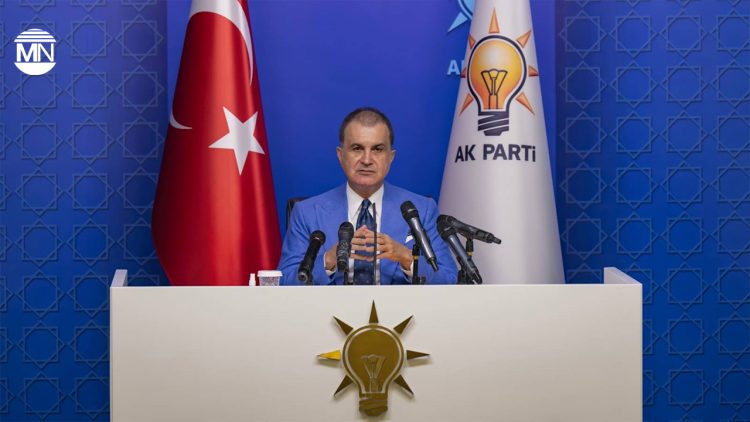
“This month, there may be new developments,” Ömer Çelik, spokesperson for Turkey’s ruling Justice and Development Party (AKP), said on Monday in Ankara, referring to a political reconciliation process initiated by jailed Kurdish leader Abdullah Öcalan. The statement, made after the party’s Central Executive Board (MYK) meeting, is the first sign in years that Ankara could reconsider its stance on the long-stalled Kurdish peace process.
While Çelik provided no specific details, his remarks come at a time of increased speculation over the future of Turkey’s policy towards its Kurdish population, amid ongoing demands for Öcalan’s release and renewed calls for peace.
Referring to rising chaos in neighbouring countries and increasing ethnic and sectarian tension in the Middle East, Çelik stated: “Our national unity and democratic expansion have never been more valuable. Everyone can now see the importance of solidarity with our neighbours and diverse peoples in the region.”
Turkey continues to face internal divisions and regional unrest, with growing concerns that hardline policies may fuel further instability. Çelik called for a “brotherhood approach” across ethnic and religious lines, including Kurds, Arabs, Sunnis, Shiites, Alevis, Yazidis and others — a rare inclusion in mainstream AKP rhetoric.
The AKP official also extended well wishes to pro-Kurdish Peoples’ Equality and Democracy (DEM) Party MP Sırrı Süreyya Önder, the deputy speaker of Turkey’s parliament and a key figure in Kurdish peace negotiations, who is currently hospitalised after a cardiac arrest. “We want to see him among us again soon,” Çelik said, highlighting their long-standing personal acquaintance.
The AKP’s gesture has drawn attention given the historical tension between Turkey’s political establishment and pro-Kurdish movements. The potential reactivation of any peace initiative would mark a significant policy shift since the collapse of the 2013–2015 talks between the Turkish state and the Kurdistan Workers’ Party (PKK), of which Öcalan remains the symbolic figurehead.
While Çelik also addressed domestic issues including childbirth policies, the strongest signals from Monday’s press conference centred on a possible return to dialogue — or at least a strategic recalibration — regarding Turkey’s long-standing Kurdish question.


