

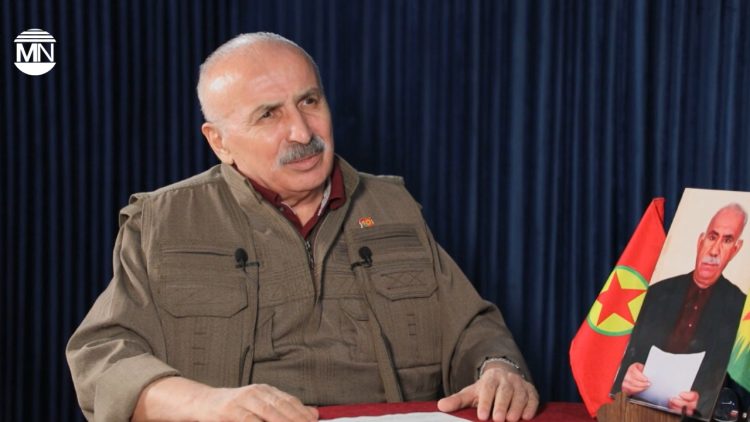
The Kurdish movement may reassess its approach if the Turkish government fails to honour promises made in recent peace talks, warned Mustafa Karasu, a member of the Executive Council of the Kurdistan Communities Union (KCK), a political umbrella group linked to the Kurdistan Workers’ Party (PKK). Speaking in an exclusive interview with Medya Haber on Saturday, Karasu stressed that the PKK is prepared to dissolve itself and end its armed struggle, but only if a congress can be held with the participation of its imprisoned leader, Abdullah Öcalan.
The Turkish government has faced mounting criticism for its inaction following Öcalan’s call in February for the PKK to disarm and disband, a proposal initially welcomed by Nationalist Movement Party (MHP) leader Devlet Bahçeli, a key ally in the ruling coalition. Bahçeli had suggested that Öcalan’s “right to hope ” – a legal mechanism allowing for potential parole – could be considered if such a call were made. Karasu, however, has accused the government of stalling, noting that Öcalan’s conditions in İmralı prison remain unchanged and that no steps have been taken to facilitate dialogue.
“If the promises—such as changing İmralı Prison’s conditions and ensuring Abdullah Öcalan’s free working environment—are not fulfilled, we cannot just wait. Our movement cannot wait,” Karasu stated. He added that the government’s repeated claim of “no legal basis” for reforms is merely an excuse, asserting that the authorities could act immediately if they were willing. The KCK, which oversees PKK activities, has long demanded Öcalan’s release as a prerequisite for peace.
Karasu also suggested that there are those in Turkey who benefit from the ongoing conflict, claiming, “There’s a group that doesn’t want the PKK to disband because they profit from the war.” He pointed to political and economic interests that thrive on the “terrorism” narrative—a charge often levelled at the ruling Justice and Development Party (AKP) and its allies.
Karasu reiterated the group’s readiness to transition to a broader democratic struggle, saying, “We aim to launch a new phase of struggle—more impactful and effective—expanding society’s fight for democracy.”
Tensions have escalated since the collapse of a ceasefire in 2015, with clashes intensifying in Kurdish-majority regions such as Diyarbakir (Amed) and Van (Wan). The government’s appointment of trustees to replace elected Kurdish mayors has further strained relations. Karasu’s remarks come amid growing domestic and international calls for a resolution to the conflict, which has claimed over 40,000 lives since the 1980s, predominantly Kurdish civilians.
Analysts note that the stalling of the peace process may stem from recent political unrest in Turkey following the arrest of İstanbul Mayor Ekrem İmamoğlu. Meanwhile, Öcalan, held in isolation since 1999, remains a pivotal figure for the Kurds—his fate a litmus test for any peace process.


