Decades after the 1988 chemical bombing of Halabja (Helebçe) in Iraqi Kurdistan, Kurdish organisations and political figures across Kurdistan and further afield have issued statements condemning the Kurdish genocide, noting that only the pursuit of freedom and democracy can prevent such tragedies from being repeated.
The Kurdish umbrella organisation Kurdistan Communities Union (KCK) is one of these. It has released a statement honouring the memory of the victims and acknowledging the enduring impact of the massacre on the historical and political memory of the Kurdish people:
The state-oriented system and the forces of capitalist modernity failed to show any meaningful response to this brutal collective assault. In reality, this mass killing of Kurds was a direct consequence of the capitalist state-centric order.
The KCK maintains that preventing further tragedies like the Halabja massacre and achieving lasting peace and freedom in Kurdistan and the Middle East require steadfast commitment to the struggle—upholding the call of imprisoned Kurdish leader Abdullah Öcalan.
The Kurdistan National Congress (KNK) also issued a statement referring to the chemical bombing of Halabja within the framework of the infamous Anfal operation and commemorating the victims of this human catastrophe:
Tragically, even after 37 years, the consequences of this massacre persist, and Halabja continues to face significant challenges. Furthermore, the international community has yet to recognise this mass killing as genocide.
The statement further highlighted the necessity of Kurdish national unity and the formulation of a national strategy as essential measures to prevent the recurrence of such tragedies.
The Kurdistan Free Life Party (PJAK) also released a statement on the occasion of the anniversary, describing the massacre as part of a broader strategy by the enemies of the Kurds to annihilate the Kurdish people.
The statement continued:
16 March marks the anniversary of the Halabja genocide, a dark stain on human history. The 1988 chemical bombing of Halabja remains a stain on the global capitalist system spearheaded by hegemonic powers. Until the Kurdish issue is resolved with genuine international commitment, the threat of another Halabja will not be eradicated.
The Iraqi Presidency issued a statement condemning the Halabja massacre as a crime that revealed the brutality of dictatorial regimes. It stressed the need for collective efforts to strengthen democracy, protect human rights and safeguard people from authoritarian oppression.
President Abdollatif Rashid called for the swift finalisation of Halabja’s provincial status and stressed the importance of providing essential services and full compensation for the victims and their families, who continue to suffer from the long-term effects of the attack.
The President also urged the international community to take action against the proliferation of weapons of mass destruction, bring an end to conflicts and promote global security.
The leader of the Patriotic Union of Kurdistan (PUK), Bafel Jalal Talabani, released a statement calling for unified effort in the Iraqi parliament to secure Halabja’s official recognition as a province, to provide justice and compensation for the victims, and to improve services in the region.
President Nechirvan Barzani of Iraq’s Kurdistan Regional Government (KRG) urged the federal government to uphold its legal and moral obligations on this solemn occasion. “The Iraqi government must fulfill its responsibilities to the victims, deliver justice for Halabja and its residents, and honour its commitments in full,” he said.
Barzani further called on Baghdad to finalise the process of making Halabja a province, and stressed the need for continuous international efforts to prevent such atrocities from ever recurring.
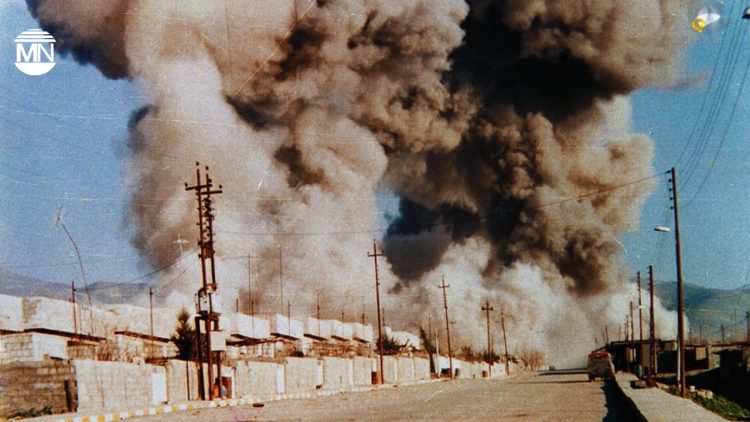
At 11.35am on 16 March 1988, during the Iran-Iraq War, on the orders of Saddam Hussein and under the command of Ali Hassan Majid, Iraqi warplanes bombed the city of Halabja 15 times with chemical weapons. This attack, executed as part of the notorious Anfal campaign, claimed the lives of 5,000 civilians.