

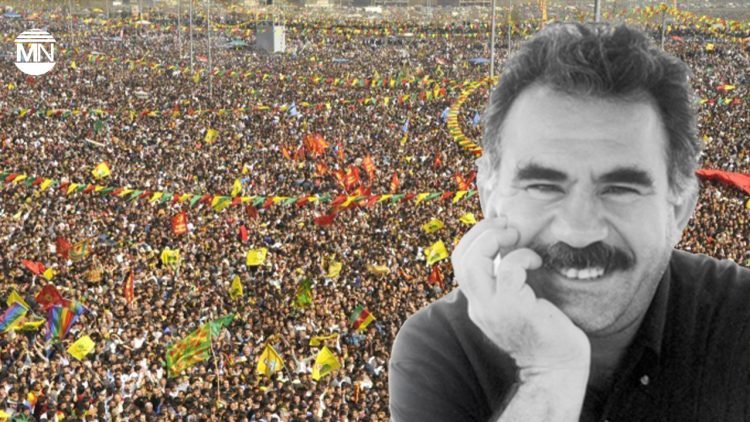
As the 26th anniversary of the abduction of Kurdish leader Abdullah Öcalan approaches, the Kurdistan Communities Union (KCK) issued a statement on the resumption of Turkey’s peace process, declaring that Öcalan’s release is essential for its success. Similarly, Helin Ümit, a member of the Kurdistan Workers’ Party (PKK) Central Committee, emphasised that his freedom is the cornerstone of any meaningful progress.
The KCK statement condemned the international conspiracy that led to Öcalan’s capture on 15 February 1999, arguing that understanding the extent of this conspiracy is crucial to making sense of ongoing political developments in the Middle East. The KCK suggested that the newly proposed peace process, labelled the “reconciliation process”, has the potential to reshape regional dynamics if pursued sincerely.
The statement highlighted Öcalan’s previous peace efforts, which, according to the KCK, have been repeatedly obstructed by both domestic and international actors opposed to Kurdish democratisation. With the Middle East currently undergoing major geopolitical shifts, the organisation argued that the conditions for a genuine peace initiative have never been more favourable.
However, the KCK criticised Turkey’s ruling Justice and Development (AKP) government, accusing it of continuing a policy of hostility against the Kurds, both domestically and in neighbouring regions. It denounced Turkey’s attacks on Iraqi Kurdistan and northeastern Syria, as well as its ongoing repression of Kurdish artists, journalists, and politicians. The KCK also addressed speculation about Öcalan potentially issuing a statement on PKK disarmament, asserting that disarmament can only be meaningfully discussed if Öcalan is first granted his freedom.
In parallel, Helin Ümit, speaking with Medya Haber, reinforced the KCK’s position, declaring:
"The physical freedom of Apo and his ability to engage in political activities without restrictions are the most essential conditions for progress."
Ümit further questioned whether the Turkish state is genuinely prepared to embrace peace, asking:
“Is Turkey ready to transform itself to ensure the freedom of the Kurds?”
She also warned of internal and external forces working to derail democratisation efforts, expressing scepticism about Ankara’s sincerity in seeking a political resolution.
KCK co-chair Cemil Bayık also weighed in, reiterating Öcalan’s long-standing efforts to shift the Kurdish issue from armed struggle to democratic resolution. He emphasised that Öcalan’s influence remains strong and has already generated optimism among Turkey’s democratic and socialist circles.
With renewed calls for Öcalan’s release, the debate over Turkey’s peace process continues, underscoring deep divisions between Kurdish political movements and the Turkish state.


