By Mehmet Tatlı
Originally published in Turkish by Medyascope TV on 11 December 2024, translated by MedyaNews
A recent statement by [Turkey’s] Nationalist Movement Party (MHP) leader Devlet Bahçeli regarding Kurdistan Workers’ Party (PKK) leader Abdullah Öcalan has once again drawn attention to İmralı Prison Island. The downfall of Bashar al-Assad in Syria shortly after that statement reinforced the beliefs of many that Bahçeli’s remarks were linked to developments in Syria.
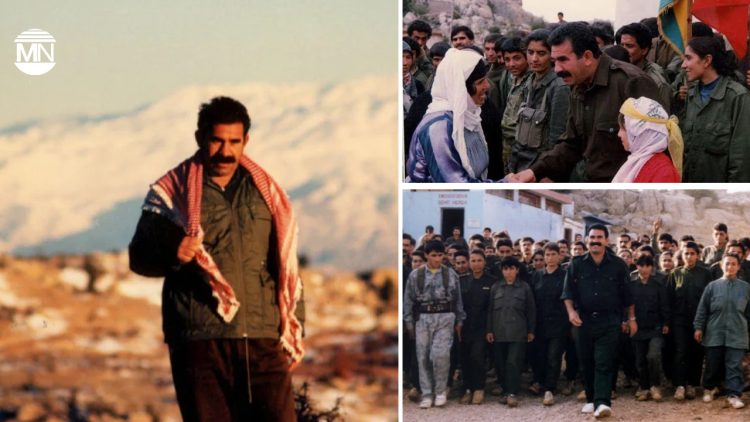
Abdullah Öcalan crossed into Syria via Kobani (Kobanê) in the summer of 1979, just before Turkey’s 1980 military coup. His nearly 20-year stay in Syria proved to be a turning point in shaping the country’s Kurdish political movement. Operating within the limited space granted by Hafez al-Assad’s regime, Öcalan focused on organising his movement—leaving a lasting impact, particularly on Syrian Kurds.
But was Öcalan truly capable of altering Syria’s political equation? Here, we take a closer look at Öcalan’s years in Syria and their broader implications.
The move from Turkey to Syria: A different country, a shared language (1979–1984)
Just before Turkey’s military coup of 12 September 1980, Abdullah Öcalan fled to Syria, where he was to spend nearly two decades. This period became a pivotal moment in the development of the Kurdish political movement in the region.
Öcalan’s first priority was to establish a secure relationship with Hafez al-Assad’s government. Through indirect channels via Syrian intelligence, he succeeded in securing logistical support from the regime (1).
With backing from the Popular Front for the Liberation of Palestine (PFLP), Öcalan set up his first training camp in Lebanon’s Beqaa Valley. He held a series of meetings with PFLP leaders, negotiating key agreements on military training and arms support (2). The camp in Beqaa quickly became a hub, attracting young recruits from Kurdish regions in northern Syria and serving as a centre for ideological and military training for the movement.
Strengthening his foothold in Syria, he placed a special emphasis on forging ties with local Kurdish organisations.
From 1981 onwards, Öcalan began holding regular tribal meetings, which played a key role in expanding the movement’s social base in the region. The contact thus established with various Kurdish tribes such as the Temo and Berazi clans in particular, were aimed at ensuring support from traditional structures (3).
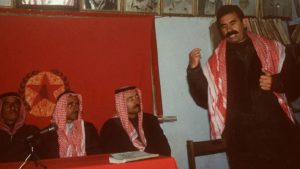
In 1982, the PKK established the Mahsum Korkmaz Academy in the Beqaa Valley, which became a central hub for ideological and military training. The academy’s curriculum covered a wide range of subjects, from Kurdish history and culture to military tactics, discussions on women’s liberation and environmental studies. Many of the Syrian Kurdish young people who received training here later assumed active roles in political organisations in the region.
Exploiting the contradictions in the Ba’ath regime’s Kurdish policy
During this period, Hafez al-Assad’s Ba’ath regime pursued a dual policy towards the Kurds. On the one hand, the government maintained the stateless status of approximately 120,000 Kurds who had been stripped of citizenship following the 1962 census. The regime also pursued land confiscations and forced displacement of Kurdish villagers under the Arab Belt project. Kurdish language education was banned, cultural rights were severely restricted and economic discrimination was widespread. This oppressive climate fuelled political dissatisfaction, particularly among young Kurds, prompting many to seek new political alternatives.
Öcalan’s efforts at organising found fertile ground in these socio-political conditions. The internal divisions within traditional Kurdish parties and their failure to mount an effective opposition led many young and economically disadvantaged Kurds to gravitate towards his movement.
Öcalan’s rhetoric sought to transform tribal structures, placed an emphasis on women’s liberation and promoted an organisational strategy rooted in the rural poor, presenting an alternative to existing Kurdish political groups. Meanwhile, the Syrian regime saw the PKK as useful ammunition against Turkey, providing the movement with the operational space it needed to expand.
During this period, Öcalan organised extensive training programmes, particularly for young militants. By 1983, these programmes were becoming more concentated, combining both military and ideological training (4). In 1984, ideological seminars held in the Beqaa Valley with Kurdish students contributed to the emergence of a new political consciousness among young activists (5).
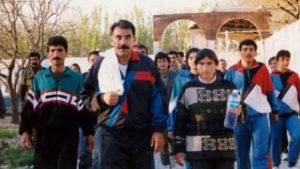
The concepts he highlighted in this first phase led to the initiation of new discussions among the Syrian Kurds. In a region where the traditional tribal structure was strong, a new political awareness began to develop, especially among the youth and the women.
Another significant development during this period of organisation was the work in the economic field. Meetings held with Kurdish tradesmen in Qamishli (Qamişlo) and contacts established with farmers in the region were indications of the movement’s efforts to create an economic base (6).
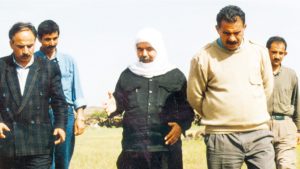
An ardent figure who influenced the Kurdish youth
From the early 1980s onwards, youth organisations spread rapidly in the Kurdish cities of northern Syria, particularly in Qamishli, Amuda (Amûdê) and Afrin (Efrîn). A youth meeting Öcalan held in Qamishli in 1985 marked a turning point at this time. He and the young people discussed political awareness and strategies for mobilisation in great detail at this meeting.
Cultural centres and study groups established during this period became the centre of political and cultural activities of the Kurdish youth. Student seminars held in the Bekaa Valley in 1984 (7) laid the groundwork for the local educational committees that would later be established. Among the various fields of study, Kurdish language and literature were of particular interest to the youth.
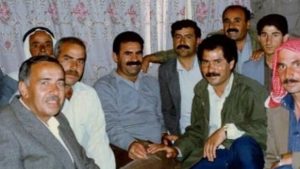
Öcalan held private meetings with Kurdish teachers (8) to set educational policies. These discussions focused on expanding Kurdish language education and developing strategies to ensure that young people would be able to receive an education in their own languages. Between 1985 and 1990, more than 15 cultural centres were opened in the Jazira (Cizîrê) region alone.
The high level of female participation was one of the most notable features of the Kurdish youth movement in Syria. The organisation and education of the women’s movement were dealt with in detail at a special meeting of female members in 1987 (9). Following this meeting, a women’s quota system was introduced within the youth organisations.
After discussions with local Kurdish media representatives (16), there was a significant increase in the number of youth magazines and cultural and art publications. These publications contributed to the creation of new platforms for debate and helped foster political awareness among the youth.
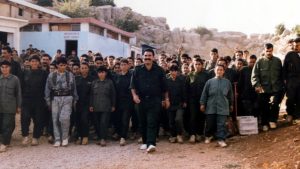
Between 1983 and 1990, some of the young people who had received training at the camps in the Bekaa Valley returned to their own regions to pursue their educational and organisational activities, where they provided practical organisational techniques as well as ideological formation.
The influence on the Kurdish youth in Syria during this period formed the social base for the political movements that emerged in the region later on. By the early 1990s, there were more than 30 youth organisations operating in the region. While some of these organisations focused on cultural activities, others were directly engaged in political work.
Facilitating social and cultural transformation
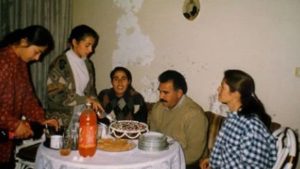
From the mid-1980s onwards, social transformation within the Syrian Kurdish community became particularly evident in the women’s movement and in changes in tribal structures. Models for social organisation as well as military cooperation were discussed in a meeting with [PFLP leader] Ahmed Jibril. During this period, new approaches to women’s organisation were developed by drawing on the experiences of the Democratic Front for the Liberation of Palestine (DFLP), particularly in relation to women’s mobilisation.
A special meeting held with female militants in 1987 became a turning point in shaping the movement’s women’s policy. The decisions made regarding women’s freedom and organisation led to significant debates within traditional family structures. The work carried out by women who had received training in the Bekaa camps upon returning to their regions laid the foundation for the birth of a new women’s movement in the towns and villages.
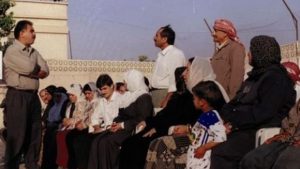
Between 1986 and 1992, women’s associations were established in the Jazira region, where Syrian Kurds lived in large numbers. Although these associations were officially set up for mutual aid and solidarity, in practice they became centres for the education and organisation of women. Strategy meetings with female cadres during the founding process of Syria’s Democratic Union Party (PYD) formed the theoretical basis for the co-chair system [in which a woman and a man share the position of chair] that would later be implemented in the region.
The cultural transformation that took place was particularly apparent in language and education activities. Between 1987 and 1995, language courses were established in the region which, though operating in semi-secrecy, ensured thousands of people were able to learn to read and write in Kurdish.
Engaging with actors from all sectors
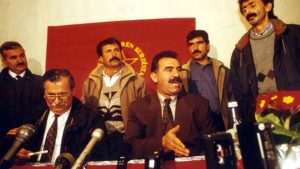
Öcalan brought the maater of the development of cultural rights to meetings with Kurdish thinkers in Damascus (14). Cultural centres established subsequent to these meetings became focal points not only for language courses and folklore studies but also for political awareness and organisation. Öcalan had a significant influence on many Kurdish artists in Syria. Artists such as Ciwan Haco and Xelîl Xemgîn composed revolutionary songs that resonated with Kurds in surrounding countries.
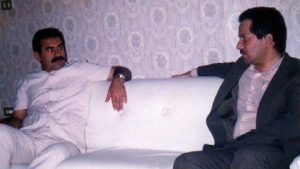
The relationships established with the tribal structure became one of the most critical aspects of social transformation. Meetings with tribal representatives that began in 1981 (20) gained a new dimension when contact was established with the Suruch and Kobani tribes in 1987 (12). The transformation from traditional to democratic structures was specifically addressed in these meetings.
A large-scale public meeting was held in Qamishli in 1986 to dicuss the region’s problems and proposed solutions (19). This meeting was significant in terms of showing the movement’s approach to local issues. The meeting highlighted economic problems, educational issues and women’s rights.
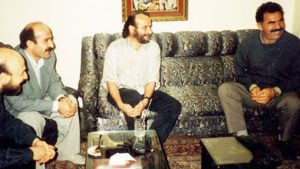
Training sessions were held with local administrative cadres during the founding of the PYD which laid the groundwork for the autonomous governance model that would later be implemented in the region. These sessions focused particularly on the commune system, neighbourhood councils and practices of direct democracy.
The movement’s economic activities also formed a crucial part of the broader social transformation. In 1982, meetings were held with Kurdish farmers to discuss the organisation of agricultural production and cooperative models (11). As a result of these discussions, agricultural cooperatives were established in the region, marking the first steps in economic organisation.
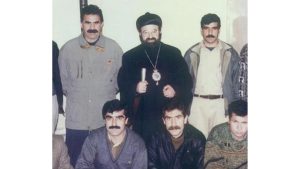
The political structure for Syrian Kurds
Öcalan’s presence in Syria led to a reshaping of the Kurdish political movement in the region. Meetings held with local Kurdish political activists (13) in 1985 marked the first steps in the organisational model that would later form the basis of the PYD. The political structures created during this period laid the institutional groundwork for the Rojava experiment.
By the late 1980s, the movement, which had gained significant momentum among women and young people, began to erode the influence of traditional Kurdish parties. The theoretical and practical foundations of the PYD’s formation were established during this time.
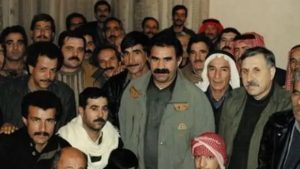
The Syrian regime’s approach during this period was characterised by contradictions. While it turned a blind eye to Öcalan’s presence, it simultaneously maintained repressive policies towards local Kurdish organisations. Hundreds of people were arrested during unrest in Qamishli in 1987. These pressures led to local organisations going underground, ultimately strengthening them.
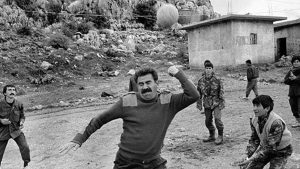
The strategy discussions held in 1988 with what is the PYD leadership of today played a critical role in determining the organisation’s management strategies. The concepts of ‘democratic autonomy’ and ‘self-governance’ were discussed in detail at these meetings. This conceptual framework later formed the theoretical foundation of the Federation of Northern Syria.
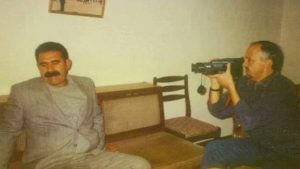
A conference held in Aleppo in 1992 and attended by representatives from various Kurdish groups marked a turning point in terms of political structuring. Nearly 150 delegates participated in the conference, the majority of whom agreed on the necessity of a new political movement. According to the archives of the Syrian Studies Association, the concept of “democratic confederalism” was discussed in detail for the first time at this conference.
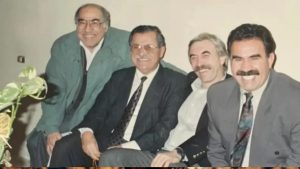
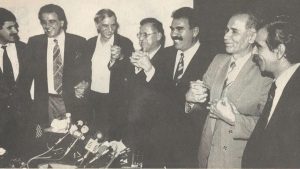
Öcalan trains PYD’s ‘cadres of the future’
Öcalan’s training sessions in 1986 with what would become the PYD cadres of today played a crucial role in laying the foundations of the autonomous governance model (15). These sessions focused primarily on the commune system and neighbourhood councils.
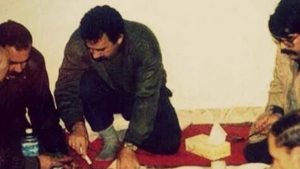
A series of meetings held in Qamishli in 1995 discussed the local governance model in detail. Concrete decisions were made on the practical implementation of the model of ‘democratic autonomy’ at these meetings. These decisions later formed the basis of the governance structure in the cantons of Rojava.
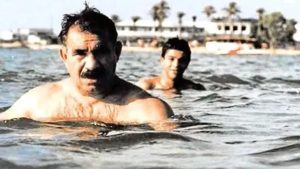
Öcalan frequently stressed the concept of ‘democratic confederalism’ in his discussions with Syrian Kurdish politicians in this period, and this idea later formed the theoretical foundation of the autonomous governance model to be established in the region.
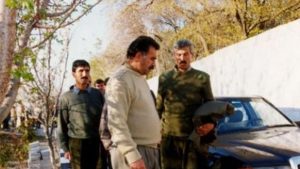
Öcalan is forced to leave Syria (1998)
Öcalan’s forced departure from Syria on 9 October 1998 marked the beginning of a new phase for the Kurdish movement in the region. According to an extensive report by the Middle East Research and Information Project (MERIP), pressures on local Kurdish organisations increased sharply following the Adana Agreement signed between the Syrian government and Turkey, but the social and political structures built up over the previous 20 years allowed the movement to continue its existence, albeit underground.
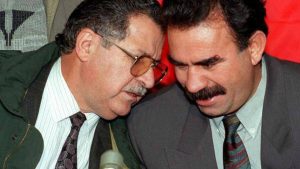
Between 1999 and 2003, many cultural centres and associations were shut down. As noted in a report of the International Crisis Group, this period of repression paradoxically led to more intense organisation within the movement. After the closure of Qamishli’s Dicle Cultural Centre, activities shifted to home meetings, which contributed to the strengthening of neighbourhood organisations.
In the early 2000s, new forms of organisation emerged, particularly among young people. One significant expression of this new phase was the “civil Friday” protests, which began in 2002 in Qamishli and later spread to other Kurdish cities. These protests played a key role in the Kurds taking an autonomous position during the Syrian civil war that would follow.
From 2003 to 2010, the social and political structures that had been established during Öcalan’s time in Syria persisted, adapting to the new conditions. During this period, the women’s organisation and the youth movement grew stronger.
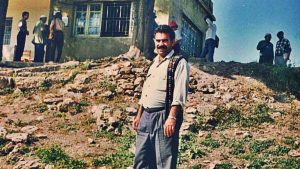
The 2004 Qamishli uprising marked one of the most important expressions of this accumulated strength.
The period from 2004 to 2010 was one of adaptation to new circumstances for the organisational structures built up during Öcalan’s time in Syria. During this period, the commune system and neighbourhood councils became stronger, according to the Operations and Policy Centre (OPC).
The foundations of autonomy were laid before the civil war
After 1998, the organisational and social structure created by Öcalan during his 20 years in Syria formed the infrastructure for what they later called the ‘Rojava revolution’. According to field research by the Syrian Studies Association, the accumulated experience in areas such as the women’s movement and organisation of the youth became the most important social base for autonomous governance after 2012.
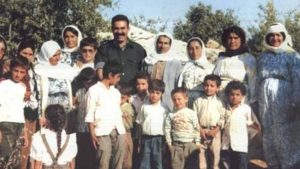
The period after Öcalan’s departure marked the beginning of the movement’s institutionalisation. During this phase, work in education and culture continued, albeit underground. The new cadre structure formed in the 2000s would later constitute the administrative backbone of de facto autonomy after 2012.
The Syrian civil war and the present day
After Öcalan’s departure from Syria in 1998, the country underwent dramatic changes. The civil war that began in 2011 led to the Ba’ath regime losing control over much of the country and opened the door to a new phase for the Syrian Kurds. The organisational and social structure built up during Öcalan’s 20 years in Syria became the foundation for the experiment of autonomous governance in this new era. The PYD, adhering to an Öcalanist doctrine, adopted the principle of self-defence and established military wings, the People’s Protection Units (YPG) and the Women’s Protection Units (YPJ). The first three years of the civil war were shaped by this organisation. However, attacks by ISIS against the Syrian Kurds forced them to redefine their ideological and operational ties with Öcalan and the PKK.
Inclusivity and change of image: The Syrian Democratic Forces
Since the establishment of the SDF in 2015, the organisation has positioned itself as a ideological and organisational structure separate from the PKK. Leaders of the SDF, who have particularly stressed this distinction, define themselves as a local force defending Syria’s territorial integrity. The SDF was formed as a multi-identity structure, incorporating fighters from among not only the Kurds but also the Arabs, the Assyrians and other ethnic groups. This diversity allowed the SDF to gain international support. However, the SDF still maintains its ideological allegiance to Abdullah Öcalan.
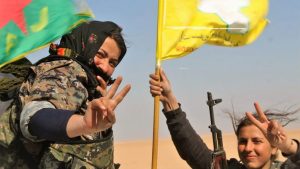
The SDF’s victories over ISIS have turned Syrian Kurds into a regional actor. However, Turkey’s cross-border operations, the power balance between Russia and the US, and tensions with the Syrian government have deepened the challenges faced by the autonomous administration, but the social and political networks established in the 1980s still played a crucial role in managing the war.
Perhaps this is why, when SDF commander Mazlum Abdi was asked, “What would you do if Abdullah Öcalan asked you to dismantle your administration?” he responded, “Öcalan would never make such a request of us.”
The close relations between Syrian and Turkish Kurds go beyond historical, social and cultural ties. These relationships continue to take form around a shared political consciousness. The violence of the 2014 Kobani protests in Turkey was one of the most significant indicators of this.
Sources:
1 van Dam, N. (1996). Suriye’de İktidar Mücadelesi (Struggle for Power in Syria) (Trans. Semih İdiz). Istanbul: İletişim Yayınları, p.132.
2 Marcus, A. (2007). Kan ve İnanç: PKK ve Kürt Hareketi (Blood and Belief: The PKK and the Kurdish Movement) (Trans. Ayten Alkan). Istanbul: İletişim Yayınları, p.89.
3 Yıldız, K. (2005). Suriye Kürtleri: Unutulan İnsanlar (Syrian Kurds: The Forgotten People) (Trans. Ömer Çolakoğlu). Istanbul: Avesta Yayınları, p.45-46.
4 Bengio, O. (2012). Kürt Uyanışı: Parçalanmış Bir Anavatanda Ulus İnşası (The Kurdish Awakening: Nation-Building in a Fragmented Homeland) (Trans. Mehmet Emin Duman). Istanbul: İletişim Yayınları, p.131.
5 Marcus, A. (2007). Kan ve İnanç: PKK ve Kürt Hareketi (Blood and Belief: The PKK and the Kurdish Movement) (Trans. Ayten Alkan). Istanbul: İletişim Yayınları, p.92.
6 Öcalan, A. (2020). Özgürlüğün Sosyolojisi (The Sociology of Freedom). Istanbul: Aram Yayınları, p.94.
7 Marcus, A. (2007). Kan ve İnanç: PKK ve Kürt Hareketi (Blood and Belief: The PKK and the Kurdish Movement) (Trans. Ayten Alkan). Istanbul: İletişim Yayınları, p.92.
8 Öcalan, A. (2011). Abdullah Öcalan’ın Siyasal Düşüncesi (Abdullah Öcalan’s Political Thought). Istanbul: Aram Yayınları, p.78.
9 Öcalan, A. (2017). Abdullah Öcalan’ın Siyasal Düşüncesi II (Abdullah Öcalan’s Political Thought II). Istanbul: Aram Yayınları, p.85.
10 Charountaki, M. (2018). Hayatta Kalanların Küçük Devleti: Suriye Kürdistanı’nın Siyasi Tarihi (The Small State of the Survivors: The Political History of Syrian Kurdistan). Istanbul: Avesta Yayınları, p.89.
11 Knapp, M., & Flach, A. (2016). Rojava: Emperyalizme Alternatif (Rojava: An Alternative to Imperialism) (Trans. Osman Akınhay). Istanbul: Dipnot Yayınları, p.58.
12 Allsopp, H., & Wilgenburg, W. (2019). Kuzey Suriye’nin Kürtleri (The Kurds of Northern Syria) (Trans. Bilal Çölgeçen). Istanbul: Avesta Yayınları, p.115.
13 Allsopp, H., & Wilgenburg, W. (2019). Kuzey Suriye’nin Kürtleri (The Kurds of Northern Syria) (Trans. Bilal Çölgeçen). Istanbul: Avesta Yayınları, p.145.
14 Yıldız, K. (2005). Suriye Kürtleri: Unutulan İnsanlar (Syrian Kurds: The Forgotten People) (Trans. Ömer Çolakoğlu). Istanbul: Avesta Yayınları, p.47.
15 Knapp, M., Flach, A., & Ayboga, E. (2018). Rojava’da Devrim: Demokratik Özerkliğin İnşası (Revolution in Rojava: The Construction of Democratic Autonomy) (Trans. Soner Değirmencioğlu). Istanbul: Dipnot Yayınları, p.120.
16 Öcalan, A. (2017). Abdullah Öcalan’ın Siyasal Düşüncesi II (Abdullah Öcalan’s Political Thought II). Istanbul: Aram Yayınları, p.85.
17 Öcalan, A. (2020). Özgürlüğün Sosyolojisi (The Sociology of Freedom). Istanbul: Aram Yayınları, p.102.
18 Bengio, O. (2012). Kürt Uyanışı: Parçalanmış Bir Anavatanda Ulus İnşası (The Kurdish Awakening: Nation-Building in a Fragmented Homeland) (Trans. Mehmet Emin Duman). Istanbul: İletişim Yayınları, p.140.
19 Knapp, M., & Flach, A. (2016). Rojava: Emperyalizme Alternatif (Rojava: An Alternative to Imperialism) (Trans. Osman Akınhay). Istanbul: Dipnot Yayınları, p.60.
20 Yıldız, K. (2005). Suriye Kürtleri: Unutulan İnsanlar (Syrian Kurds: The Forgotten People) (Trans. Ömer Çolakoğlu). Istanbul: Avesta Yayınları, p.45-46.
Mehmet Tatlı is foreign news editor and Kurdish desk editor of Medyascope TV.
He holds a bachelor’s degree in International Relations from Ankara University Faculty of Political Sciences, and a master’s degree from Sciences Po Lyon and Goa University, with particular interest in foreign policy, political history, geopolitics, human rights, the Kurdish question and democratisation.