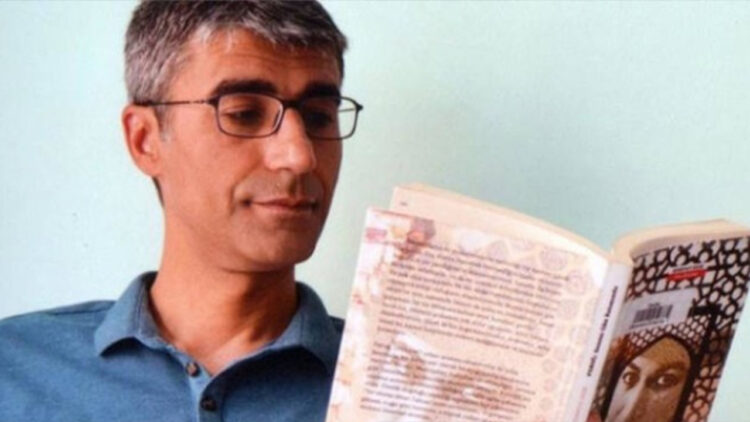
🔴Kurdish poet İlhan Sami Çomak released after 30 years imprisonment in Turkey
📌Kurdish Poet İlhan Sami Çomak gains freedom after 30 years in a Turkish prison! #IlhanSamiComak | #Freedom | #Turkey | #Prison
🔗https://t.co/QJPXljdE5f pic.twitter.com/uaccwzwCau— MedyaNews (@medyanews_) November 27, 2024
Poet İlhan Sami Çomak, detained in 1994 at the age of 21, was freed last night after serving 30 years in prison in Turkey. His long-awaited release, celebrated by human rights activists and the literary world, has brought renewed focus on other prisoners whose imprisonment has been unlawfully extended.
Speaking to supporters after his release, Çomak expressed concern for those still behind bars. “I have left behind many people I care about. There are friends whose sentences have been unlawfully extended or unfairly prolonged by the administration and the [prison] monitoring committees. These injustices must be addressed immediately,” he said.
Another blow to justice: İlhan Sami Çomak’s release postponed by 3 months. 29 years, but still standing strong.#HumanRights (https://t.co/a6RjXaxlpW) pic.twitter.com/iTmRkLMJnE
— MedyaNews (@1MedyaNews) August 22, 2024
During his imprisonment, İlhan Sami Çomak published eight books of poetry and received international acclaim. While his release is being hailed as a significant milestone, advocates hope it will also draw attention to the systemic injustices suffered by prisoners such as Diyarbakır (Amed) student Ali Koç, imprisoned in 1992, and Remziye Polat, a young woman arrested nine years ago at age 16, both of whom have already completed the terms they were expected to serve.
Ilhan Sami Çomak is FREE!
I am overjoyed that the Kurdish poet, Ilhan Sami, has been released after 30 years of imprisonment. To him, his family, and his supporters, I send my warmest wishes. I can’t wait to read more of his poetry written as a free man.******************… pic.twitter.com/r7jacEmJff
— Gianluca Costantini (@channeldraw) November 26, 2024
Turkey has been widely criticised for its treatment of political prisoners and its use of lengthy prison sentences, which are often seen as a tool to stifle dissent. Many people accused of political crimes, including journalists, academics, activists and Kurdish politicians, have received disproportionately long sentences on charges such as ‘membership of a terrorist organisation’ or ‘disrupting the unity and integrity of the state’.
A major point of contention is Turkey’s parole system, which often requires prisoners to show ‘remorse’ or ‘good behaviour’ in order to be eligible for release. These subjective criteria are often used to deny parole, even when prisoners have served their full sentences. Furthermore, the Administrative and Monitoring Committees tasked with assessing parole eligibility have been criticised for their lack of transparency and their tendency to punish prisoners for holding political beliefs or associating with other political prisoners.
Turkey’s now-defunct State Security Courts, which operated from 1972 to 2004, played a major role in the sentencing of many political prisoners. These courts, often headed by military judges, were criticised for their lack of independence and their harsh sentences against Kurdish activists and opposition figures. Although they have been abolished, their legacy remains, as many of their decisions have yet to be reviewed.
Turkey’s prison system continues to come under scrutiny for its treatment of prisoners today. There are widespread reports of inhumane conditions, arbitrary punishment and rights violations, including cell searches and restrictions on family visits. The cases of İlhan Sami Çomak, Ali Koç and Remziye Polat illustrate how systemic problems within the judiciary and prison system prolong the imprisonment of many prisoners, even when legally the sentences have been served.
This has made Turkey one of the countries most criticised by international watchdogs for its human rights violations, highlighting the urgent need for reforms in its judicial and prison systems.
Ali Koç has served over 31 years of a life sentence for ‘disrupting the unity and integrity of the country’. Arrested in 1992 by the now-defunct State Security Courts, Koç was due to be released in December 2022. However, the parole board has repeatedly delayed his release, citing his “lack of remorse” and disciplinary record. Most recently, in January 2024, his release was again postponed for three months. Koç claims that at least 14 prisoners have been similarly denied parole despite having completed their sentences.
Another striking case is that of 25-year-old Remziye Polat, whose release from İzmir’s Şakran Women’s Prison has been delayed despite her also having served her sentence. Arrested as a teenager and sentenced to 12 years and 6 months for alleged “membership of a terrorist organisation”, Polat was due for parole on 11 October 2021. However, prison officials extended her sentence, once again claiming that she had not shown “remorse”. Her lawyer, Şükran Öztürk, argues that the decision is unfounded as Polat had no disciplinary charges against her at the time of her scheduled release.
Polat’s father, Şerafettin Polat, described the family’s heartbreak: “On the day we were expecting her home, we received a notice that her sentence had been extended. These practices are unlawful. Prisoners are insulted, oppressed and raided in the middle of the night. We worry about their safety every day.
The release of political prisoners Aydın Kudat and Abdurrahman Güner, who have been imprisoned since 1992 for alleged crimes against the state, has been delayed for the fourth time due to their refusal to repent. Despite having served over 32 years in prison and being eligible for parole under Turkish law, the administration of Karabük T-type prison postponed their release again on 28 August, citing their refusal to sign a statement of repentance.
Those examples, just a few of many similar cases, highlight growing criticism of Turkey’s parole system, where requirements such as showing “remorse” and subjective assessments of “good behaviour” have led to arbitrary delays. Critics argue that these practices violate prisoners’ rights and undermine the integrity of the justice system.