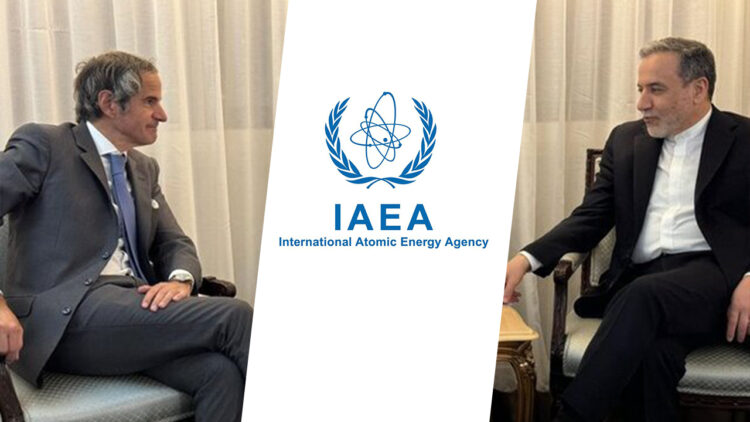
Donald Trump’s return to office is set to intensify economic and military pressures on Iran.
Following the US’s unilateral withdrawal from the Joint Comprehensive Plan of Action (JCPOA) during Trump’s first term, Iran substantially increased its enriched uranium reserves, amid growing global and regional tensions.
Last week, Rafael Grossi, Director General of the International Atomic Energy Agency (IAEA), met with Iranian officials in an attempt to ease rising tensions and limit Iran’s pursuit of nuclear weapons.
In a report to the IAEA Board of Governors on 20 November, Grossi indicated that Iran’s reserves of uranium enriched to 20% and 60% have continued to increase since the last IAEA report. However, he noted that Tehran has expressed readiness to halt enrichment at the 60% level. While the agency welcomed this as a positive development, many states are still expressing significant concerns.
In response to Grossi’s optimistic report, senior diplomats from Israel and the United States voiced concerns over Iran’s nuclear program during an interview with Iran International TV on 20 November.
Danny Danon, Israel’s Ambassador to the United Nations, urged the international community to be alarmed by Iran’s increasing uranium reserves, which he believes signal Tehran’s intent to acquire nuclear capabilities. He predicted that the Trump administration would exert additional pressure on Iran.
Israel itself has had a secret nuclear weapons programme for decades.
Similarly, Robert Wood, the US Deputy Permanent Ambassador to the United Nations, reiterated concerns over Iran’s 60% uranium enrichment activities, highlighting ongoing apprehensions about Tehran’s nuclear ambitions.
Meanwhile, Germany, Great Britain, and France have jointly submitted a draft resolution to the IAEA Board of Governors condemning Iran’s nuclear programme and calling for a comprehensive report from Grossi regarding these developments.
Despite Iran’s announcement that it is prepared to cease high-concentration uranium enrichment ahead of the Board of Governors meeting —where a resolution against Tehran may be proposed — Western concerns about Iran’s nuclear program are unlikely to subside.
In response to these developments, Iranian Foreign Minister Abbas Araghchi warned that any resolution passed by the Board would disrupt Iran’s relations with the IAEA.
In parallel, Kazem Gharibabadi, Deputy Minister for Legal and International Affairs in Iran, stated that if a resolution is adopted, Tehran will respond decisively and immediately.
Since initiating its controversial nuclear program, Iran has covertly established research and military facilities related to uranium enrichment across various locations to mitigate the risk of a direct attack from Israel. However, following Israel’s theft of Iranian nuclear documents, many of these sites have been exposed.