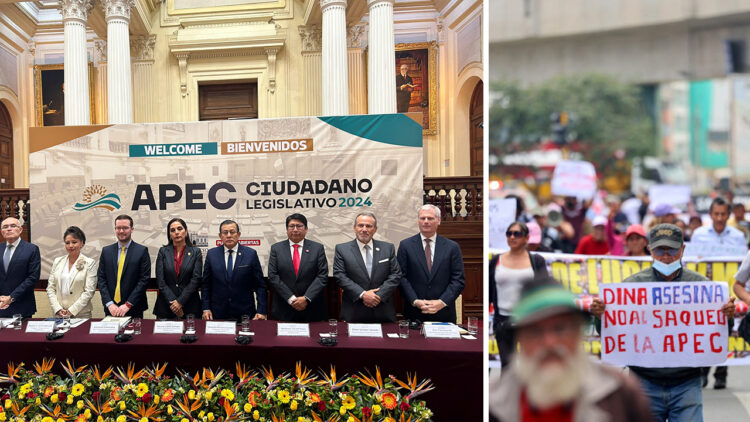
A general national strike is taking place across Peru from 13 to 15 November, coinciding with the Asia-Pacific Economic Cooperation (APEC) summit in Lima, where world economic leaders including the US, China and Japan, as well as various international corporations, are meeting. The strike has been strongly opposed by the government, which has threatened organisers with charges of “treason against the nation” in an attempt to stifle dissent.
The strike is broadly supported by unionised transport workers, students, public sector workers and other social groups. Demonstrators are calling for the government to take stronger action against corruption and organised crime, and for the removal of President Dina Boluarte and new elections.
Protests and strikes are intensifying in Lima and other major cities, with heightened security and restricted movement in key areas of the capital. The government has ramped up security, deploying over 15,000 police and soldiers, closing major roads, and instituting remote work and virtual classes for public employees and students.
The US Embassy in Peru has issued an alert, noting that “protest activity and strikes may occur with little or no notice in various locations.” The embassy has advised citizens to avoid demonstrations, remain vigilant, and prepare for potential disruptions. “Expect heavy traffic and limited transportation options. Organizations in other cities may also decide to join the strikes and demonstrations on short notice,” the embassy stated.
Demonstrations concentrate near government buildings and major public squares in Lima. Transport disruptions and the closure of businesses and markets are affecting daily life in several regions, with many public and private services disrupted.