

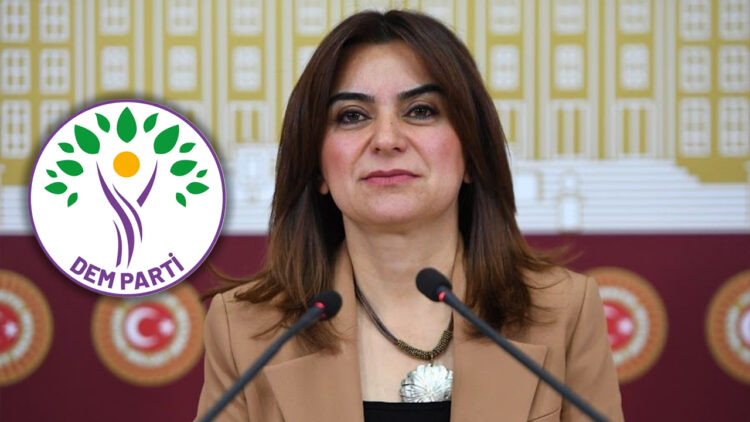
Turkey’s pro-Kurdish People’s Equality and Democracy (DEM) Party announced a week-long parliamentary boycott, launching on Tuesday, to protest recent government-appointed trustees in Kurdish-majority cities of Batman (Elîh), Mardin (Merdîn), and Halfeti (Xelfetî). The party condemned these appointments as a direct assault on democratic norms and the rights of local representation, saying the government’s actions undermine the will of Kurdish voters.
At a press conference at the Turkish Parliament, DEM Party Deputy Chair Gülistan Kılıç Koçyiğit articulated her party’s stance, announcing that DEM members will withdraw from the General Assembly, Plan Budget Commission, and other parliamentary committees throughout the week. In addition, the DEM Party co-chairs are expected to travel to Mardin, where they will conduct a group meeting on Tuesday to underscore their objection to the third trusteeship in the city.
“The government’s repeated imposition of trustees disregards the voice of Kurdish communities,” said Koçyiğit, labelling the trustee appointments as systematic efforts to dismantle local democracy. She argued that by removing elected officials and appointing trustees, the government effectively nullifies democratic choices in these regions, eroding the foundations of democratic governance.
Koçyiğit further highlighted the broader implications of these actions, describing them as violations of human rights that foster marginalisation and disenfranchisement among Kurdish citizens. The appointments, she argued, fit into a broader strategy by the ruling Justice and Development Party (AKP) to consolidate power, stifle dissent, and sideline opposition voices, especially in Kurdish-majority areas.
“This is not just an isolated incident. It reflects a worrying trend in Turkey’s political climate, where opposition is increasingly quashed through legal and administrative manoeuvres,” she added, calling on other opposition parties and non-governmental organisations to unite against what she described as an “attack on democracy.”
The Turkish government has frequently cited alleged ties between Kurdish administrations and terrorism to justify trustee appointments in Kurdish-majority cities. However, Koçyiğit rebuffed these allegations as baseless, asserting that the true motive was to curb Kurdish political influence. Critics say the government’s approach, which disregards electoral outcomes, risks alienating Kurdish voters and exacerbating state-community tensions.
Koçyiğit emphasised that DEM Party’s parliamentary boycott marks the beginning of a sustained resistance to government policies. The party plans to raise awareness of the issue on international platforms, advocating reforms to protect local governance and strengthen democratic principles across Turkey.


