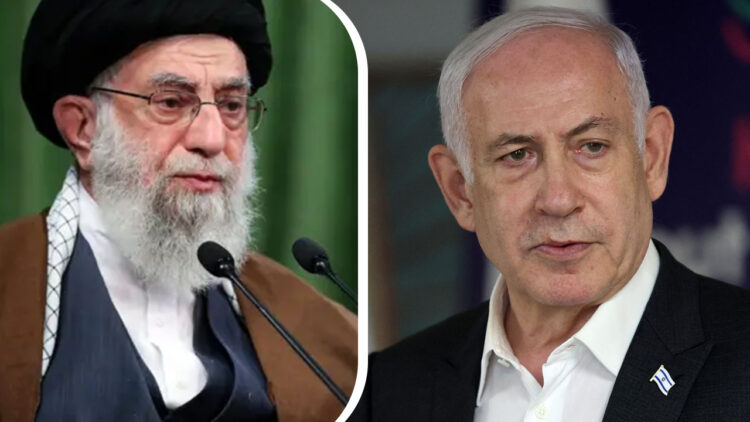
Following Israel’s strikes on Iran’s military facilities on 26 October, Ali Khamenei, Iran’s Supreme Leader and Commander-in-Chief, assigned responsibility for retaliation to Iran’s government officials, and especially to the Supreme National Security Council.
However, as of 31 October, the escalation in rhetoric from senior Iranian officials suggests that the region stands on the brink of a new conflict.
On 31 October, during a speech in Shiraz, Commander-in-Chief of the Revolutionary Guards, Hossein Salami, warned that Iran’s response to Israel would be “unimaginable.”
In parallel, IRGC Deputy Commander Ali Fadavi emphasised, in an interview with al-Mayadeen, that the Islamic Republic of Iran “will certainly respond” to Israel’s aggression.
Adding to this, Khamenei’s chief of staff, Mohammad Mohammadi Golpayegani, pledged a “harsh and regretful response” to Israel at a Tehran memorial for Hashem Safiuddin, a Hezbollah executive council leader.
Iran’s Foreign Minister Abbas Araghchi reinforced Iran’s “right to respond” and highlighted that any response would be “proportionate and appropriate.”
As speculation grows around Iran’s impending attack, Israeli media outlet Kan News reported that Iran’s response could emanate from Iraq.
Shortly after, the New York Times, citing three Iranian officials, reported that Khamenei had directed the Supreme National Security Council to prepare for retaliation, potentially from both Iranian territory and abroad, likely ahead of the US presidential election.
According to Axios, Israeli intelligence assessments indicate Iran may be readying an attack by its proxies from Iraq in the coming days, involving a “large number” of drones, missiles, and allied forces.
The Biden administration has meanwhile urged restraint, calling on Iran to forgo retaliation and stressing US support for Israel. White House spokesperson Karine Jean-Pierre reaffirmed the US stance, asserting that America “stands ready to support” Israel if needed.
Meanwhile, Israeli Prime Minister Benjamin Netanyahu, in a recent cabinet meeting, underscored his government’s focus on preventing Iran from acquiring nuclear weapons, asserting that Israel now has unprecedented “freedom of action” in Iran.
Referring to Iran as an “octopus,” Netanyahu declared that, we are destroying the arms of the octopus while also striking at its head. He also claimed that “we are reshaping the Middle East.”
Israel struck Iran on 26 October in an operation called “Days of Repentance“, which reportedly targeted over 20 significant military sites across Shahroud, Tehran, Khuzestan, and Ilam. Although Iranian officials have downplayed the impact, aerial photographs reveal the extent of the attacks.