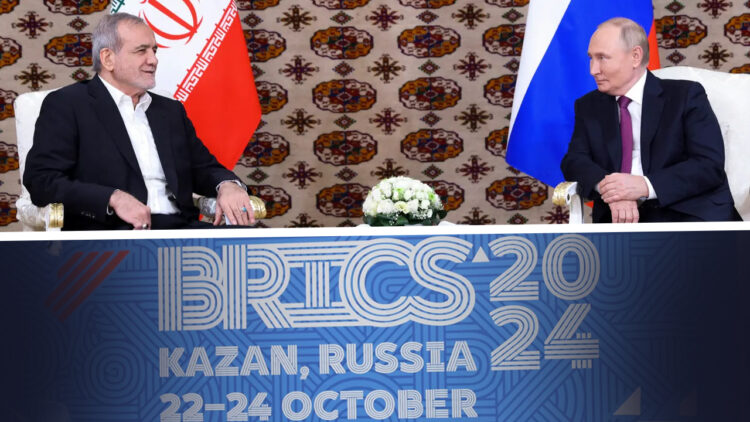
The BRICS summit marked a pivotal moment in international relations, with President Vladimir Putin announcing Iran’s formal accession to the bloc. This expansion underscores BRICS’ ambition to challenge Western hegemony and promote a multipolar world order. At the summit, leaders also adopted the ‘Kazan Declaration’, and held important discussions on energy security, with BRICS leaders emphasising the need for stable energy supplies amid ongoing geopolitical tensions, particularly in the Middle East and Eastern Europe.
Key discussions and outcomes
The summit concluded with the adoption of the ‘Kazan Declaration’, which reaffirmed the BRICS’ members commitment to multipolarity and global governance reform. Leaders discussed the challenges of de-dollarisation and strategies to promote trade and investment through local currencies. However, the inclusion of new members such as Iran, Egypt, Saudi Arabia and the United Arab Emirates signals BRICS’ intention to expand its reach and strengthen cooperation between the global south.
Iran’s admission is seen as an important step in raising the group’s economic and strategic profile, especially given the country’s geopolitical importance and strained relations with Western powers. Iran’s inclusion adds to the diversity of the bloc, giving BRICS greater influence on key global issues such as energy, regional security and economic development.
Geopolitical implications
The timing of the summit coincides with heightened geopolitical tensions, notably Russia’s ongoing conflict with Ukraine and the Israel-Gaza war. Putin’s leadership has emphasised Russia’s strategic pivot to BRICS as an alternative to the Western-led international order. The inclusion of Iran further strengthens Russia’s ties within the bloc, in line with Moscow’s goal of fostering partnerships beyond the West.
Nevertheless, internal divergences remain, particularly in how BRICS members approach issues such as the war in Ukraine. Countries such as India, Brazil and South Africa maintain a more neutral or non-aligned stance, focusing on maximising their diplomatic options while avoiding taking sides in great power rivalries.
Challenges ahead
While the expansion of BRICS is a significant development, it also poses challenges. The bloc’s ambitions to create a common global currency have yet to materialise, and the increasing diversity within BRICS may test its internal coherence. With new members such as Iran bringing different strategic and political priorities, the grouping must navigate these complexities to maintain unity.