

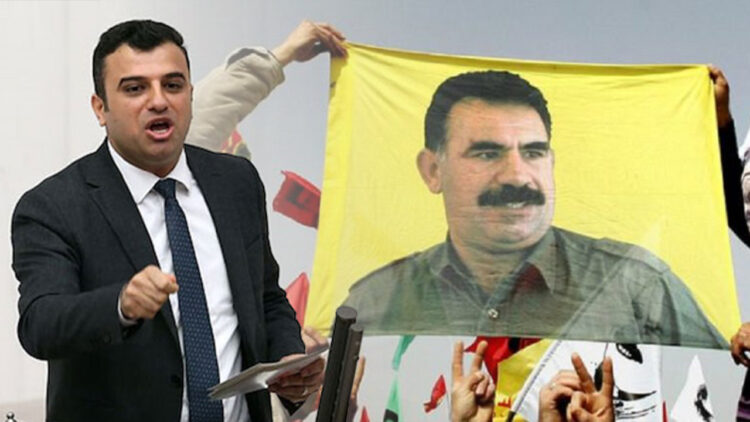
Turkey’s pro-Kurdish Peoples’ Equality and Democracy (DEM) Party MP Ömer Öcalan has openly questioned the legal justification for Abdullah Öcalan’s prolonged isolation, challenging Turkish President Recep Tayyip Erdoğan and the Justice Ministry to apply the law. In a post on X (formerly Twitter) on Sunday, Ömer Öcalan called for the Turkish government to lift the restrictions preventing the family from visiting the imprisoned Kurdistan Workers’ Party (PKK) leader, who has been held at İmralı Island Prison for over 26 years.
“For us, Abdullah Öcalan’s health is paramount,” Ömer Öcalan, the Abdullah’s brother, said in his message. “We want to exercise our rights under national and international law. We, as his family, wish to visit him and use our right to routine meetings. Why is the law not applied to İmralı?”
The tweet directly addressed Erdoğan and Justice Minister Yılmaz Tunç, tagging their official accounts in an effort to bring attention to Abdullah Öcalan’s situation. The PKK leader has been in solitary confinement for the majority of his imprisonment, with the last contact made during a brief, interrupted phone call with Ömer in March 2021.
Abdullah Öcalan’s severe isolation has sparked rallies across Turkey’s Kurdish-majority regions in recent weeks. Protests have erupted in Diyarbakır (Amed), Van (Wan), Batman (Êlih) and other cities, with demonstrators calling for an end to Öcalan’s isolation and a political solution to the ongoing Kurdish question.
The demonstrations have drawn a strong response from the authorities, with riot police blocking access to protest sites. Despite these efforts, Kurdish activists have continued to gather, chanting slogans such as “Bijî Serok Apo” (Long Live Our Leader Apo), expressing their support for Öcalan and resistance to the government’s repressive policies.
“The isolation of Abdullah Öcalan is a violation of human rights,” said a protester in Diyarbakır, speaking on the condition of anonymity. “If there is to be peace in Turkey, it must include dialogue with the Kurdish people, and that starts with Öcalan.”
Kurdish political representatives have long argued that Öcalan’s role is central to any resolution of the Kurdish issue. They see his isolation not only as a punitive measure but as a barrier to progress on political reforms that could address long-standing grievances of the Kurdish population in Turkey.


