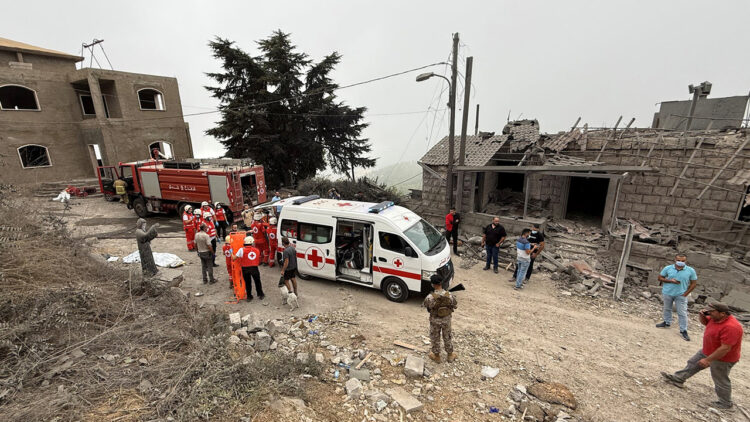
Over the past three weeks, tensions between Israel and Hezbollah have escalated sharply, with Israeli military operations intensifying across southern Lebanon. These actions have caused significant displacement and destruction, with more than a quarter of Lebanon now under evacuation orders, according to the UN refugee agency, as reported by Reuters.
The Lebanese government says more than 2,300 people have been killed in Lebanon under Israeli air strikes over the past year, and more than 1.2 million from a population of 5.8 million have been displaced, mostly from southern Lebanon. Tensions have been high since Hezbollah reignited its conflict with Israel by launching rocket attacks in solidarity with Hamas. The number of casualties has risen sharply, particularly since late September, when Israel stepped up its campaign.
Israeli Prime Minister Benjamin Netenyahu said Israel’s goal is to cripple Hezbollah’s infrastructure and secure the return of northern Israeli residents displaced by Hezbollah rocket fire. On Monday, an Israeli airstrike on a house in a predominantly Christian village in northern Lebanon killed at least 22 people, mostly women and children seeking refuge from earlier bombings.
The northern Lebanon strike prompted the UN to raise concerns over Israel’s possible violation of international law, while Netanyahu vowed to continue operations against Hezbollah “without mercy” throughout Lebanon.
The escalation of violence has renewed sectarian tensions in the country. More than a million people, mostly Shia Muslims, have sought refuge in Christian and Sunni-majority areas, with towns such as Christian-majority Marjayoun, which offered temporary shelter, later being targeted due to the presence of displaced Shi’ites.
The situation has brought back painful memories of Lebanon’s 15-year civil war, during which sectarian divisions fuelled widespread violence, leaving 150,000 dead. Beirut’s already strained infrastructure is buckling under the weight of the newly displaced population.
Analysts warn that the displacement crisis could ignite widespread sectarian violence. The UN refugee chief has echoed these concerns, calling Lebanon a ‘fragile country’ and urging all parties to consider the risks of further destabilisation.
Furthermore, the situation regarding Israel’s potential retaliation against Iran is precarious. Following a barrage of missiles launched by Iran in response to Israeli attacks in Lebanon on 1 October, Israeli officials have indicated that they will decide on counterattacks based on national interests.