

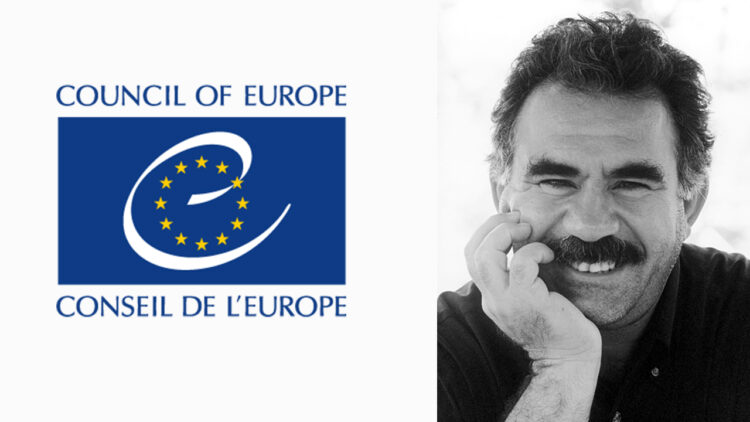
The Council of Europe (CoE) has urged Turkey to implement crucial reforms to its legal system, which currently does not allow for the review of aggravated life sentences. During a three-day meeting from 17 to 19 September, the CoE’s Committee of Ministers called on Turkey to introduce a mechanism that would allow sentence reviews after a certain period. The case of Kurdish leader Abdullah Öcalan, who has been serving an aggravated life sentence in solitary confinement for 25 years, featured prominently in the discussions.
The European Court of Human Rights (ECtHR) had previously ruled that Turkey’s failure to provide a review mechanism for such sentences violates the Right to Hope. The Committee of Ministers stressed that the Turkish authorities must introduce a system that would allow all prisoners serving aggravated life sentences the possibility of review and potential release, unless the individual remains a danger to society.
“The Court stressed…that this finding cannot be understood as giving the applicants the prospect of imminent release, but merely requires the national authorities to put in place a review mechanism in the light of the standards already set out by the Court,” the Committee of Ministers recalled.
Despite these rulings, Turkey has made no progress in implementing the required reforms. The Committee “Expressed deep concern that no progress has been achieved to this end and strongly urged the authorities to take the necessary measures without further delay.”
Öcalan’s continued detention under these conditions, along with hundreds of others serving aggravated life sentences without any prospect of review, remains a significant human rights issue for Turkey. The Committee has repeatedly called on Turkey to follow the examples of other member states that have introduced similar review mechanisms in line with ECtHR standards.
“The execution of these judgments requires the adoption of legislative or other adequate measures to secure a mechanism that would allow the review of any aggravated life sentence after a certain minimum term with a possibility of release,” the Committee stated.
The Council of Europe also invited Turkey to provide information on how many individuals are currently serving aggravated life sentences without access to a review mechanism. The Committee warned that if no progress is made by September 2025, an interim resolution may be considered.
Responding to the Council of Europe’s call, OcalanVigil.net released a statement, lamenting the Committee for putting off “taking any action that might push Turkey to comply with the ruling of their own European Court of Human Rights.”
“We are left wondering if we can even hope for Abdullah Öcalan to be granted his Right to Hope – and what is the point of the Council of Europe?” the vigil added.
“We have to record, with sadness and anger, but no longer surprise, that despite all the representations and campaigning made on Öcalan’s behalf, the Committee felt it enough to put off for a further year doing anything beyond ‘expressing deep concern’ and ‘urging’ Turkey to obey the law,” they said, concluding that the campaign to “raise the profile” of not only Öcalan’s case, but that of Selahattin Demirtaş as well, must now continue.


