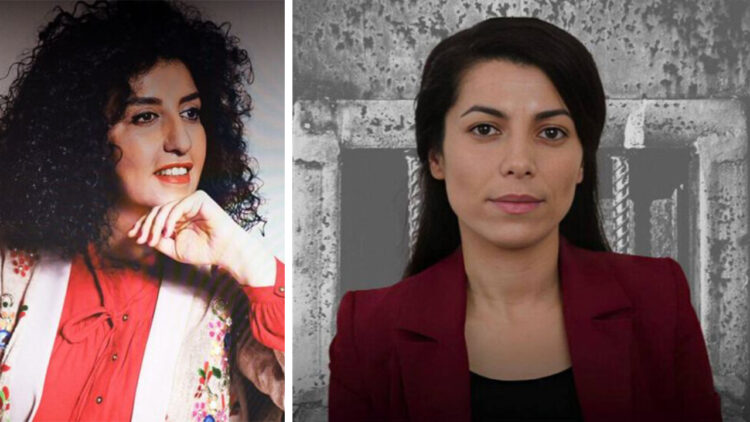
Nobel Peace Prize laureate Narges Mohammadi and Kurdish activist Warisha Moradi were both injured during a violent crackdown by Iranian authorities on female political prisoners in Tehran’s notorious Evin Prison on Wednesday. The prisoners had been protesting against the execution of Kurdish youth Reza Rasayi, which took place on Tuesday.
Mohammadi’s family reported that she and several other women had gathered to protest against the execution when the prison authorities were ordered to beat the protesters. “They were ordered to assault the women, particularly those leading the protests,” Mohammadi’s family said, adding that she was struck in the chest, causing severe pain and respiratory issues. Mohammadi lost consciousness in the prison courtyard and was later treated in the prison infirmary, but was not transferred to a hospital. “We are deeply concerned about her health,” her family stated.
Narges Mohammadi, a 52-year-old human rights activist who was awarded the Nobel Peace Prize in 2023, has been imprisoned since November 2021 and has spent much of the past decade in detention. Her family, who resides in Paris, has had no direct contact with her since November 2023, when her telephone privileges were revoked. They learned of these recent events through the families of other prisoners.
In the same incident, Kurdish activist Warisha Moradi, a member of the Free Women’s Organisation of East Kurdistan (Komelgeha Jinên Azad ya Rojhilatê Kurdistanê or KJAR), was also brutally beaten by Iranian police. Reports indicate that Moradi was tortured on the orders of a prison officer named Hadi Mohammadi. She sustained multiple injuries, with bruises and wounds covering much of her body, yet was denied medical treatment. Moradi has been held in Evin Prison since being transferred there in January 2024 following her arrest in Sine on 1 August 2023
Moradi’s case is part of a broader pattern of repression against Kurdish political detainees in Iran, who are often subjected to harsh treatment and denied basic rights. Other Kurdish women, including Zeynab Jalalian, imprisoned since 2008, and Sharifa Mohammadi and Bakhshan Azizi, both facing death sentences, are also among those who continue to suffer under these repressive conditions.