

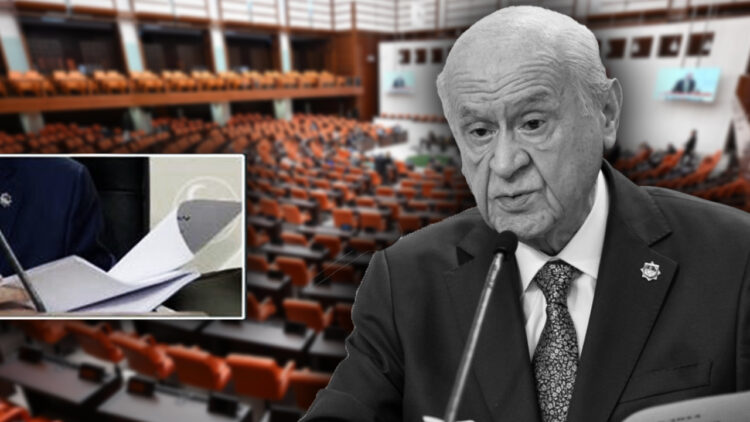
Turkish far-right leader and Erdoğan ally Devlet Bahçeli has publicly issued a list of 154 critics, including 63 journalists, labelling them as attempting to undermine his party, the Nationalist Movement Party (MHP).
The list is linked to the ongoing case of Sinan Ateş, a former Grey Wolves (Ülkü Ocakları) leader, murdered in an intra-party conflict. It was first submitted to the court by the MHP, with the allegation that those on the list are trying to defame the party by claiming its involvement in the Ateş murder, and then publicly announced by Bahçeli at a press conference. The International Press Institute (IPI) has condemned the list, citing it as an attempt to intimidate the media.
On 26 July, IPI criticised the list, stating, “This derogatory labeling, in the form of a blacklist, is a clear attempt to discredit these journalists. This list not only targets critical voices but also exemplifies an attempt to intimidate the judiciary.” The organisation urged the Turkish government and all political parties to respect press freedom and ensure the safety of journalists.
The MHP, historically known for its involvement in political murders of dissidents and leftists, has recently faced allegations of intra-party violence, highlighted by the murder of Ateş. Bahçeli’s list aims to discredit those who have commented on the case, accusing them of attempting to tarnish the party’s reputation. He warned that the dossier would be acted upon “when the time comes”. While he reassured that they would settle this issue through legal means, the party’s troubled past has concerned political commentators.
According to the opposition Politikyol website, the list originated in anticipation of an ‘influence agent’ law expected in the ninth judicial package. MHP sources revealed that it was initially compiled to file criminal complaints under this law. However, the law’s exclusion from the package allegedly led to frustration within the MHP towards their coalition partner, the Justice and Development Party (AKP).
The publication of the list has sparked significant debate in the Turkish Parliament. On 23 July, main opposition Republican People’s Party (CHP) Group Deputy Chairman Ali Mahir Başarır criticised the list during a parliamentary session, saying, “This is profiling, and if anyone is harmed, the government will be held accountable.” Başarır questioned the purpose of the list, arguing it was neither a criminal complaint nor a witness list but rather a means to intimidate critics.
MHP Group Deputy Chairman Erkan Akçay responded, stating, “There is no targeting, profiling, or threat involved. This is a public complaint shared with the nation.” Akçay insisted the list was a legitimate means of submitting information to the courts. However, Başarır countered, “If these names are neither suspects nor witnesses, why were they submitted? The courts are not platforms for political messages.”
The list includes prominent journalists, politicians and academics. Among the names are politicians such as the CHP leader Özgür Özel, the Peoples’ Equality and Democracy (DEM) Party’s Gülistan Kılıç Koçyiğit, Workers’ Party of Turkey’s (TİP) Erkan Baş, journalists such as Murat Yetkin and Nevşin Mengü, and commentators like Erol Mütercimler. The inclusion of such a diverse group has raised concerns about the broader implications for freedom of expression in Turkey.
IPI emphasised that the list acts as a blacklist, seeking to undermine and intimidate journalists, while also exerting pressure on the judiciary. The organisation highlighted that this tactic damages judicial independence and criminalises journalism.


