The UK government under Prime Minister Keir Starmer has withdrawn its objection to the International Criminal Court (ICC) arrest warrant for Israeli Prime Minister Benjamin Netanyahu, marking a significant shift in the country’s stance on the Israel-Palestine conflict. The UK’s Labour Party is also considering halting arms exports to Israel amid mounting pressure and legal challenges.
The decision marks a significant change from the previous administration under the Conservative Party’s Rishi Sunak, which had opposed the ICC’s warrants for Netanyahu and Israeli Defence Minister Yoav Gallant. A spokesperson for the UK Prime Minister’s Office stated that the current government believes the court should make decisions independently, reflecting Starmer’s support for the ICC and international law. “The court must be able to make its decisions in due course. I support the court and international law,” Starmer had previously stated.
In addition, the UK government has reinstated and increased its financial support to the United Nations Relief and Works Agency for Palestine Refugees in the Near East (UNRWA). On 19 July, it was announced that £21 million would be allocated to UNRWA, reversing a previous suspension of aid. This includes £6 million for emergency projects in Gaza and the West Bank, and £15 million for essential projects in the occupied West Bank.
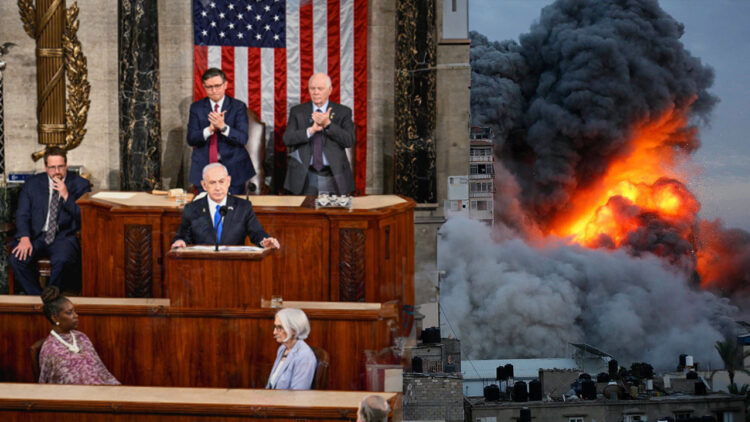
This decision comes as Netanyahu faces growing international criticism for Israel’s military campaign in Gaza. Addressing the United States Congress on Thursday, Netanyahu defended Israel’s actions, claiming minimal civilian casualties and blaming Hamas for suffering in Gaza.
A Lancet study estimates that the cumulative death toll from the ongoing Gaza conflict could exceed 186,000, considering both direct violence and indirect effects. The official toll, over 39,000 since the conflict began in October 2023, underrepresents the total impact due to factors like destruction of infrastructure, healthcare and food systems. The study stresses that indirect deaths from disease and infrastructure damage could vastly exceed direct casualties. It highlights the challenge of keeping accurate death tolls amid extensive infrastructure damage and funding shortages. It also calls for comprehensive documentation to ensure accountability and historical record.
“Israel has allowed 40,000 aid trucks into Gaza,” Netanyahu asserted, a figure disputed by the United Nations’ reported total of approximately 30,000. His claims of targeted military operations also contradicted reports of indiscriminate bombings and civilian harm.
The two main presidential candidates, Republican Donald Trump and Democrat Kamala Harris, have signalled contrasting positions regarding the Israel-Palestine conflict. Trump emphasised his strong relationship with Netanyahu and highlighted past pro-Israel8 policies, including moving the US embassy to Jerusalem and withdrawing from the Iran nuclear deal. He criticised Harris for her remarks on the humanitarian impact in Gaza, calling them “disrespectful”. In contrast, Harris voiced serious concerns about the situation in Gaza, emphasising the importance of the way Israel defends itself. She placed an emphasis on the suffering of Palestinian civilians, signalling a potential shift in US policy if she becomes president.
On Friday, Australia, Canada and New Zealand made a joint call for an immediate ceasefire in Gaza, citing the severe humanitarian impact of the ongoing conflict, which has lasted for 292 days. They emphasised the need to protect civilians and end the violence, criticised Israeli settlements as illegal per the International Court of Justice (ICJ) and urged a renewed peace process with a two-state solution. The nations also highlighted the urgent need for increased humanitarian aid.
Last week, the ICJ ruled the Israeli occupation of Palestinian territories illegal, urging Israel to end its presence and evacuate settlers from the West Bank and East Jerusalem, compensating for damages. The Court also imposed measures for Israel to halt its military offensive in Rafah in the Gaza Strip. Separately, the ICC is pursuing war crimes charges against both Israeli and Hamas leaders, with the UK government now expected to withdraw its objections.
Earlier this week, fourteen Palestinian factions, including Fatah and Hamas, agreed to form a unity government in a landmark agreement brokered by China. This diplomatic breakthrough aims to foster internal Palestinian cohesion and address post-war governance.
Reports also suggest that Israeli, US and UAE officials are considering a post-war plan for Gaza in secret meetings in Abu Dhabi, potentially involving international peacekeeping forces.