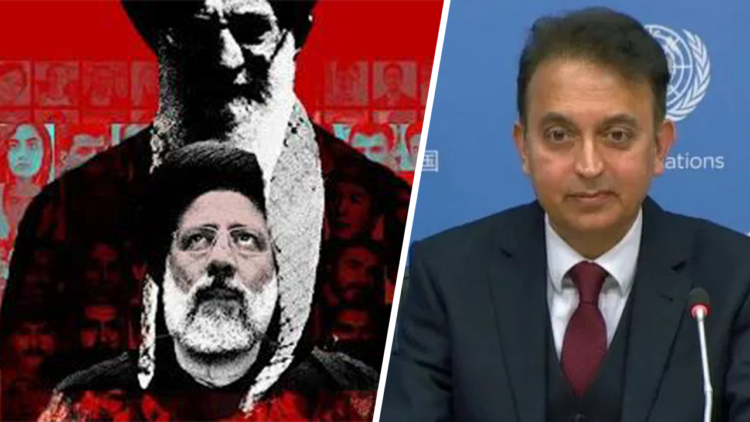
United Nations Special Rapporteur Javaid Rehman’s latest report condemns Iranian leaders for extensive human rights violations, particularly against ethnic minorities, urging accountability for past atrocities and highlighting ongoing abuses, as Mai Sato takes on the role of new Special Rapporteur on Iran.
Rehman stressed that Iranian leaders who committed crimes against humanity and genocide in the Islamic Republic of Iran in the 1980s continue to enjoy impunity for “the worst and the most egregious human rights abuses of our living memory”. He also addressed the “arbitrary and discriminatory” constitutional provisions used to repress, sexually assault, torture, execute and disappear citizens, including women, children and dissidents, since the establishment of the Republic in 1979.
Rehman’s report highlights the repression of ethnic and religious minorities in Iran, including Kurds, Arabs, Turkmen, and Baluchis. It specifically cites the military attack on Kurdistan following the 1979 Revolution as a significant example of this oppression. It also details the Kurdish rebellion in Paveh in August 1979 and subsequent attacks by Revolutionary Guards on Kurdish towns.
Rehman emphasised that the past atrocities, including the mass execution of political prisoners in 1988, ordered by former Supreme leader Ruhollah Khomeini and carried out by a “Death Board” which included high-ranking officials such as Ebrahim Raisi, the former president of Iran who served until he died in a helicopter crash in May, are not solely a historical matter, with officials living under governmental privileges. Moreover, he said human rights violations in Iran, against political prisoners, women and children, continue, with the international community “unable or unwilling” to hold perpetrators to account.
In an earlier UN report Rehman addressed the on-going plight of ethnic and religious minorities, stating, “The condition of these minorities remains highly troubling. Baloch and Kurdish communities, particularly Kolbars (border traders) and fuel carriers, have faced arbitrary deprivation of life by government officials through extrajudicial executions and killings.”
Rehman expressed hope that the UN’s findings would lead to judicial action against current Iranian officials involved in the 1980s massacres. The United Nations Human Rights Council appointed Mai Sato, a Japanese lawyer, as the new United Nations Special Rapporteur on Iran during the 56th session. Sato is expected to resume work on the critical issues highlighted in Rehman’s report