

Sütun 1
Sütun 2
Sütun 3
Medya News
Daily News
Breaking News
Subscribe
No Result
View All Result
  • Home
  • All News
  • Opinion
  • Kurdistan
  • Women
  • Politics
  • Human Rights
  • INTERVIEW
  • More
    • SPECIAL REPORTS
    • ECOLOGY
    • WORLD
    • AUDIO ARTICLES
    • JOURNALISM
    • ECONOMY
    • CULTURE & ART
    • LONG READS
    • NEWSLETTER
    • DAILY NEWS
MULTIMEDIA
PODCAST
LIVE BLOG
  • Home
  • All News
  • Opinion
  • Kurdistan
  • Women
  • Politics
  • Human Rights
  • INTERVIEW
  • More
    • SPECIAL REPORTS
    • ECOLOGY
    • WORLD
    • AUDIO ARTICLES
    • JOURNALISM
    • ECONOMY
    • CULTURE & ART
    • LONG READS
    • NEWSLETTER
    • DAILY NEWS
MULTIMEDIA
PODCAST
No Result
View All Result
Medya News

Forced migration of Kurds in Turkey is ‘linked to the Kurdish question’

Forced displacement and the evacuation of Kurdish villages by the Turkish state forces are connected to a strategical displacement policy targeting the Kurds, a migration expert states.

1:05 pm 21/06/2021
A A
Forced migration of Kurds in Turkey is ‘linked to the Kurdish question’
Share post

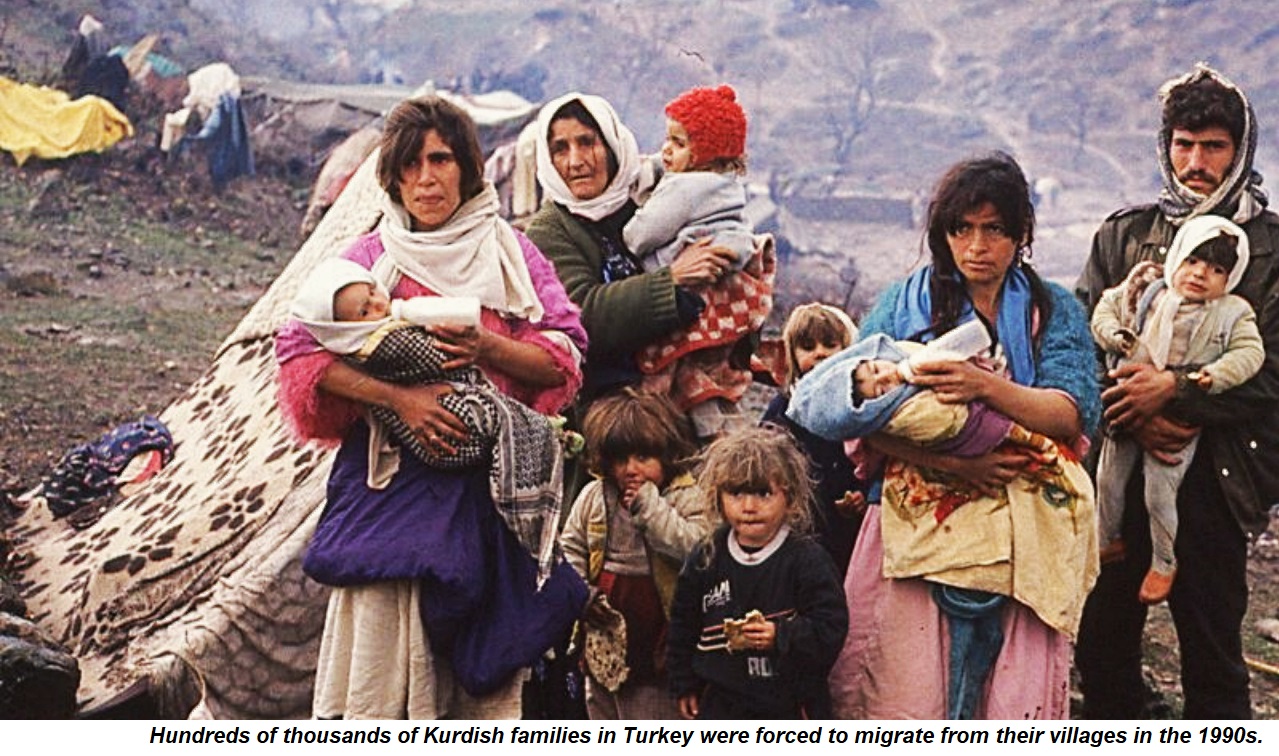
The forced displacement of the Kurdish population in Turkey was a deeply traumatic process. Hundreds of thousands of families were forced to migrate from their villages in the 1990s.

3 million Kurdish people were forcibly displaced, especially in the Kurdish provinces between 1990 and 1995 whilst 300 thousand were settled in Çukurova region, according to Çukurova Migration and Refugee Research and Monitoring Association’s (Çukurova Göç-Der) 2011 report.

Adding on the second generation of the migrated families to those figures, it is estimated to be over 1 million Kurds currently living in the region.

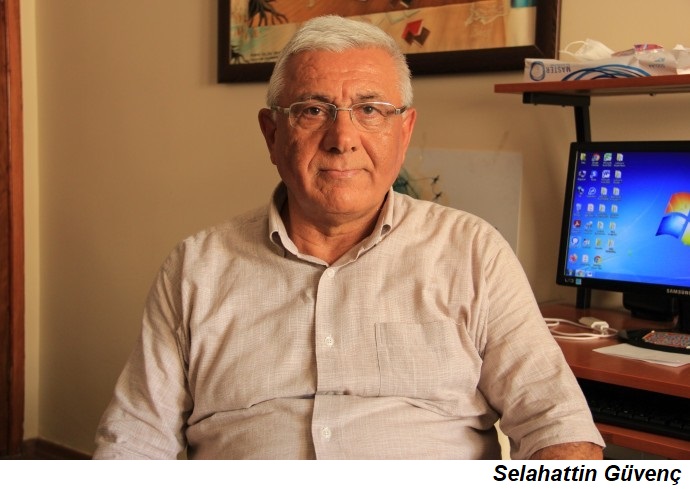
Speaking to MA, Selahattin Güvenç, Çukurova Göç-Der Co-chair emphasised the legal basis for Kurdish migration which was based on the “Reform Plan for the East” (Şark Islahat Planı) the basic pillars of which have been described as assimilation, mass deportation and mass killings.

“On this legal basis, Kurdish forced migration has been systematically continued like this to the present day,” he said.
“The forced migration policy is a problem linked to the Kurdish question and its solution depends on the solution of the Kurdish question. The state does not want to solve the Kurdish issue. The demand for identity and cultural rights, continue to be violently suppressed. This problem will continue unless it is solved by peaceful methods,” he stated.

Underlining that Turkey is a country of migration, Güvenç said, “Turkey has experienced several migration waves, but Kurdish migration has a specific importance among these waves, because this was a forced mass migration systematically planned by the state.”

He added: “Tens of thousands of Kurds migrating to the West in the first years of the Republic is an example of this systematic policy. With the Emergency Law (OHAL) in 1990s, more than 4 thousand of Kurdish residential areas being evacuated is another example of these migrations.”
Güvenç noted that the Kurdish migration during the 1990s in Turkey has been defined as the “migration of the century” and informed that more than 3 million Kurds were displaced during this massive wave of migration.

He stressed that the Kurds were also then subjected to “discrimination” in the Turkish western cities where they were forcibly displaced to.

“Just like the problems experienced by Syrian refugees today, Kurds were exposed to discrimination, violence and hate crimes in the Western cities they migrated to. Migrations do not only cause urban problems and traumatic problems, but also a great social destruction for the Kurds in terms of language and culture,” he said.

Güvenç recalled the so called ‘peace process’ in Turkey between the years of 2013 and 2015 and the positive effect of that process on the hopes of millions of Kurds to return. “Many families returned to their lands during the peace process. If this process had of continued, returning would have been easier. Currently, the Kurdish geography in Turkey is mostly depopulated,” he said.

Field studies also show that almost one out of every two Kurds want to return to their homelands. According to the research conducted by Bilgi University in 2011, the rate of those Kurdish citizens who want to return their homelands is 40 percent.

”For the authorities to provide conditions for return is everyone’s hope actually,” Güvenç said. “If the village guard system is abolished, if the oppression and violence ends, if the Kurdish problem is resolved peacefully, at least one third of those forcibly displaced from their land would return.”


Share post
Tags: Trending

Related Posts

Daily News : 06 November 2024

Daily News : 06 November 2024

November 6, 2024
Daily News : 05 November 2024

Daily News : 05 November 2024

November 5, 2024
Daily News : 03 SEPTEMBER 2024

Daily News : 03 SEPTEMBER 2024

September 3, 2024
Fifty more detainees released under amnesty for internal peace in North and East Syria

Fifty more detainees released under amnesty for internal peace in North and East Syria

September 3, 2024
Uncle of missing child in Turkey arrested as case exposes broader child safety issues

Uncle of missing child in Turkey arrested as case exposes broader child safety issues

September 3, 2024
Turkey’s bid to join BRICS raises questions within NATO

Turkey’s bid to join BRICS raises questions within NATO

September 3, 2024

The news content on our website cannot be quoted without permission, even by citing the source. It cannot be copied or published elsewhere, contrary to the law or without permission.

Follow Medya News

Categories

  • All News
  • Politics
  • Human Rights
  • Opinion
  • Kurdistan
  • Human Rights
  • Interview
  • Women
  • Audio Articles
  • Special Report

Quick Menu

  • Daily News
  • Live Blog
  • Podcast
  • Videos
  • Breaking News

About

Impressum

About us

Privacy Policy

Welcome Back!

Login to your account below

Forgotten Password?

Retrieve your password

Please enter your username or email address to reset your password.

Log In
We use cookies on our website to give you the most relevant experience by remembering your preferences and repeat visits. By clicking “Accept All”, you consent to the use of ALL the cookies. However, you may visit "Cookie Settings" to provide a controlled consent.
Cookie SettingsAccept All
Manage consent

Privacy Overview

This website uses cookies to improve your experience while you navigate through the website. Out of these, the cookies that are categorized as necessary are stored on your browser as they are essential for the working of basic functionalities of the website. We also use third-party cookies that help us analyze and understand how you use this website. These cookies will be stored in your browser only with your consent. You also have the option to opt-out of these cookies. But opting out of some of these cookies may affect your browsing experience.
Necessary
Always Enabled
Necessary cookies are absolutely essential for the website to function properly. These cookies ensure basic functionalities and security features of the website, anonymously.
CookieDurationDescription
cookielawinfo-checkbox-analytics11 monthsThis cookie is set by GDPR Cookie Consent plugin. The cookie is used to store the user consent for the cookies in the category "Analytics".
cookielawinfo-checkbox-functional11 monthsThe cookie is set by GDPR cookie consent to record the user consent for the cookies in the category "Functional".
cookielawinfo-checkbox-necessary11 monthsThis cookie is set by GDPR Cookie Consent plugin. The cookies is used to store the user consent for the cookies in the category "Necessary".
cookielawinfo-checkbox-others11 monthsThis cookie is set by GDPR Cookie Consent plugin. The cookie is used to store the user consent for the cookies in the category "Other.
cookielawinfo-checkbox-performance11 monthsThis cookie is set by GDPR Cookie Consent plugin. The cookie is used to store the user consent for the cookies in the category "Performance".
viewed_cookie_policy11 monthsThe cookie is set by the GDPR Cookie Consent plugin and is used to store whether or not user has consented to the use of cookies. It does not store any personal data.
Functional
Functional cookies help to perform certain functionalities like sharing the content of the website on social media platforms, collect feedbacks, and other third-party features.
Performance
Performance cookies are used to understand and analyze the key performance indexes of the website which helps in delivering a better user experience for the visitors.
Analytics
Analytical cookies are used to understand how visitors interact with the website. These cookies help provide information on metrics the number of visitors, bounce rate, traffic source, etc.
Advertisement
Advertisement cookies are used to provide visitors with relevant ads and marketing campaigns. These cookies track visitors across websites and collect information to provide customized ads.
Others
Other uncategorized cookies are those that are being analyzed and have not been classified into a category as yet.
SAVE & ACCEPT

Add New Playlist

Contact

[contact-form-7 id=”18690″ title=”Contact form 1″]

[email-subscribers-form id=”1″]

No Result
View All Result
  • All News
  • Kurdistan
  • Women
  • Politics
  • Human Rights
  • Interview
  • Long Reads
  • World
  • Journalism
  • Ecology
  • Economy
  • Culture & Art
  • Daily News
  • Breaking News
  • Newsletter
  • Opinion
  • Authors
  • Podcast
  • LIVE BLOG

© 2020 Medyanews. All Rights Reserved