

Sütun 1
Sütun 2
Sütun 3
Medya News
Daily News
Breaking News
Subscribe
No Result
View All Result
  • Home
  • All News
  • Opinion
  • Kurdistan
  • Women
  • Politics
  • Human Rights
  • INTERVIEW
  • More
    • SPECIAL REPORTS
    • ECOLOGY
    • WORLD
    • AUDIO ARTICLES
    • JOURNALISM
    • ECONOMY
    • CULTURE & ART
    • LONG READS
    • NEWSLETTER
    • DAILY NEWS
MULTIMEDIA
PODCAST
LIVE BLOG
  • Home
  • All News
  • Opinion
  • Kurdistan
  • Women
  • Politics
  • Human Rights
  • INTERVIEW
  • More
    • SPECIAL REPORTS
    • ECOLOGY
    • WORLD
    • AUDIO ARTICLES
    • JOURNALISM
    • ECONOMY
    • CULTURE & ART
    • LONG READS
    • NEWSLETTER
    • DAILY NEWS
MULTIMEDIA
PODCAST
No Result
View All Result
Medya News

30 years of struggle: Unravelling the PKK ban in Germany

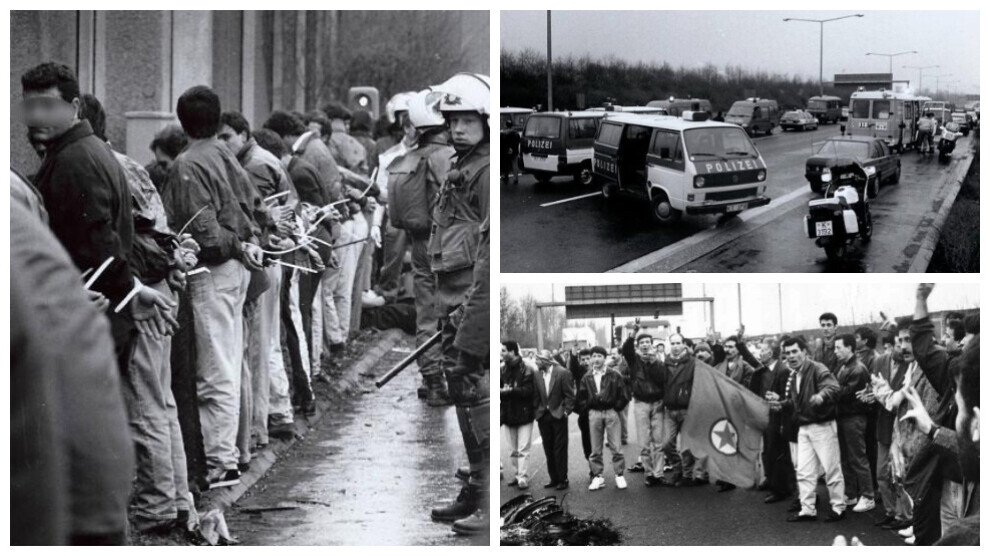
In a Medya News exclusive interview, Kurdistan Workers' Party (PKK) Executive Duran Kalkan sheds light on the process which led to Germany's on-going criminalisation of the Kurdish armed political movement, declared on 26 November 1993. As the 30th anniversary of the PKK ban approaches, the Kurdish community are preparing to stage protests against the German parliament's decision. Kalkan offers a unique perspective on the events and political manoeuvres that led to the proscription.

2:54 pm 15/11/2023
A A
30 years of struggle: Unravelling the PKK ban in Germany
Share post

As the Kurdish community in Germany prepares for protests marking the 30th anniversary of the ban, Kurdistan Workers’ Party (PKK) Executive Committee Member Duran Kalkan elucidates the origins of the proscription of the PKK in Germany. In this exclusive interview with Medya News, Kalkan places the PKK ban within the context of the NATO-involved conflict in the Kurdish regions of Turkey and the Turkish government’s response to the guerrilla warfare that commenced in 1984.

He highlights the critical role of the Düsseldorf Trial, which began with arrests in 1988 and concluded in 1994. The trial initially focused on linking the PKK to the assassination of Swedish Prime Minister Olof Palme in 1986, an allegation that later proved baseless.

Kalkan discusses how the trial developed from a legal battle into a political issue, eventually leading to the PKK ban. This shift underscores the complexity of legal proceedings interwoven with political pressures.

Kalkan also touches on the European Court of Human Rights’ (ECHR) verdict, which overturned the legal basis for the PKK ban. This decision not only challenged the ban’s legitimacy but also highlighted the significant flaws in the legal process that led to it.

Kalkan concludes by emphasising the importance of the upcoming protests, which represent not just a remembrance of past events but an ongoing struggle for justice and political expression. The interview with Kalkan serves as a poignant reminder of the broader implications of the PKK ban, shedding light on the enduring struggle of the Kurdish diaspora for justice and political freedom.
Mr. Kalkan, with the 30th anniversary of Germany’s PKK ban approaching and the Kurdish community preparing for protests, could you share your insights into the circumstances surrounding the imposition of this ban?

Absolutely. Understanding the genesis of the PKK ban by the German Parliament on 26 November 1993 is crucial. I was directly involved in this process, particularly through the Düsseldorf Trial. The PKK ban was not originally about labelling the PKK as a ‘terrorist organisation’ – that happened in 2001. It was more a response to the PKK’s actions during a ceasefire and its battle against the İmralı torture and isolation system.

Can you tell us more about the events leading up to the PKK ban, especially regarding the Düsseldorf Trial?

The Düsseldorf Trial, which began with arrests in February 1988 and concluded in April 1994, was significant. This trial had roots in the NATO-involved conflict in Kurdistan, with the Turkish government pushing NATO to engage following guerrilla warfare actions by the PKK in 1984. The trial’s initiation, particularly after the assassination of Swedish Prime Minister Olof Palme in 1986, was aimed at linking the PKK to this event, despite lacking evidence. This led to the creation of a special underground court in Germany, with extensive resources devoted to investigating the PKK.

How did the lack of evidence affect the trial?

Despite the intense efforts and use of ‘confessor witnesses’, the trial failed to establish any connection to the Palme murder. This lack of evidence led to difficulties for the prosecutors and the use of a smear campaign to sway public opinion. However, this tactic was short-lived as the PKK began to be seen by the German public as a Kurdish national liberation movement.

How did the case evolve into a political issue?

By 1990, the situation became untenable for the prosecutors, given the sheer volume of documents and the discrediting of witnesses. The case, which could have dragged on for decades, reached a point where the prosecutors sought a political solution. This led to a meeting between the judges, lawyers and us – the defendants, where we were asked to admit to crimes for a sentence. We refused, leading the political establishment to intervene.

What was the outcome of this political intervention?

The political intervention culminated in the German parliament declaring the PKK a ‘criminal organisation’ on 26 November 1993, essentially to facilitate our sentencing. We were then sentenced based on this new designation, for the time we had already served. However, we contested this decision at the ECHR.

What was the verdict of the ECHR?

On 5 July 2001, the ECHR overturned our conviction, effectively declaring the German parliament’s decision to ban the PKK as incorrect. This verdict legally and morally rejected the 26 November decision, highlighting its political and economic motivations.

With the upcoming anniversary of the ban, how do you view the significance of these planned protests?

These protests are a crucial expression of the ongoing struggle against the injustice of the PKK ban. They symbolise the need to challenge this politically motivated decision and to seek its revocation. The protests not only commemorate the past but also represent a stand for justice and the right to political expression.


Share post
Tags: Trending

Related Posts

Daily News : 06 November 2024

Daily News : 06 November 2024

November 6, 2024
Daily News : 05 November 2024

Daily News : 05 November 2024

November 5, 2024
Daily News : 03 SEPTEMBER 2024

Daily News : 03 SEPTEMBER 2024

September 3, 2024
Fifty more detainees released under amnesty for internal peace in North and East Syria

Fifty more detainees released under amnesty for internal peace in North and East Syria

September 3, 2024
Uncle of missing child in Turkey arrested as case exposes broader child safety issues

Uncle of missing child in Turkey arrested as case exposes broader child safety issues

September 3, 2024
Turkey’s bid to join BRICS raises questions within NATO

Turkey’s bid to join BRICS raises questions within NATO

September 3, 2024

The news content on our website cannot be quoted without permission, even by citing the source. It cannot be copied or published elsewhere, contrary to the law or without permission.

Follow Medya News

Categories

  • All News
  • Politics
  • Human Rights
  • Opinion
  • Kurdistan
  • Human Rights
  • Interview
  • Women
  • Audio Articles
  • Special Report

Quick Menu

  • Daily News
  • Live Blog
  • Podcast
  • Videos
  • Breaking News

About

Impressum

About us

Privacy Policy

Welcome Back!

Login to your account below

Forgotten Password?

Retrieve your password

Please enter your username or email address to reset your password.

Log In
We use cookies on our website to give you the most relevant experience by remembering your preferences and repeat visits. By clicking “Accept All”, you consent to the use of ALL the cookies. However, you may visit "Cookie Settings" to provide a controlled consent.
Cookie SettingsAccept All
Manage consent

Privacy Overview

This website uses cookies to improve your experience while you navigate through the website. Out of these, the cookies that are categorized as necessary are stored on your browser as they are essential for the working of basic functionalities of the website. We also use third-party cookies that help us analyze and understand how you use this website. These cookies will be stored in your browser only with your consent. You also have the option to opt-out of these cookies. But opting out of some of these cookies may affect your browsing experience.
Necessary
Always Enabled
Necessary cookies are absolutely essential for the website to function properly. These cookies ensure basic functionalities and security features of the website, anonymously.
CookieDurationDescription
cookielawinfo-checkbox-analytics11 monthsThis cookie is set by GDPR Cookie Consent plugin. The cookie is used to store the user consent for the cookies in the category "Analytics".
cookielawinfo-checkbox-functional11 monthsThe cookie is set by GDPR cookie consent to record the user consent for the cookies in the category "Functional".
cookielawinfo-checkbox-necessary11 monthsThis cookie is set by GDPR Cookie Consent plugin. The cookies is used to store the user consent for the cookies in the category "Necessary".
cookielawinfo-checkbox-others11 monthsThis cookie is set by GDPR Cookie Consent plugin. The cookie is used to store the user consent for the cookies in the category "Other.
cookielawinfo-checkbox-performance11 monthsThis cookie is set by GDPR Cookie Consent plugin. The cookie is used to store the user consent for the cookies in the category "Performance".
viewed_cookie_policy11 monthsThe cookie is set by the GDPR Cookie Consent plugin and is used to store whether or not user has consented to the use of cookies. It does not store any personal data.
Functional
Functional cookies help to perform certain functionalities like sharing the content of the website on social media platforms, collect feedbacks, and other third-party features.
Performance
Performance cookies are used to understand and analyze the key performance indexes of the website which helps in delivering a better user experience for the visitors.
Analytics
Analytical cookies are used to understand how visitors interact with the website. These cookies help provide information on metrics the number of visitors, bounce rate, traffic source, etc.
Advertisement
Advertisement cookies are used to provide visitors with relevant ads and marketing campaigns. These cookies track visitors across websites and collect information to provide customized ads.
Others
Other uncategorized cookies are those that are being analyzed and have not been classified into a category as yet.
SAVE & ACCEPT

Add New Playlist

Contact

[contact-form-7 id=”18690″ title=”Contact form 1″]

[email-subscribers-form id=”1″]

No Result
View All Result
  • All News
  • Kurdistan
  • Women
  • Politics
  • Human Rights
  • Interview
  • Long Reads
  • World
  • Journalism
  • Ecology
  • Economy
  • Culture & Art
  • Daily News
  • Breaking News
  • Newsletter
  • Opinion
  • Authors
  • Podcast
  • LIVE BLOG

© 2020 Medyanews. All Rights Reserved