

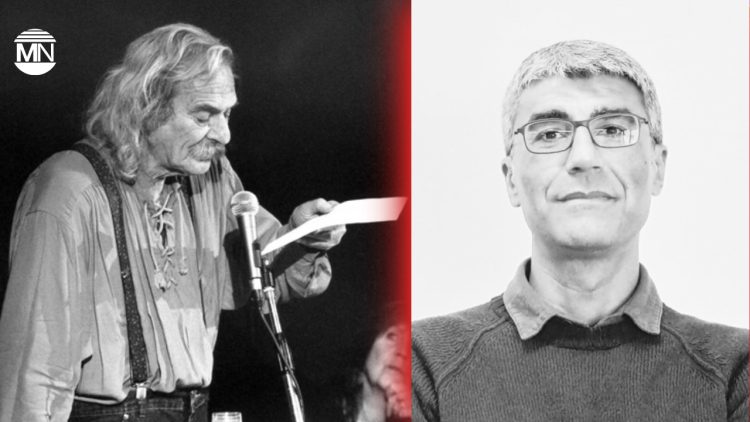
Kurdish poet İlhan Sami Çomak, who spent more than three decades in prison in Turkey, has been named the recipient of the 2025 Jack Hirschman Poetry Prize, an international award honouring writers whose work reflects ideals of justice, peace and human dignity.
The award, established in memory of the late American poet and activist Jack Hirschman, will be presented in June. This year’s jury, which included poets Francis Combes, Agneta Falk Hirschman and Halmosi Sándor, selected Çomak from a global shortlist that also featured Indian writer Tishani Doshi and Somali-British poet Warsan Shire.
Çomak was imprisoned in 1994 at the age of 22 while studying geography at İstanbul University. He was convicted following a controversial trial marked by allegations of torture and an absence of due process. Despite the lengthy sentence, he published nine volumes of poetry while in prison, writing both in Turkish and in his native Kurdish.
“The award highlights poetry’s ability to transcend borders and captivity, and to connect with fundamental human values,” said the organisers.
Çomak’s work is known for its quiet lyricism, rich imagery and emotional depth. Though it steers clear of overt political slogans, his poetry explores themes such as memory, isolation and hope in the face of adversity. His voice, shaped by decades of incarceration, offers a rare literary perspective from within the Turkish prison system, where writers and intellectuals — and particularly those of Kurdish origin — have frequently faced censorship and imprisonment.
Now free, Çomak has gained international recognition. His poems have been translated into several languages, including English, Norwegian, German and Welsh. He is an honorary member of PEN centres in Norway, Austria, Wales, Ireland and among Kurdish writers, and has been featured in literary festivals from Venice to Oslo. His collection Separated From the Sun was published by Smokestack Books in the UK in 2022.
Jack Hirschman, who died in 2021, was a prolific Marxist poet known for his revolutionary verse, his engagement with the Beat movement, and his translations of poets from around the world—including Kurdish writers. The award in his name seeks to honour not only artistic achievement but poetry as a form of social resistance.
“The prize symbolically connects two poets from different continents but united in their commitment to truth and human dignity,” said the jury. “Hirschman brought poetry into the streets; Çomak wrote his way into the world from a prison cell.”
The ceremony in June will celebrate not only literary excellence but also the enduring power of poetry to serve as witness, resistance and hope in even the darkest of places.


