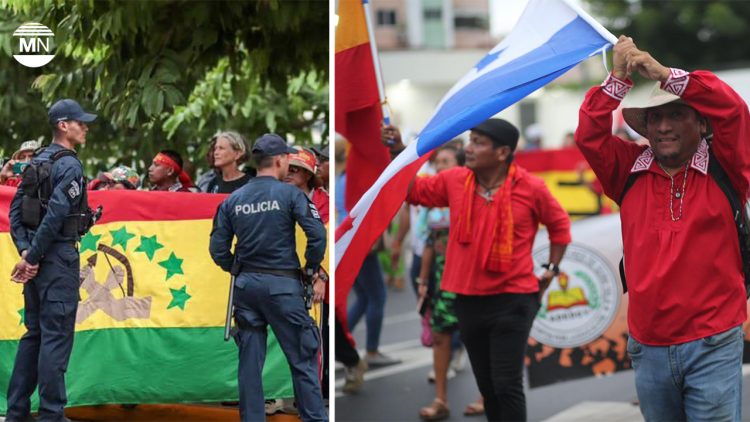
For over 30 days, Panama has been engulfed in massive protests led by indigenous communities, students, and labour unions. Despite facing violent repression, the protestors remain steadfast in their demands for justice and change. The unrest has been sparked by the recent approval of Law 426, which has ignited widespread discontent among various sectors of society.
Law 426, recently enacted by the Panamanian government, introduces significant reforms that have raised alarm among citizens. Key provisions of the law include an increase in the retirement age, stricter requirements for individuals seeking social insurance, and a potential decrease in the minimum wage that could impact up to 70% of workers in Panama. These changes are seen as detrimental to the livelihoods of many, particularly in a country where economic disparities are already pronounced.
The protests are occuring within a broader context of ongoing attacks against indigenous lands. The government has permitted mining companies to continue their operations, even after the constitutional court ruled against such activities. This decision, framed as a means to protect the national economy, has led to severe contamination of local water sources, further endangering the health and well-being of indigenous communities.
Moreover, the situation is compounded by geopolitical tensions, particularly in light of US President Trump’s call to reclaim control over the Panama Canal. This rhetoric has coincided with the approval of new US military bases in Panama, raising concerns about foreign influence and control over national resources. Critics argue that the reforms introduced by Law 426 serve to weaken societal organisations, facilitating greater control over the Panama Canal and the expansion of the mining industry.
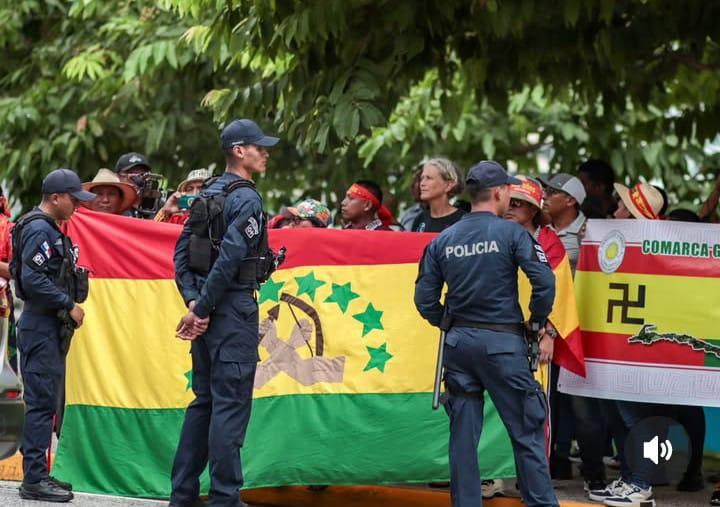
In response to these developments, social movements have mobilised in unprecedented numbers. Indigenous groups, such as the Kuna, have taken to the streets alongside students and labour unions, uniting in their fight against the government’s policies. The protests have been met with a heavy-handed response from law enforcement, with police encircling indigenous villages, deploying tear gas, and arresting protest leaders without legitimate cause.
As the situation unfolds, the resilience of the protestors highlights the urgent need for dialogue and reform. The struggle for justice in Panama is far from over, as communities continue to demand accountability and respect for their rights and resources.