

Turkey’s pro-Kurdish Peoples’ Equality and Democracy (DEM) Party has called for immediate government action to capitalise on the historic opportunity presented by the disbandment of the Kurdistan Workers’ Party (PKK), warning that failure to act will risk derailing the peace process.
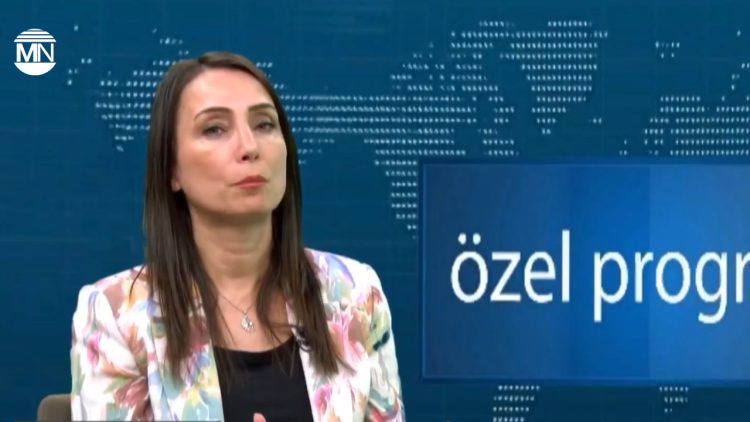
Speaking on Medya Haber TV on Saturday, Tülay Hatimoğulları, the party’s co-chair, urged the Turkish state to implement democratic reforms and facilitate broader dialogue to ensure lasting peace. The speech comes as Turkey navigates a delicate moment in its decades-long Kurdish conflict, following the sudden dissolution of the PKK.
Hatimoğulları described the PKK’s disbandment as a “significant and serious step”, noting that unlike previous peace efforts, where disarmament typically concluded negotiations, this move has occurred at the outset. “This is one of the most important opportunities in Turkey’s history,” she said. She stressed that the government needs to respond with equally bold measures, including legislative reforms and an end to anti-democratic practices, to establish lasting peace.
The significance of this moment lies in its potential to reshape Turkey’s political landscape. The Kurdish issue, a decades-long conflict involving demands for cultural and political rights, has claimed tens of thousands of lives – mostly those of Kurdish civilians – and deeply polarised society. The PKK, founded in 1978, has long been a central actor in the conflict, engaging in armed struggle against the Turkish state since 1984. Its disbandment, announced recently, marks a turning point, but Hatimoğulları warned that without reciprocal state action, “this process will stall”.
Hatimoğulları outlined specific steps the government must take, including addressing prisoners’ rights, such as the release of sick inmates and the implementation of European Court of Human Rights (ECtHR) rulings. She also called for the abolition of the ‘trustee’ practice, where elected Kurdish mayors are replaced by state-appointed officials, a policy widely criticised for undermining local democracy. “The trustee law is unconstitutional,” she said, urging parliament to act swiftly to repeal it.
Central to her speech was the role of Abdullah Öcalan, the imprisoned PKK leader, whom she described as pivotal to the peace process. Hatimoğulları advocated for an extension of access to Öcalan, not only for DEM Party delegations but also for intellectuals, journalists and artists, to foster inclusive dialogue. “For this process to succeed, these meetings must happen quickly,” she said.
Abdullah Öcalan, held in near-total isolation on İmralı Island in the Marmara Sea since 1999, has been a pivotal figure in the Kurdish conflict. Öcalan was permitted a family visit—his first in 43 months—on 23 October last year following a surprise proposal by Devlet Bahçeli, leader of the far-right Nationalist Movement Party (MHP) and ally of President Recep Tayyip Erdoğan. Bahçeli also suggested Öcalan could address parliament to declare the PKK’s dissolution, a move that sparked renewed speculation of peace talks. During the visit, Öcalan expressed readiness to shift the conflict “from violence to politics”, saying, “If the conditions are right, I have the theoretical and practical power to pull this process from a basis of conflict and violence to a basis of law and politics.” On 27 February, he called for the PKK to disarm and disband, a historic appeal that led to the group’s announcement of its dissolution and marked a potential turning point in Turkey’s decades-long conflict.
During this period, the DEM Party has been actively building a coalition for peace, engaging with opposition parties, civil society and diverse societal groups. Hatimoğulları highlighted these efforts, stating, “We have knocked on every door, and we will continue to do so.” However, she cautioned that the process cannot succeed unilaterally, urging the government and society to embrace their “duty and responsibility”.


