

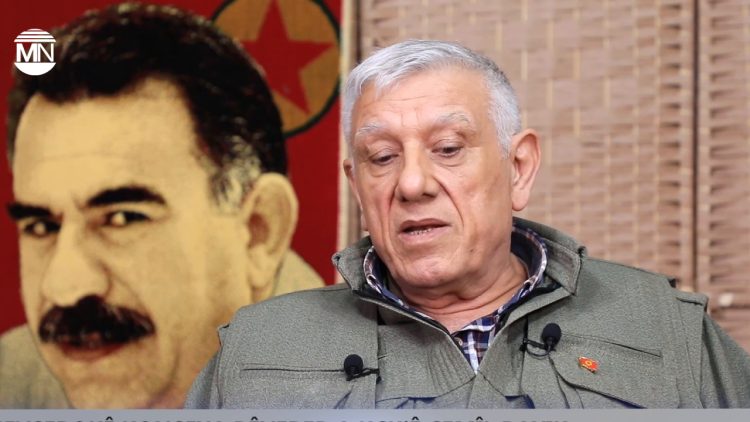
Cemil Bayık, co-founder of Kurdistan Workers’ Party (PKK), has declared that the Kurdish movement is formulating a “new paradigm” to guide its future political direction, following a landmark decision to formally dissolve the PKK and end its armed campaign, announced at the 12th Extraordinary Congress of the PKK, held from 5-7 May.
Speaking in a televised interview on Friday, Bayık said the congress marked a turning point for the movement and signalled a renewed focus on solving not only the Kurdish question but also wider democratic issues facing the Middle East. “We are developing a second manifesto that addresses freedom and democracy for all peoples, not just the Kurds,” he said.
The Kurdistan Workers’ Party (PKK) emerged in the late 1970s as a Marxist-inspired armed movement. Its founder, Abdullah Öcalan, has been imprisoned in Turkey since 1999. The group shifted increasingly towards a model of local democracy and ideological mobilisation, especially following the collapse of peace talks in 2015.
Bayık, who co-chairs the Kurdistan Communities Union (KCK)—the broader political umbrella structure of the Kurdish movement—emphasised the historical weight of the group’s origins. “There was nothing left for the Kurds: no identity, no language, no hope,” he said. “The intervention of Rêber Apo [Leader Öcalan] was historic—it revived a people on the brink of erasure.”
Bayık described the 12th Congress of the PKK as the product of decades of struggle, hardship and ideological evolution. He paid tribute to fallen members of the group and credited Öcalan, along with political figures such as the late Sırrı Süreyya Önder, with shaping the movement’s current trajectory. “This congress could only happen because of the sacrifices made,” he said.
Reflecting on the early years of the PKK, Bayık recounted how the movement took shape amid the political repression of the 1980s. “There was no Kurdish organisation, no movement, no sense of self-determination,” he said. “We had to recreate not just a party, but a people.”
The new phase, he said, involves advancing democratic principles, women’s liberation and grassroots participation. “We proved that Kurds exist, that they can stand with dignity and that they have a right to a future,” he said. Bayık added that the transformation of the PKK produced tangible ideological changes, including in the 1990s, the development of an “ideology of women’s freedom”, which became a central pillar of the movement’s political thought.
Bayık criticised the Turkish state’s continued refusal to engage in meaningful dialogue, arguing that previous peace efforts initiated by Öcalan had been deliberately undermined. He nevertheless reaffirmed the group’s commitment to a peaceful and democratic solution: “If there is to be life, it must be a free life,” he said.


